THE ADVENTURE COLLECTIVE® · Independent discovery and booking for outdoor travel

Fly from Cairo for a private, full-day exploration of Luxor’s temples—Karnak, Luxor Temple and Hatshepsut’s mortuary temple—returning the same evening. Expect guided history, uneven stone surfaces, and long periods in direct sun.
Fly from Cairo for a private, full-day exploration of Luxor’s temples—Karnak, Luxor Temple and Hatshepsut’s mortuary temple—returning the same evening. Expect guided history, uneven stone surfaces, and long periods in direct sun.
Morning light cuts across the Nile as a low-cost jet lifts off from Cairo and the carved columns of Karnak come into view—then suddenly the city of Luxor is underfoot. This private day tour compresses Egypt’s millennia of temple-building into a single, purposeful day: visit the vast pylons and hypostyle halls of Karnak, cross to the west bank to see Queen Hatshepsut’s cliffside mortuary temple, and return to the glowing colonnades of Luxor Temple.
Verified experiences and guided adventures in the surrounding area.
Operated by ToBadaa · Luxor, Luxor Governorate
Morning light cuts across the Nile as a low-cost jet lifts off from Cairo and the carved columns of Karnak come into view—then suddenly the city of Luxor is underfoot. This private day tour compresses Egypt’s millennia of temple-building into a single, purposeful day: visit the vast pylons and hypostyle halls of Karnak, cross to the west bank to see Queen Hatshepsut’s cliffside mortuary temple, and return to the glowing colonnades of Luxor Temple.
Luxor occupies the ruins of ancient Thebes, a religious and political center during Egypt’s New Kingdom (c. 1550–1070 BCE). Geologically the Nile valley here is a ribbon of alluvial soil framed by desert escarpments; monuments are cut from limestone and sandstone that age into warm ochres by midday sun. Culturally the sites remain living places—local guides narrate rituals, pharaonic names and the practical engineering that raised massive blocks without modern cranes.
Practically, expect a long but manageable day: hotel pickup in Cairo, a domestic flight, guided stops on both east and west banks, lunch and return flight. Surfaces range from paved temple plazas to uneven stone ramps and steps; shade is limited. Bring water, sun protection, comfortable walking shoes and a camera with spare batteries.
Timing matters: early visits avoid crowds and heat; a private guide smooths logistics and secures entrance lines. Respect the sites—no flash on fragile reliefs, stay behind ropes, and follow your guide’s instructions. For travelers seeking concentrated history, this tour delivers an intense, efficient encounter with Egypt’s royal past.
Yes—domestic round-trip flight tickets between Cairo and Luxor are included in the tour package.
The itinerary is approximately 10–11 hours total, including flights, guided visits, and transit time.
Accessibility options are noted as available; contact the operator in advance to confirm vehicle and site access provisions.
Yes—the tour covers key east bank temples (Karnak, Luxor Temple) and west bank highlights such as Hatshepsut’s mortuary temple.
ToBadaa operates guided outdoor trips and adventures with an emphasis on safety, stewardship, and memorable experiences.
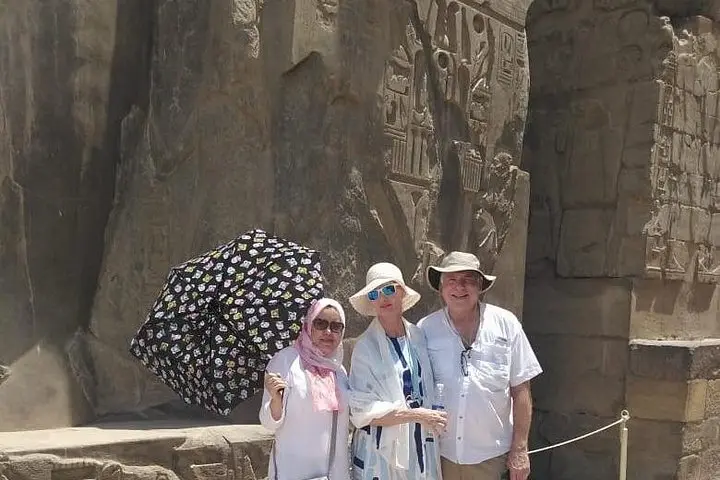
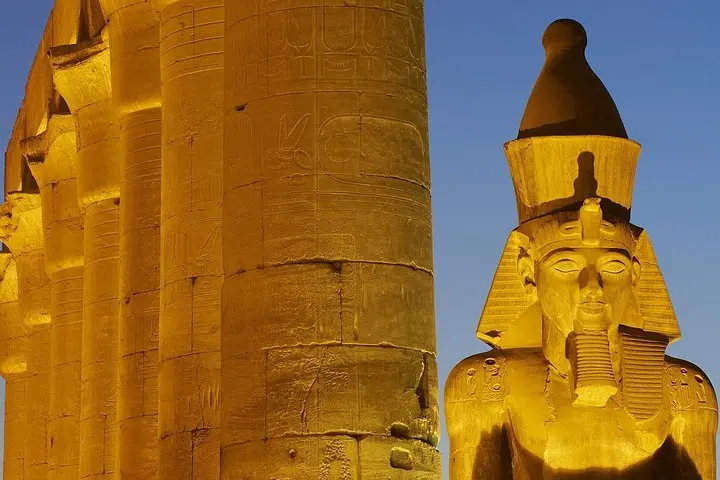
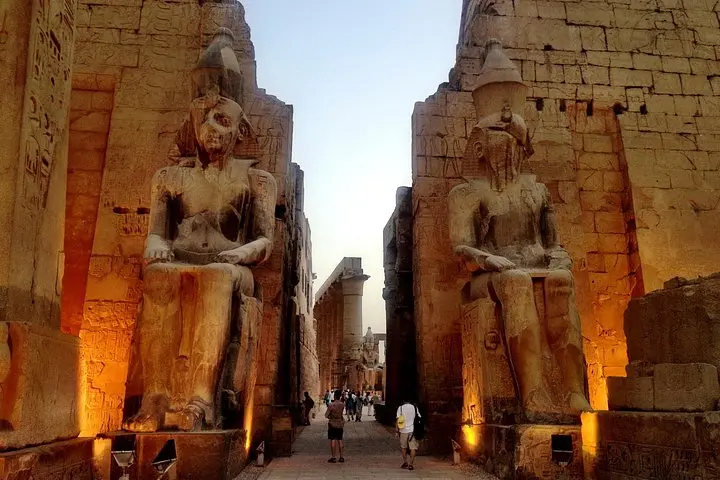
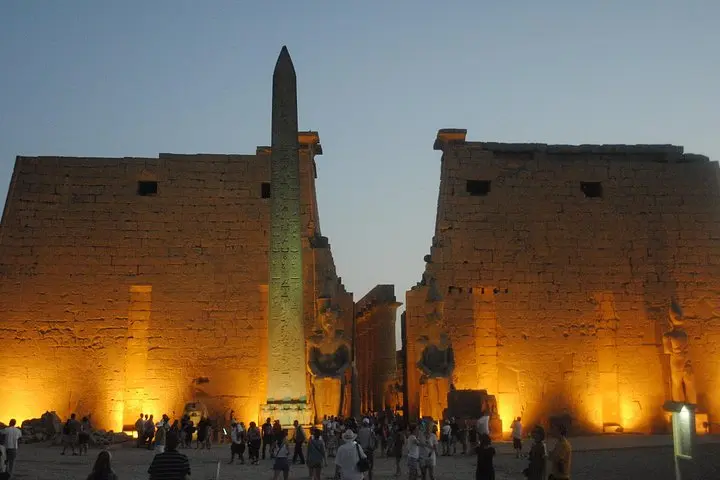
Morning light cuts across the Nile as a low-cost jet lifts off from Cairo and the carved columns of Karnak come into view—then suddenly the city of Luxor is underfoot. This private day tour compresses Egypt’s millennia of temple-building into a single, purposeful day: visit the vast pylons and hypostyle halls of Karnak, cross to the west bank to see Queen Hatshepsut’s cliffside mortuary temple, and return to the glowing colonnades of Luxor Temple.
Morning light cuts across the Nile as a low-cost jet lifts off from Cairo and the carved columns of Karnak come into view—then suddenly the city of Luxor is underfoot. This private day tour compresses Egypt’s millennia of temple-building into a single, purposeful day: visit the vast pylons and hypostyle halls of Karnak, cross to the west bank to see Queen Hatshepsut’s cliffside mortuary temple, and return to the glowing colonnades of Luxor Temple.
Luxor occupies the ruins of ancient Thebes, a religious and political center during Egypt’s New Kingdom (c. 1550–1070 BCE). Geologically the Nile valley here is a ribbon of alluvial soil framed by desert escarpments; monuments are cut from limestone and sandstone that age into warm ochres by midday sun. Culturally the sites remain living places—local guides narrate rituals, pharaonic names and the practical engineering that raised massive blocks without modern cranes.
Practically, expect a long but manageable day: hotel pickup in Cairo, a domestic flight, guided stops on both east and west banks, lunch and return flight. Surfaces range from paved temple plazas to uneven stone ramps and steps; shade is limited. Bring water, sun protection, comfortable walking shoes and a camera with spare batteries.
Timing matters: early visits avoid crowds and heat; a private guide smooths logistics and secures entrance lines. Respect the sites—no flash on fragile reliefs, stay behind ropes, and follow your guide’s instructions. For travelers seeking concentrated history, this tour delivers an intense, efficient encounter with Egypt’s royal past.