THE ADVENTURE COLLECTIVE® · Independent discovery and booking for outdoor travel

Leave Cairo before sunrise and spend a long, high-contrast day across the Black Desert, Crystal Mountain and the chalk towers of the White Desert, with visits to oasis springs and local villages. This full-day jeep tour delivers raw geology, short walks, and cultural context in one intense outing.
Leave Cairo before sunrise and spend a long, high-contrast day across the Black Desert, Crystal Mountain and the chalk towers of the White Desert, with visits to oasis springs and local villages. This full-day jeep tour delivers raw geology, short walks, and cultural context in one intense outing.
By dawn you’re eased out of Cairo’s traffic into open road — a long, flat ribbon of highway that unfurls west toward the Bahariya Oasis. The drive is part of the day’s rhythm: about four hours (roughly 150 miles/240 km) of shifting flats before a rugged jeep replaces the air-conditioned car and the landscape begins to assert itself.
Verified experiences and guided adventures in the surrounding area.
Operated by This is Egypt Tours · Bawiti (Bahariya Oasis), Matrouh Governorate
By dawn you’re eased out of Cairo’s traffic into open road — a long, flat ribbon of highway that unfurls west toward the Bahariya Oasis. The drive is part of the day’s rhythm: about four hours (roughly 150 miles/240 km) of shifting flats before a rugged jeep replaces the air-conditioned car and the landscape begins to assert itself.
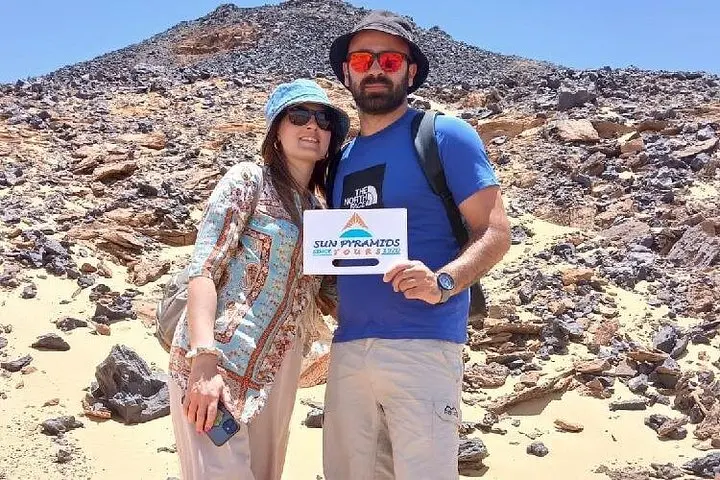
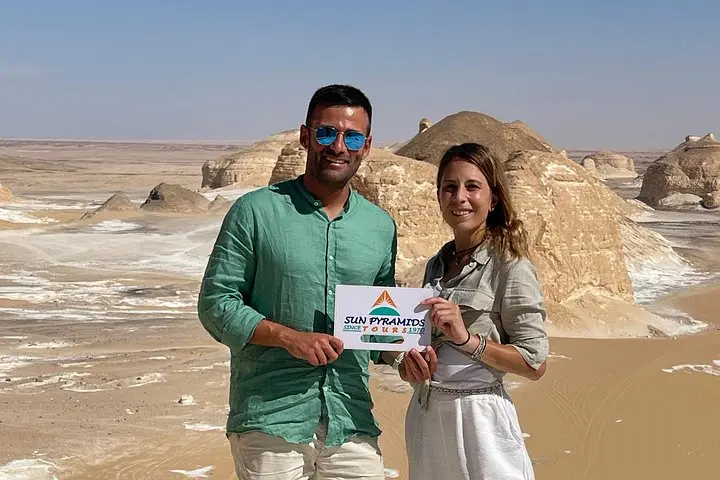
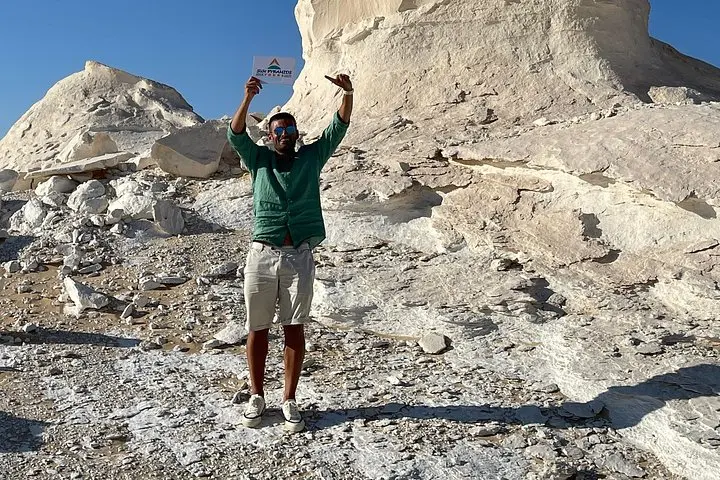
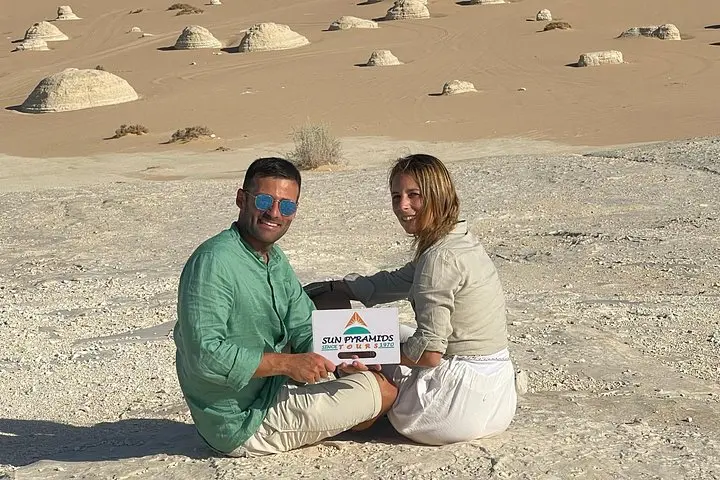
You move from blackened volcanic hills into fields of chalk and sand. The Black Desert’s scoria cones give way to Crystal Mountain’s mineral-streaked ridges and finally to the White Desert, where wind-sculpted limestone and chalk boulders stand like abstract sculptures against a sun-drenched plain. Geologically these formations are soft marine sediments carved by millennia of wind; they erode quickly, so shapes change over decades.
Bahariya has a layered human history — pharaonic tombs and Roman-era finds, including the nearby Valley of the Golden Mummies — and a living desert culture centered on oasis settlements and Bedouin-guided jeep routes. Hot and cold springs at El Hez provide a cooling contrast and a local restorative after the white-stone expanses.
Practical guidance: expect a full 16-hour day with long stints in vehicles and short walks on uneven desert rock. Bring at least 3 liters of water, sun protection, sturdy closed-toe shoes for walking around formations, and a light insulating layer for early morning or night wind. Photography windows are best around sunrise and late afternoon when angles reveal the contours in relief.
Respect fragile hoodoos—avoid climbing on thin pedestals—and follow guides’ instructions. This is a high-reward day for travelers who want dramatic, otherworldly landscapes within reach of Cairo.
Expect about four hours each way by road (roughly 150 miles/240 km), plus time in jeeps and stops — it’s a full 12–16 hour day.
Yes — this tour includes entrance fees to the sites mentioned and a provided lunch, as well as mineral water.
The tour involves long vehicle transfers and short walks on uneven ground; it’s generally suitable for most fitness levels but not ideal for those with serious mobility restrictions or spinal issues.
Yes — operators request a soft copy of passports at least 24 hours before departure to process permits and licenses for the desert areas.
This is Egypt Tours operates guided outdoor trips and adventures with an emphasis on safety, stewardship, and memorable experiences.
By dawn you’re eased out of Cairo’s traffic into open road — a long, flat ribbon of highway that unfurls west toward the Bahariya Oasis. The drive is part of the day’s rhythm: about four hours (roughly 150 miles/240 km) of shifting flats before a rugged jeep replaces the air-conditioned car and the landscape begins to assert itself.
By dawn you’re eased out of Cairo’s traffic into open road — a long, flat ribbon of highway that unfurls west toward the Bahariya Oasis. The drive is part of the day’s rhythm: about four hours (roughly 150 miles/240 km) of shifting flats before a rugged jeep replaces the air-conditioned car and the landscape begins to assert itself.
You move from blackened volcanic hills into fields of chalk and sand. The Black Desert’s scoria cones give way to Crystal Mountain’s mineral-streaked ridges and finally to the White Desert, where wind-sculpted limestone and chalk boulders stand like abstract sculptures against a sun-drenched plain. Geologically these formations are soft marine sediments carved by millennia of wind; they erode quickly, so shapes change over decades.
Bahariya has a layered human history — pharaonic tombs and Roman-era finds, including the nearby Valley of the Golden Mummies — and a living desert culture centered on oasis settlements and Bedouin-guided jeep routes. Hot and cold springs at El Hez provide a cooling contrast and a local restorative after the white-stone expanses.
Practical guidance: expect a full 16-hour day with long stints in vehicles and short walks on uneven desert rock. Bring at least 3 liters of water, sun protection, sturdy closed-toe shoes for walking around formations, and a light insulating layer for early morning or night wind. Photography windows are best around sunrise and late afternoon when angles reveal the contours in relief.
Respect fragile hoodoos—avoid climbing on thin pedestals—and follow guides’ instructions. This is a high-reward day for travelers who want dramatic, otherworldly landscapes within reach of Cairo.