THE ADVENTURE COLLECTIVE® · Independent discovery and booking for outdoor travel

Spend a full day tracing Egypt’s highlights: walk the Giza Plateau beside the Great Pyramid, explore the Egyptian Museum’s Tutankhamun collection, then navigate the lively Khan el-Khalili bazaar. This guide tells you what to expect and how to prepare for the day.
Spend a full day tracing Egypt’s highlights: walk the Giza Plateau beside the Great Pyramid, explore the Egyptian Museum’s Tutankhamun collection, then navigate the lively Khan el-Khalili bazaar. This guide tells you what to expect and how to prepare for the day.
You step out of an air‑conditioned van into a strip of wind and dust that seems to hold its breath around stone older than language. The Giza Plateau spreads like a hard-edged skyline: three pyramids cut against the sky, the Sphinx watching with a face worn by centuries of desert wind. A guide points out construction details as the sun slides across casing stones; voices and the muffled traffic of modern Cairo come from beyond the plateau.
Verified experiences and guided adventures in the surrounding area.
Operated by Egipto Excursiones · Cairo, Cairo Governorate
You step out of an air‑conditioned van into a strip of wind and dust that seems to hold its breath around stone older than language. The Giza Plateau spreads like a hard-edged skyline: three pyramids cut against the sky, the Sphinx watching with a face worn by centuries of desert wind. A guide points out construction details as the sun slides across casing stones; voices and the muffled traffic of modern Cairo come from beyond the plateau.
This itinerary threads together Egypt’s most compact slice of history. The Great Pyramid of Khufu dates to c. 2600 BCE, part of the Fourth Dynasty that created monumental stone architecture, while the surrounding complexes — valley temples, causeways and Menkaure’s smaller pyramid — reveal funerary planning and quarrying geology of limestone and granite. In the afternoon, the Cairo Museum in Tahrir Square catalogs millennia of artifacts, including Tutankhamun’s funerary pieces, and Khan el-Khalili bazaar offers a sensory counterpoint: call to haggle, the smell of strong coffee and brassware workshops.
Practically, expect a full day: moderate walking on uneven limestone, open sun on the plateau, long corridors in the museum and crowded narrow alleys in the bazaar. Bring hydration, sun protection and comfortable footwear. Confirm whether interior pyramid access is included and book early for peak-season entry slots. The rhythm of the day moves from exposed desert to climate‑controlled galleries to pedestrian alleys, making this a compact but layered orientation to ancient and modern Cairo.
This tour lists entry fees among inclusions, but access to pyramid interiors can be limited; confirm with the operator before booking for any special internal-access tickets.
The itinerary is a full 8‑hour day and includes private, air‑conditioned transportation between sites and back to your pickup point.
The tour is physically easy overall, but the plateau involves uneven ground and some climbing; it’s not recommended for travelers with spinal injuries or those who cannot manage short stairs and uneven surfaces.
Yes—Khan el-Khalili is a working bazaar where bargaining is common; carry small notes, agree prices clearly before purchase and be prepared for crowds.
Egipto Excursiones operates guided outdoor trips and adventures with an emphasis on safety, stewardship, and memorable experiences.
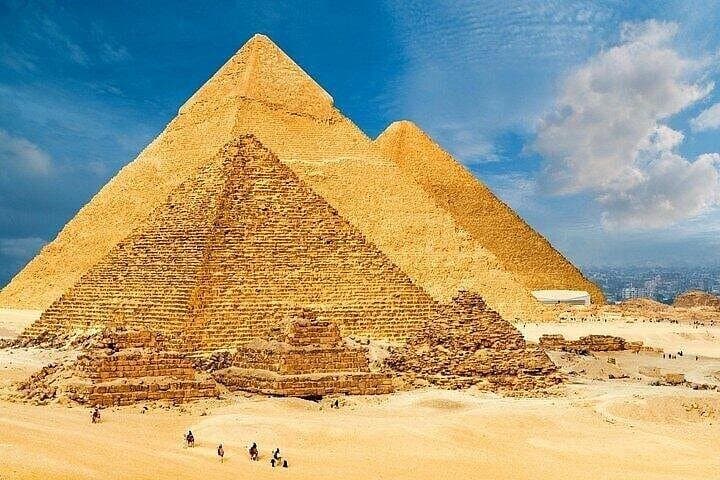


You step out of an air‑conditioned van into a strip of wind and dust that seems to hold its breath around stone older than language. The Giza Plateau spreads like a hard-edged skyline: three pyramids cut against the sky, the Sphinx watching with a face worn by centuries of desert wind. A guide points out construction details as the sun slides across casing stones; voices and the muffled traffic of modern Cairo come from beyond the plateau.
You step out of an air‑conditioned van into a strip of wind and dust that seems to hold its breath around stone older than language. The Giza Plateau spreads like a hard-edged skyline: three pyramids cut against the sky, the Sphinx watching with a face worn by centuries of desert wind. A guide points out construction details as the sun slides across casing stones; voices and the muffled traffic of modern Cairo come from beyond the plateau.
This itinerary threads together Egypt’s most compact slice of history. The Great Pyramid of Khufu dates to c. 2600 BCE, part of the Fourth Dynasty that created monumental stone architecture, while the surrounding complexes — valley temples, causeways and Menkaure’s smaller pyramid — reveal funerary planning and quarrying geology of limestone and granite. In the afternoon, the Cairo Museum in Tahrir Square catalogs millennia of artifacts, including Tutankhamun’s funerary pieces, and Khan el-Khalili bazaar offers a sensory counterpoint: call to haggle, the smell of strong coffee and brassware workshops.
Practically, expect a full day: moderate walking on uneven limestone, open sun on the plateau, long corridors in the museum and crowded narrow alleys in the bazaar. Bring hydration, sun protection and comfortable footwear. Confirm whether interior pyramid access is included and book early for peak-season entry slots. The rhythm of the day moves from exposed desert to climate‑controlled galleries to pedestrian alleys, making this a compact but layered orientation to ancient and modern Cairo.