THE ADVENTURE COLLECTIVE® · Independent discovery and booking for outdoor travel

Spend two days moving between Cairo’s monumental past and its living present: climb the visual drama of Giza’s pyramids, explore Saqqara’s ancient tombs and take in the Egyptian Museum and Alabaster Mosque with a private guide. Practical tips on timing, accessibility and what to carry help you make the most of the experience.
Spend two days moving between Cairo’s monumental past and its living present: climb the visual drama of Giza’s pyramids, explore Saqqara’s ancient tombs and take in the Egyptian Museum and Alabaster Mosque with a private guide. Practical tips on timing, accessibility and what to carry help you make the most of the experience.
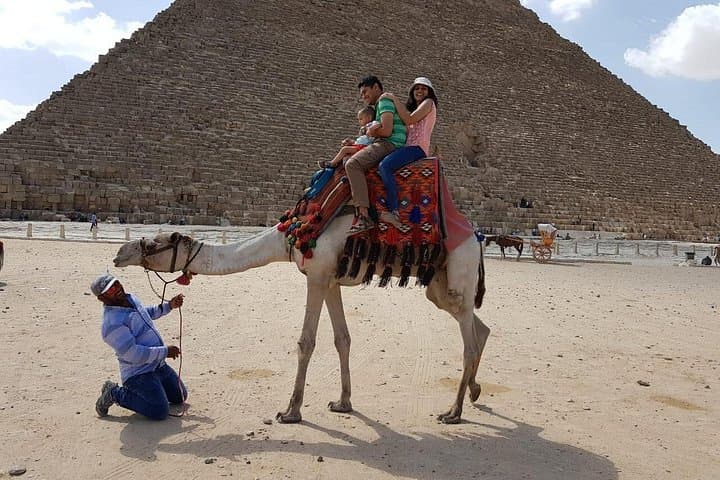
Morning light cuts across limestone and asphalt; the city exhales commerce while the desert keeps its slow watch. On a private two-day Cairo tour the traveler moves between those rhythms—an air-conditioned minivan carries you from hotel doors to the wind-scoured Giza Plateau, where the pyramids rise like engineered cliffs and a camel’s slow sway sets the pace.
Verified experiences and guided adventures in the surrounding area.
Operated by Vacations in Egypt · Cairo, Cairo Governorate
Morning light cuts across limestone and asphalt; the city exhales commerce while the desert keeps its slow watch. On a private two-day Cairo tour the traveler moves between those rhythms—an air-conditioned minivan carries you from hotel doors to the wind-scoured Giza Plateau, where the pyramids rise like engineered cliffs and a camel’s slow sway sets the pace.
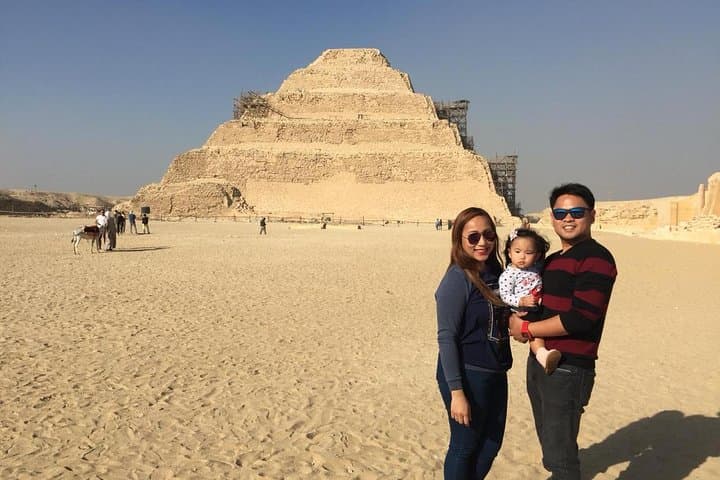
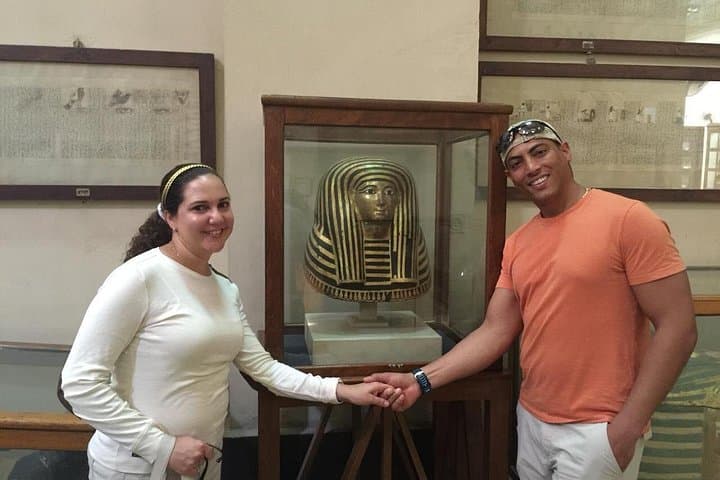
Day one follows stone and sand: Giza’s Great Pyramids and the Sphinx, a short camel ride across the plateau, then Dahshur’s Bent and Red Pyramids and Saqqara’s Step Pyramid, sites that chart the evolution of Old Kingdom funerary architecture. Geologically, these monuments sit on a bed of Eocene limestone and sand deposits shaped by the Nile’s ancient floodplain. Day two threads the city—Egyptian Museum’s Tutankhamun galleries, the Ottoman-era Alabaster Mosque of Muhammad Ali with its commanding domes, and the lanes of Khan el-Khalili bazaar where commerce and craft intersect.
Practical guidance is straightforward: start early to avoid midday heat, carry sun protection and at least two liters of water, and wear soles that handle both cobbled bazaars and rocky ruins. Museum security screens are strict—keep passports and printed or mobile tickets handy. The tour is accessible and paced for most travelers; still, be prepared for uneven surfaces inside tombs and modest walking at each stop. Bring local currency for bazaar bargaining and small tips, and allow extra time for photography—Cairo rewards patience with moments that feel both ancient and immediate.
Entrance fees are typically not included in the base tour price—confirm with your operator and carry cash or card to purchase tickets where required.
The tour notes wheelchair-accessible transportation and is suitable for most physical levels, but some tombs and uneven sites (e.g., pyramid interiors) have limited accessibility—check specific site restrictions beforehand.
Yes; the tour includes hotel pickup and drop-off by air-conditioned minivan—confirm your pickup point at booking.
Tipping is customary in Egypt; plan modest tips for your guide and driver and small change for service staff throughout the visit.
Vacations in Egypt operates guided outdoor trips and adventures with an emphasis on safety, stewardship, and memorable experiences.

Morning light cuts across limestone and asphalt; the city exhales commerce while the desert keeps its slow watch. On a private two-day Cairo tour the traveler moves between those rhythms—an air-conditioned minivan carries you from hotel doors to the wind-scoured Giza Plateau, where the pyramids rise like engineered cliffs and a camel’s slow sway sets the pace.
Morning light cuts across limestone and asphalt; the city exhales commerce while the desert keeps its slow watch. On a private two-day Cairo tour the traveler moves between those rhythms—an air-conditioned minivan carries you from hotel doors to the wind-scoured Giza Plateau, where the pyramids rise like engineered cliffs and a camel’s slow sway sets the pace.
Day one follows stone and sand: Giza’s Great Pyramids and the Sphinx, a short camel ride across the plateau, then Dahshur’s Bent and Red Pyramids and Saqqara’s Step Pyramid, sites that chart the evolution of Old Kingdom funerary architecture. Geologically, these monuments sit on a bed of Eocene limestone and sand deposits shaped by the Nile’s ancient floodplain. Day two threads the city—Egyptian Museum’s Tutankhamun galleries, the Ottoman-era Alabaster Mosque of Muhammad Ali with its commanding domes, and the lanes of Khan el-Khalili bazaar where commerce and craft intersect.
Practical guidance is straightforward: start early to avoid midday heat, carry sun protection and at least two liters of water, and wear soles that handle both cobbled bazaars and rocky ruins. Museum security screens are strict—keep passports and printed or mobile tickets handy. The tour is accessible and paced for most travelers; still, be prepared for uneven surfaces inside tombs and modest walking at each stop. Bring local currency for bazaar bargaining and small tips, and allow extra time for photography—Cairo rewards patience with moments that feel both ancient and immediate.