THE ADVENTURE COLLECTIVE® · Independent discovery and booking for outdoor travel

A long, luminous day into Argentina’s Calchaquí Valleys takes you from wind-sculpted rock formations to Cafayate’s high-altitude vineyards. Expect dramatic geology, a winery tasting and several short, easy walks.
A long, luminous day into Argentina’s Calchaquí Valleys takes you from wind-sculpted rock formations to Cafayate’s high-altitude vineyards. Expect dramatic geology, a winery tasting and several short, easy walks.
A morning bus pulls out of Salta before dawn and the highway immediately tilts into a different Argentina: an open, high desert folded into ribs of red, ochre and honey. The driver slows as the road threads a narrow gorge; through the window you can see towers of eroded sandstone—The Castles—standing like deliberate ruins. The guide's voice explains that these shapes, carved by wind and rain over millions of years, don’t just look dramatic, they acoustically shape the valley: shout once and the Amphitheatre answers.
Verified experiences and guided adventures in the surrounding area.
Operated by NORDIC TRAVEL EVT · Cafayate, Salta
A morning bus pulls out of Salta before dawn and the highway immediately tilts into a different Argentina: an open, high desert folded into ribs of red, ochre and honey. The driver slows as the road threads a narrow gorge; through the window you can see towers of eroded sandstone—The Castles—standing like deliberate ruins. The guide's voice explains that these shapes, carved by wind and rain over millions of years, don’t just look dramatic, they acoustically shape the valley: shout once and the Amphitheatre answers.
This circuit through the Calchaquí Valleys reads like a compact lesson in regional history and geology. The valleys were shaped by Andean uplift and subsequent erosion; the strata tilt visibly where ancient seabeds were pushed up and split. Indigenous Calchaquí peoples farmed these slopes long before the Spanish introduced viticulture in the 16th century. Today that colonial experiment has become Cafayate’s signature—torrontés and other high-altitude varietals that thrive in sunny days and cool nights.
Cafayate itself is a small town with broad plazas, low adobe façades and an improbable density of bodegas. The tour schedules a tasting at a local winery and enough free time to stroll cobbled streets, buy empanadas or inspect vines that run in precise rows against the backdrop of sculpted rock.
Practicalities are straightforward but worth planning for. Expect a long day—roughly 12–14 hours with about three to four hours of driving each way from Salta and roughly 380 km round-trip. Walking at the viewpoints is short but on uneven dirt; elevation at Cafayate is roughly 1,700 meters, so bring water and move slowly if you’re sensitive to altitude. National park or local fees are included, and wine tastings are standard on the itinerary—taste responsibly if you’re driving later.
Timing is everything: light in the late afternoon sculpts the Castles and the Amphitheatre best, but early morning brings clearer air. Wear sturdy shoes for short walks up to lookouts, a wide-brimmed hat, and layers—the valley bakes midday yet cools rapidly once the sun dips. Guides typically offer history notes at each stop; ask about small, family-run bodegas for a quieter tasting off the main route.
This is a day designed for contrasts—the quiet, bone-dry landscape of the Calchaquí and the cultivated geometry of vineyards—and for an active traveler who wants geological spectacle and a direct introduction to one of Argentina’s most distinctive wine regions.
The experience runs about 12–14 hours with roughly 3–4 hours driving each way from Salta; expect about 380 km round-trip.
Yes—park fees and the scheduled wine tasting(s) are included in the tour price.
Children are welcome but must be accompanied by an adult; strollers are feasible for flat town sections but not on rocky viewpoints.
Cafayate sits near 1,700 m—mild symptoms are possible; hydrate, avoid heavy alcohol before travel and ascend slowly if you feel unwell.
Notify the operator ahead of time via the booking questions so they can arrange tastings or snacks that meet dietary needs.
For a full refund cancel at least 24 hours before departure; the tour may cancel if minimum passenger numbers aren’t met.
NORDIC TRAVEL EVT operates guided outdoor trips and adventures with an emphasis on safety, stewardship, and memorable experiences.
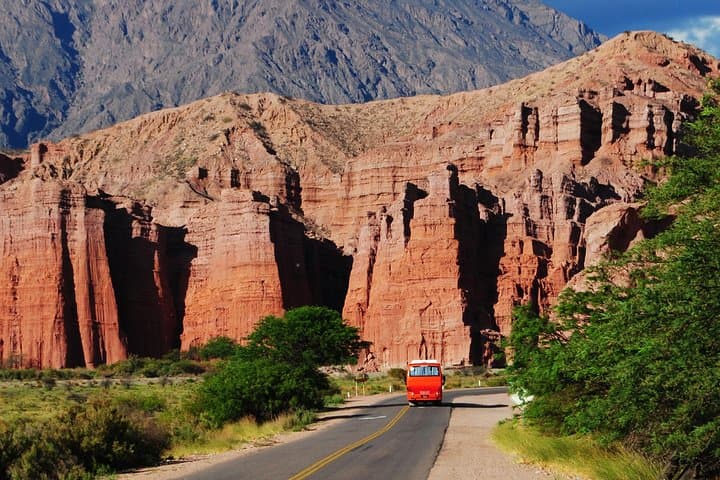
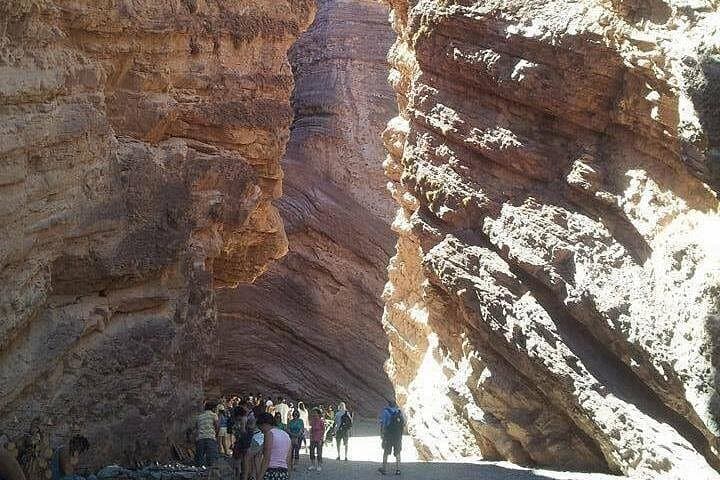


A morning bus pulls out of Salta before dawn and the highway immediately tilts into a different Argentina: an open, high desert folded into ribs of red, ochre and honey. The driver slows as the road threads a narrow gorge; through the window you can see towers of eroded sandstone—The Castles—standing like deliberate ruins. The guide's voice explains that these shapes, carved by wind and rain over millions of years, don’t just look dramatic, they acoustically shape the valley: shout once and the Amphitheatre answers.
A morning bus pulls out of Salta before dawn and the highway immediately tilts into a different Argentina: an open, high desert folded into ribs of red, ochre and honey. The driver slows as the road threads a narrow gorge; through the window you can see towers of eroded sandstone—The Castles—standing like deliberate ruins. The guide's voice explains that these shapes, carved by wind and rain over millions of years, don’t just look dramatic, they acoustically shape the valley: shout once and the Amphitheatre answers.
This circuit through the Calchaquí Valleys reads like a compact lesson in regional history and geology. The valleys were shaped by Andean uplift and subsequent erosion; the strata tilt visibly where ancient seabeds were pushed up and split. Indigenous Calchaquí peoples farmed these slopes long before the Spanish introduced viticulture in the 16th century. Today that colonial experiment has become Cafayate’s signature—torrontés and other high-altitude varietals that thrive in sunny days and cool nights.
Cafayate itself is a small town with broad plazas, low adobe façades and an improbable density of bodegas. The tour schedules a tasting at a local winery and enough free time to stroll cobbled streets, buy empanadas or inspect vines that run in precise rows against the backdrop of sculpted rock.
Practicalities are straightforward but worth planning for. Expect a long day—roughly 12–14 hours with about three to four hours of driving each way from Salta and roughly 380 km round-trip. Walking at the viewpoints is short but on uneven dirt; elevation at Cafayate is roughly 1,700 meters, so bring water and move slowly if you’re sensitive to altitude. National park or local fees are included, and wine tastings are standard on the itinerary—taste responsibly if you’re driving later.
Timing is everything: light in the late afternoon sculpts the Castles and the Amphitheatre best, but early morning brings clearer air. Wear sturdy shoes for short walks up to lookouts, a wide-brimmed hat, and layers—the valley bakes midday yet cools rapidly once the sun dips. Guides typically offer history notes at each stop; ask about small, family-run bodegas for a quieter tasting off the main route.
This is a day designed for contrasts—the quiet, bone-dry landscape of the Calchaquí and the cultivated geometry of vineyards—and for an active traveler who wants geological spectacle and a direct introduction to one of Argentina’s most distinctive wine regions.