THE ADVENTURE COLLECTIVE® · Independent discovery and booking for outdoor travel

This full-day drive from Calgary threads the Icefields Parkway’s most arresting stops: an icy walk through Johnston Canyon, the frozen expanse of Lake Louise, reflective Bow Lake, and the vivid viewpoint at Peyto. Expect dramatic waterfalls, glacial vistas, and a full day of photogenic pullouts and short walks.
This full-day drive from Calgary threads the Icefields Parkway’s most arresting stops: an icy walk through Johnston Canyon, the frozen expanse of Lake Louise, reflective Bow Lake, and the vivid viewpoint at Peyto. Expect dramatic waterfalls, glacial vistas, and a full day of photogenic pullouts and short walks.
The coach eases out of Calgary with a sky that still holds night’s cold. Windows fog as the city thins and the mountains loom—gray peaks like old fortresses against a pale winter sky. By midmorning you’re fastening crampons at the Johnston Canyon trailhead, the metal teeth eager against compacted snow. The canyon clamps down around you: black limestone cliffs, ice curtains hanging like chandeliers, and a creek that keeps running even when the surface is sealed. The walkways hug the rock, and each catwalk reveal—Lower Falls, then the higher cascades—arrives as a small, breath-stealing surprise.
Verified experiences and guided adventures in the surrounding area.
Operated by Banff ToDo · Lake Louise, Alberta
The coach eases out of Calgary with a sky that still holds night’s cold. Windows fog as the city thins and the mountains loom—gray peaks like old fortresses against a pale winter sky. By midmorning you’re fastening crampons at the Johnston Canyon trailhead, the metal teeth eager against compacted snow. The canyon clamps down around you: black limestone cliffs, ice curtains hanging like chandeliers, and a creek that keeps running even when the surface is sealed. The walkways hug the rock, and each catwalk reveal—Lower Falls, then the higher cascades—arrives as a small, breath-stealing surprise.
This single-day route stitches together signature landscapes of Banff National Park. The Icefields Parkway, completed in the 1930s, was carved to connect mountain communities and showcase glacial country; it still serves as the artery between Lake Louise and the Columbia Icefield. Geologically, these valleys were shaped by repeated glaciation—slow, grinding rivers of ice that gouged U-shaped basins and left behind rock flour that gives Peyto and Bow lakes their electric turquoise in warmer months. Culturally, the region is on traditional territory of the Stoney Nakoda and other Indigenous peoples; the lakes and passes were landmarks long before modern roads.
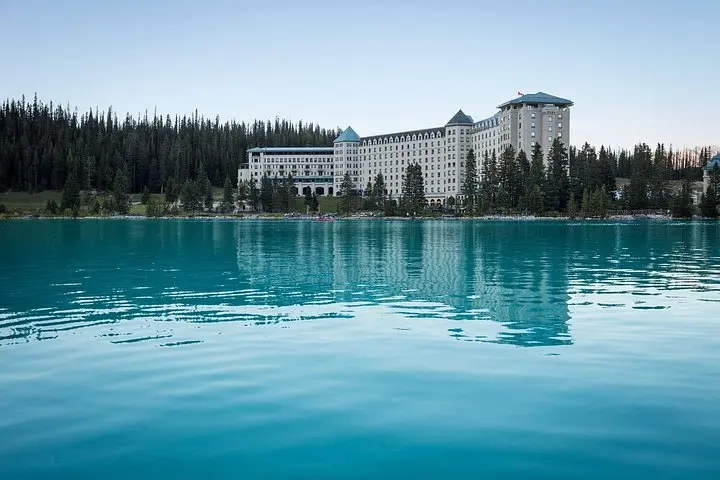
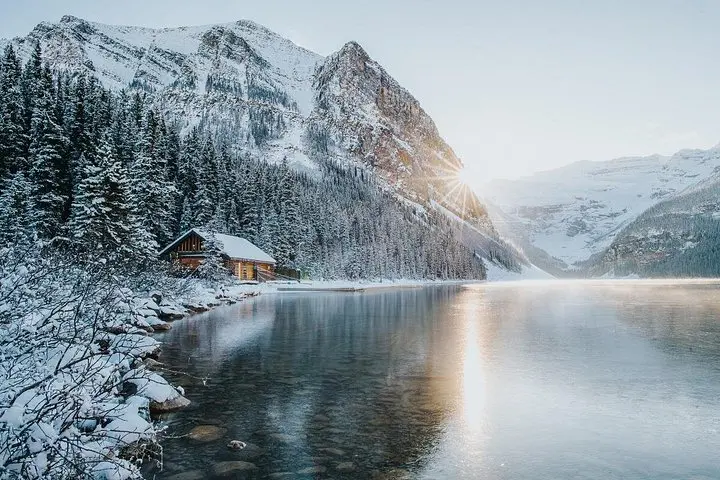
After Johnston Canyon the tour pushes higher—Lake Louise opens like a frozen mirror, Victoria Glacier a fringe of white at the far end. A stroll across the lakeshore or a short loop around the Chateau gives a close-up sense of scale: mountains shoulder up directly from the water. Further along the Parkway, Bow Lake reflects peaks on glass-calm days, and Peyto Lake rewards a short, steep walk from the Bow Summit viewpoint with a sweep of color and a maple-leaf-shaped shoreline you’ll recognize from postcards.
Practical notes: this is an 8–10 hour day (480–600 minutes) with multiple short walks—Johnston Canyon’s winter route is roughly 3–4 km round-trip with ~100–150 m cumulative elevation gain on icy metal walkways; Lake Louise shoreline loops are 1–3 km on flat, groomed surfaces; Peyto’s viewpoint sits about 600 m from the parking area with a brief, steeper ascent. Crampons are provided in winter and fit over sturdy, waterproof boots—use them; ice is deceptive and falls happen.
Bring layered insulation, waterproof boots, a warm hat and gloves, sunglasses for glare off snow, and at least 1–2 liters of water plus high-energy snacks. Expect cold wind at viewpoints and limited services at some stops—lunch is at your own expense. If you’re aiming for photography, aim for the softer light of mid-morning at the canyon and late afternoon along the Parkway when shadows sculpt the ranges. Above all: give yourself time between stops; the road is part of the attraction and the view often arrives between pullouts.
Yes—visitors to Banff National Park require a Parks Canada pass; many tour operators include it in the booking, but confirm with your provider before departure.
In winter, crampons are provided to use at your responsibility; staff will help fit them but you should bring appropriate boots.
Expect multiple short walks: Johnston Canyon ~3–4 km round-trip with modest elevation gain, Lake Louise shoreline loops of 1–3 km, and a 600 m uphill approach to Peyto’s viewpoint.
The tour is family-friendly but requires mobility for boardwalks and steps; it’s not recommended for those with serious cardiovascular or mobility limitations.
Lunch stop is at Lake Louise village or ski resort at your own expense—bring cash or card and warm layers; you can also pack a high-energy meal if you prefer.
Yes—many of the best viewpoints are a short walk from parking; arrive early on busy days to secure a good spot and shoot in softer light.
Banff ToDo operates guided outdoor trips and adventures with an emphasis on safety, stewardship, and memorable experiences.
The coach eases out of Calgary with a sky that still holds night’s cold. Windows fog as the city thins and the mountains loom—gray peaks like old fortresses against a pale winter sky. By midmorning you’re fastening crampons at the Johnston Canyon trailhead, the metal teeth eager against compacted snow. The canyon clamps down around you: black limestone cliffs, ice curtains hanging like chandeliers, and a creek that keeps running even when the surface is sealed. The walkways hug the rock, and each catwalk reveal—Lower Falls, then the higher cascades—arrives as a small, breath-stealing surprise.
The coach eases out of Calgary with a sky that still holds night’s cold. Windows fog as the city thins and the mountains loom—gray peaks like old fortresses against a pale winter sky. By midmorning you’re fastening crampons at the Johnston Canyon trailhead, the metal teeth eager against compacted snow. The canyon clamps down around you: black limestone cliffs, ice curtains hanging like chandeliers, and a creek that keeps running even when the surface is sealed. The walkways hug the rock, and each catwalk reveal—Lower Falls, then the higher cascades—arrives as a small, breath-stealing surprise.
This single-day route stitches together signature landscapes of Banff National Park. The Icefields Parkway, completed in the 1930s, was carved to connect mountain communities and showcase glacial country; it still serves as the artery between Lake Louise and the Columbia Icefield. Geologically, these valleys were shaped by repeated glaciation—slow, grinding rivers of ice that gouged U-shaped basins and left behind rock flour that gives Peyto and Bow lakes their electric turquoise in warmer months. Culturally, the region is on traditional territory of the Stoney Nakoda and other Indigenous peoples; the lakes and passes were landmarks long before modern roads.
After Johnston Canyon the tour pushes higher—Lake Louise opens like a frozen mirror, Victoria Glacier a fringe of white at the far end. A stroll across the lakeshore or a short loop around the Chateau gives a close-up sense of scale: mountains shoulder up directly from the water. Further along the Parkway, Bow Lake reflects peaks on glass-calm days, and Peyto Lake rewards a short, steep walk from the Bow Summit viewpoint with a sweep of color and a maple-leaf-shaped shoreline you’ll recognize from postcards.
Practical notes: this is an 8–10 hour day (480–600 minutes) with multiple short walks—Johnston Canyon’s winter route is roughly 3–4 km round-trip with ~100–150 m cumulative elevation gain on icy metal walkways; Lake Louise shoreline loops are 1–3 km on flat, groomed surfaces; Peyto’s viewpoint sits about 600 m from the parking area with a brief, steeper ascent. Crampons are provided in winter and fit over sturdy, waterproof boots—use them; ice is deceptive and falls happen.
Bring layered insulation, waterproof boots, a warm hat and gloves, sunglasses for glare off snow, and at least 1–2 liters of water plus high-energy snacks. Expect cold wind at viewpoints and limited services at some stops—lunch is at your own expense. If you’re aiming for photography, aim for the softer light of mid-morning at the canyon and late afternoon along the Parkway when shadows sculpt the ranges. Above all: give yourself time between stops; the road is part of the attraction and the view often arrives between pullouts.