THE ADVENTURE COLLECTIVE® · Independent discovery and booking for outdoor travel

Explore Cali by electric scooter: glide along the Cali River, pause at El Gato del Río and Jairo Varela Plaza, and sample authentic street food with a bilingual guide. This 3–4 hour tour mixes cultural history with easy urban riding.
Explore Cali by electric scooter: glide along the Cali River, pause at El Gato del Río and Jairo Varela Plaza, and sample authentic street food with a bilingual guide. This 3–4 hour tour mixes cultural history with easy urban riding.
Morning light cuts across the Cali River as electric scooters hum to life—your guide calls cadence, the city answers with distant salsa and cafe steam. On two wheels the streets open up: riverside greenery gives way to bronze cats, trumpet-shaped monuments, and a climb of tree-lined cobbles into the San Antonio neighborhood where the city tilts beneath you.
Verified experiences and guided adventures in the surrounding area.
Operated by Colombianbikeroads · Cali, Valle del Cauca
Morning light cuts across the Cali River as electric scooters hum to life—your guide calls cadence, the city answers with distant salsa and cafe steam. On two wheels the streets open up: riverside greenery gives way to bronze cats, trumpet-shaped monuments, and a climb of tree-lined cobbles into the San Antonio neighborhood where the city tilts beneath you.
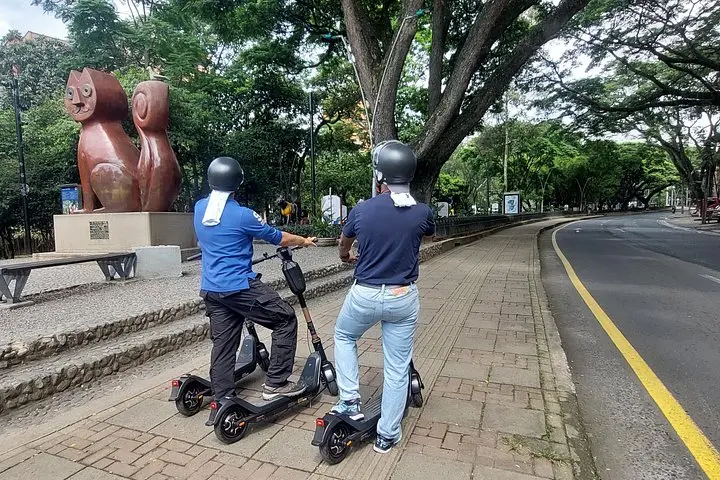
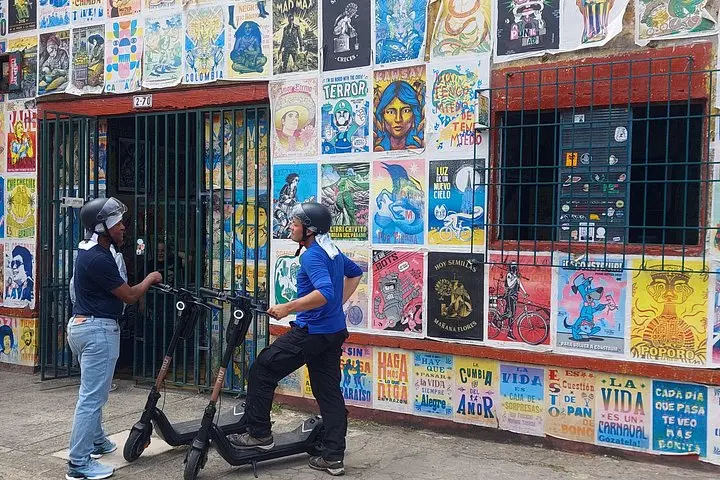
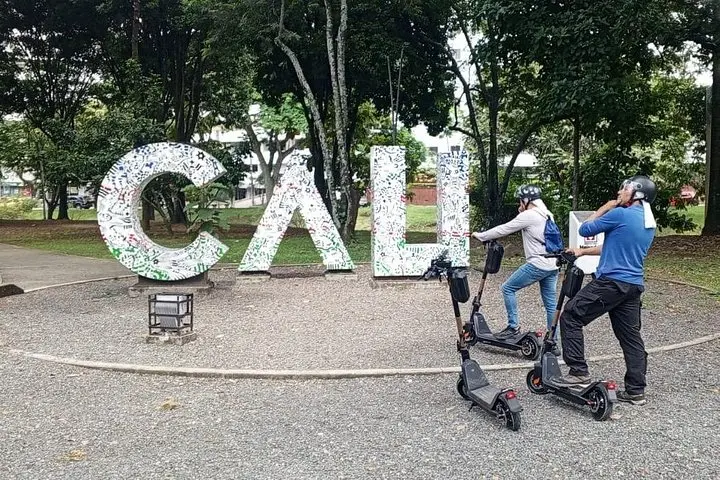
Cali sits in the Valle del Cauca between Colombia’s Western and Central Andean ranges; its urban form grew around the river that once shaped trade routes and neighborhood patterns. You’ll pass El Gato del Río, a public-art landmark by Hernando Tejada, and Jairo Varela Plaza, a living nod to the city’s salsa heritage. Historic churches like La Merced and San Francisco trace Spanish colonial origins back to the 16th–18th centuries, while places like Imprenta La Linterna preserve manual printmaking from the 20th century.
The route blends geology and culture: short hills and cobbled streets replace long climbs, and river breezes punctuate busy plazas. Expect stops for local street food—arepas, empanadas, seasonal fruit—and bilingual commentary that ties architecture to social life.
Practical notes: tours run about 3–4 hours with frequent stops; helmets and bottled water are provided but bring sunscreen, a small pack, and photo-ready layers. Morning departures avoid traffic and afternoon showers. If you’re comfortable balancing on an electric scooter and can manage a few short climbs, this ride gives a compact, sensory map of Cali’s past and present.
No—basic instruction is provided and the route stays on city streets with frequent stops; familiarity with scooters helps but is not mandatory.
Guides typically know local vendors and can point out common allergens; notify at booking and carry any necessary medications.
Tours are bilingual—typically Spanish and English—so most travelers can follow commentary and ask questions.
Children can participate if they can safely ride a scooter; infants are required to sit on an adult’s lap per operator policy and safety rules apply.
Colombianbikeroads operates guided outdoor trips and adventures with an emphasis on safety, stewardship, and memorable experiences.
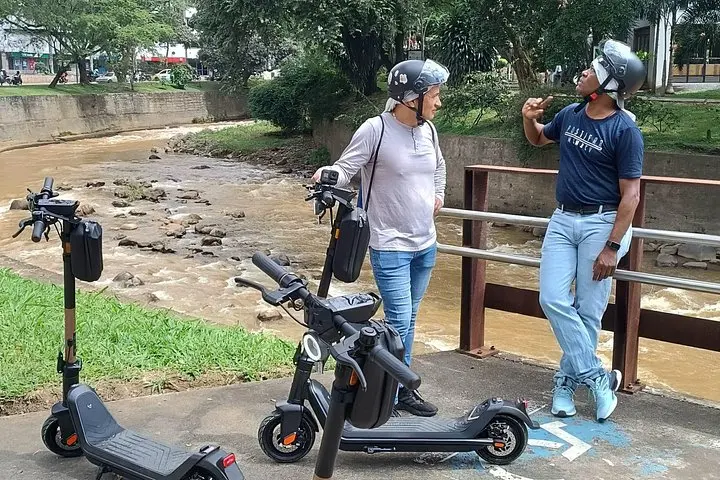
Morning light cuts across the Cali River as electric scooters hum to life—your guide calls cadence, the city answers with distant salsa and cafe steam. On two wheels the streets open up: riverside greenery gives way to bronze cats, trumpet-shaped monuments, and a climb of tree-lined cobbles into the San Antonio neighborhood where the city tilts beneath you.
Morning light cuts across the Cali River as electric scooters hum to life—your guide calls cadence, the city answers with distant salsa and cafe steam. On two wheels the streets open up: riverside greenery gives way to bronze cats, trumpet-shaped monuments, and a climb of tree-lined cobbles into the San Antonio neighborhood where the city tilts beneath you.
Cali sits in the Valle del Cauca between Colombia’s Western and Central Andean ranges; its urban form grew around the river that once shaped trade routes and neighborhood patterns. You’ll pass El Gato del Río, a public-art landmark by Hernando Tejada, and Jairo Varela Plaza, a living nod to the city’s salsa heritage. Historic churches like La Merced and San Francisco trace Spanish colonial origins back to the 16th–18th centuries, while places like Imprenta La Linterna preserve manual printmaking from the 20th century.
The route blends geology and culture: short hills and cobbled streets replace long climbs, and river breezes punctuate busy plazas. Expect stops for local street food—arepas, empanadas, seasonal fruit—and bilingual commentary that ties architecture to social life.
Practical notes: tours run about 3–4 hours with frequent stops; helmets and bottled water are provided but bring sunscreen, a small pack, and photo-ready layers. Morning departures avoid traffic and afternoon showers. If you’re comfortable balancing on an electric scooter and can manage a few short climbs, this ride gives a compact, sensory map of Cali’s past and present.