THE ADVENTURE COLLECTIVE® · Independent discovery and booking for outdoor travel

Ride a camel on the Giza Plateau with an Egyptologist at your side and feel the pyramids loom from the desert. This hour-long tour pairs brisk history lessons with a hands-on desert experience just outside the funerary stones of the pharaohs.
Ride a camel on the Giza Plateau with an Egyptologist at your side and feel the pyramids loom from the desert. This hour-long tour pairs brisk history lessons with a hands-on desert experience just outside the funerary stones of the pharaohs.
The sun sits low over the Giza Plateau and the desert breathes warm against your face as a camel pads forward, each deliberate step nudging you closer to the silhouettes of Khufu, Khafre and Menkaure.
Verified experiences and guided adventures in the surrounding area.
Operated by Pyramids On The Spot · Giza, Giza Governorate
The sun sits low over the Giza Plateau and the desert breathes warm against your face as a camel pads forward, each deliberate step nudging you closer to the silhouettes of Khufu, Khafre and Menkaure.
This short, atmospheric ride places you on the outside ring of one of the world’s oldest construction sites: limestone blocks and wind-polished sand underfoot, the plateau’s flat profile broken only by the pyramids’ angular geometry. The setting invites a quick primer in history — these monuments date to the Fourth Dynasty (about 4,500 years ago), raised on a limestone escarpment that overlooks the Nile floodplain and the modern sprawl of Greater Cairo.
Geologically, the plateau is a compacted mix of wind-blown sand and exposed bedrock; culturally, the area still hums with the commerce and ritual of modern Egypt — local camel handlers, souvenir vendors and the occasional chanting of a street vendor. An Egyptologist guide turns the ride into context: construction techniques, funerary customs, and the ongoing conservation challenges of tourism on fragile ancient stone.
Practically speaking: expect 30–60 minutes on a camel at a gentle pace and roughly 2–4 km of travel across uneven, sandy ground with negligible elevation gain. Wear closed-toe shoes, sun protection and bring water; handlers will usually provide basic saddling and a short safety briefing. Respect animal welfare, tip handlers, and use the ride as an economical, memorable way to see the pyramids’ exterior without long walks — but save time to walk closer to the sites and visit the Solar Boat Museum if your schedule allows.
The ride typically lasts 30–60 minutes; the total tour time is about 3–4 hours including hotel transfers and briefings.
Yes — children can ride, but infants may need to sit on a guardian’s lap and handlers may provide child seats; check the operator’s age rules when booking.
No prior experience is required; handlers saddle the camels and give basic safety instructions before you mount.
The camel route generally circles the plateau and offers excellent exterior views; access inside certain pyramids or closer excavation areas may require a separate ticket and time.
Pyramids On The Spot operates guided outdoor trips and adventures with an emphasis on safety, stewardship, and memorable experiences.
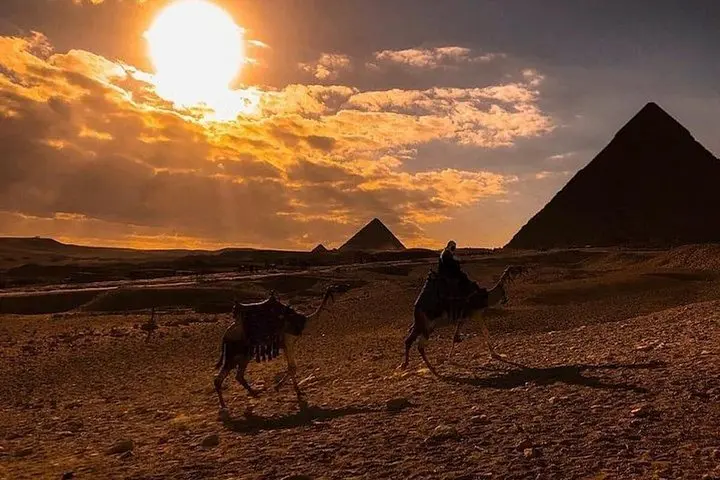
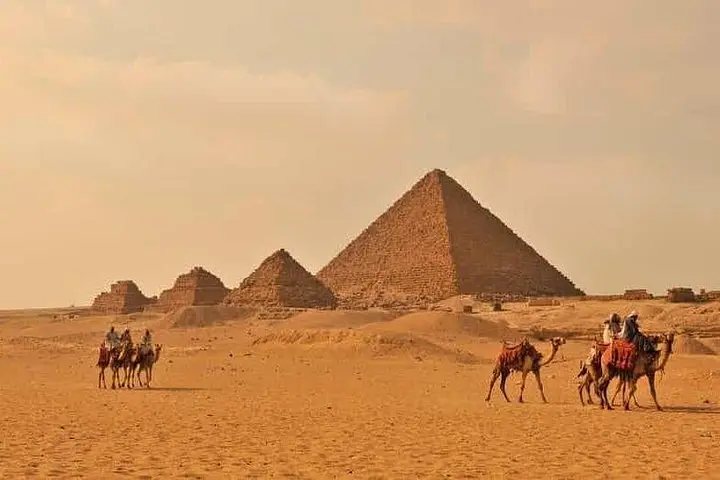
The sun sits low over the Giza Plateau and the desert breathes warm against your face as a camel pads forward, each deliberate step nudging you closer to the silhouettes of Khufu, Khafre and Menkaure.
The sun sits low over the Giza Plateau and the desert breathes warm against your face as a camel pads forward, each deliberate step nudging you closer to the silhouettes of Khufu, Khafre and Menkaure.
This short, atmospheric ride places you on the outside ring of one of the world’s oldest construction sites: limestone blocks and wind-polished sand underfoot, the plateau’s flat profile broken only by the pyramids’ angular geometry. The setting invites a quick primer in history — these monuments date to the Fourth Dynasty (about 4,500 years ago), raised on a limestone escarpment that overlooks the Nile floodplain and the modern sprawl of Greater Cairo.
Geologically, the plateau is a compacted mix of wind-blown sand and exposed bedrock; culturally, the area still hums with the commerce and ritual of modern Egypt — local camel handlers, souvenir vendors and the occasional chanting of a street vendor. An Egyptologist guide turns the ride into context: construction techniques, funerary customs, and the ongoing conservation challenges of tourism on fragile ancient stone.
Practically speaking: expect 30–60 minutes on a camel at a gentle pace and roughly 2–4 km of travel across uneven, sandy ground with negligible elevation gain. Wear closed-toe shoes, sun protection and bring water; handlers will usually provide basic saddling and a short safety briefing. Respect animal welfare, tip handlers, and use the ride as an economical, memorable way to see the pyramids’ exterior without long walks — but save time to walk closer to the sites and visit the Solar Boat Museum if your schedule allows.