THE ADVENTURE COLLECTIVE® · Independent discovery and booking for outdoor travel

Ride a camel across the Giza Plateau, stand before the Great Pyramid and later explore five millennia of artifacts in the Egyptian Museum. This private day tour bundles iconic sights with hotel pickup and a local guide to streamline a full Cairo experience.
Ride a camel across the Giza Plateau, stand before the Great Pyramid and later explore five millennia of artifacts in the Egyptian Museum. This private day tour bundles iconic sights with hotel pickup and a local guide to streamline a full Cairo experience.
You step out of the air-conditioned van into a wash of dry heat; wind moves the sand like an impatient guide and the pyramids loom, angular and patient, against a hard blue sky. A camel exhales and shifts its weight; the plateau opens beneath you and the Giza complex reads like stone chapters—Cheops, Chephren and Mykerinus—each block holding millennia of labor and sun.
Verified experiences and guided adventures in the surrounding area.
Operated by Sun Pyramids Tours · Giza, Cairo Governorate
You step out of the air-conditioned van into a wash of dry heat; wind moves the sand like an impatient guide and the pyramids loom, angular and patient, against a hard blue sky. A camel exhales and shifts its weight; the plateau opens beneath you and the Giza complex reads like stone chapters—Cheops, Chephren and Mykerinus—each block holding millennia of labor and sun.
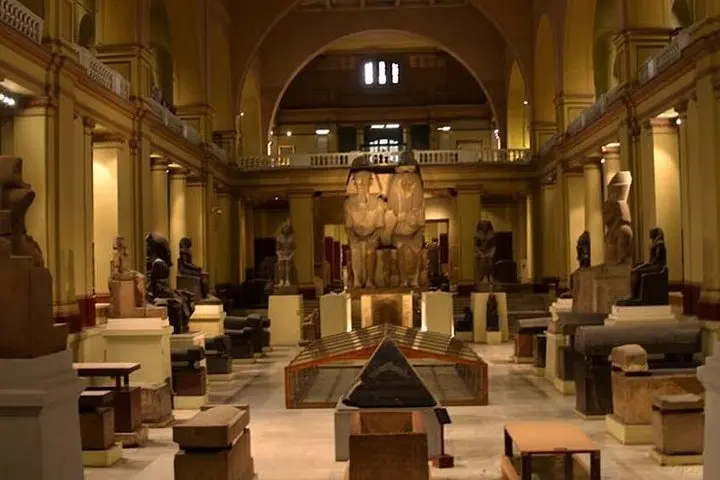
The monuments date to Egypt’s Fourth Dynasty, around 4,500 years ago; the plateau’s limestone bedrock was quarried here and set into geometric order that still defies simple explanation. Nearby, the Egyptian Museum in Cairo consolidates the cultural arc—mummies, funerary goods, and Tutankhamun’s gold pieces—showing how burial practice, religion and political power interlocked.
Expect close-up archaeology, a brief dune-wind ballet while mounted, and a museum visit that moves from open-air monumentality to packed vitrines. Local guides translate inscriptions into narratives and vendors gesture toward papyrus prints and small replicas; bargaining is part of the rhythm.
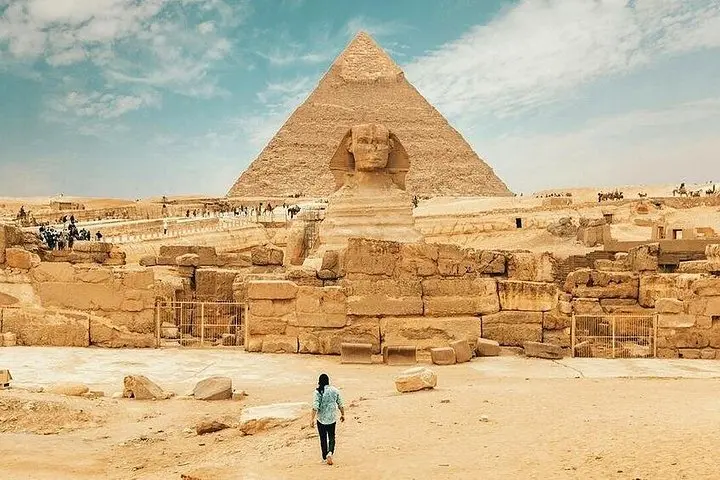
Practical guidance: wear sturdy shoes for the plateau (sand hides uneven stone), bring sun protection, and carry small bills for tips. Photography is allowed in open areas but restricted for some museum exhibits; follow your guide’s instructions. The day is a loop—hotel pickup, 2–3 hours at Giza (including camel time), a Sphinx stop and valley temple visit, then 1–2 hours at the Egyptian Museum, and return.
Timing matters: mornings are cooler and clearer for photos; afternoons bring heat haze. Respect signage—climbing is prohibited and stresses fragile masonry. With basic preparation this private tour compresses big slices of Egypt into a single, surprisingly manageable day.
Yes, the itinerary includes a camel ride on the Giza Plateau as part of the private tour.
Entrance fees to the pyramids, Sphinx, Valley Temple and the Egyptian Museum are included in the tour price.
The tour lists wheelchair accessibility, but the plateau and some museum areas have uneven surfaces—check with the operator about specific assistance needs before booking.
Modest, breathable clothing is recommended; cover shoulders and knees for comfort and cultural respect, and remove hats inside museum galleries.
Sun Pyramids Tours operates guided outdoor trips and adventures with an emphasis on safety, stewardship, and memorable experiences.
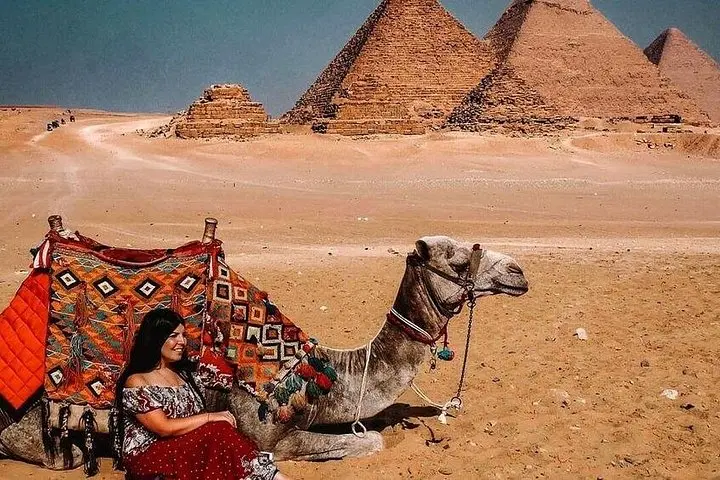
You step out of the air-conditioned van into a wash of dry heat; wind moves the sand like an impatient guide and the pyramids loom, angular and patient, against a hard blue sky. A camel exhales and shifts its weight; the plateau opens beneath you and the Giza complex reads like stone chapters—Cheops, Chephren and Mykerinus—each block holding millennia of labor and sun.
You step out of the air-conditioned van into a wash of dry heat; wind moves the sand like an impatient guide and the pyramids loom, angular and patient, against a hard blue sky. A camel exhales and shifts its weight; the plateau opens beneath you and the Giza complex reads like stone chapters—Cheops, Chephren and Mykerinus—each block holding millennia of labor and sun.
The monuments date to Egypt’s Fourth Dynasty, around 4,500 years ago; the plateau’s limestone bedrock was quarried here and set into geometric order that still defies simple explanation. Nearby, the Egyptian Museum in Cairo consolidates the cultural arc—mummies, funerary goods, and Tutankhamun’s gold pieces—showing how burial practice, religion and political power interlocked.
Expect close-up archaeology, a brief dune-wind ballet while mounted, and a museum visit that moves from open-air monumentality to packed vitrines. Local guides translate inscriptions into narratives and vendors gesture toward papyrus prints and small replicas; bargaining is part of the rhythm.
Practical guidance: wear sturdy shoes for the plateau (sand hides uneven stone), bring sun protection, and carry small bills for tips. Photography is allowed in open areas but restricted for some museum exhibits; follow your guide’s instructions. The day is a loop—hotel pickup, 2–3 hours at Giza (including camel time), a Sphinx stop and valley temple visit, then 1–2 hours at the Egyptian Museum, and return.
Timing matters: mornings are cooler and clearer for photos; afternoons bring heat haze. Respect signage—climbing is prohibited and stresses fragile masonry. With basic preparation this private tour compresses big slices of Egypt into a single, surprisingly manageable day.