THE ADVENTURE COLLECTIVE® · Independent discovery and booking for outdoor travel

Take a guided camel ride around the Giza Pyramids at sunset for close-up views of Khufu, Khafre and Menkaure. This easy, cultural desert safari pairs a gentle ride with local snacks and photo stops near the Sphinx and Solar Boat Museum.
Take a guided camel ride around the Giza Pyramids at sunset for close-up views of Khufu, Khafre and Menkaure. This easy, cultural desert safari pairs a gentle ride with local snacks and photo stops near the Sphinx and Solar Boat Museum.
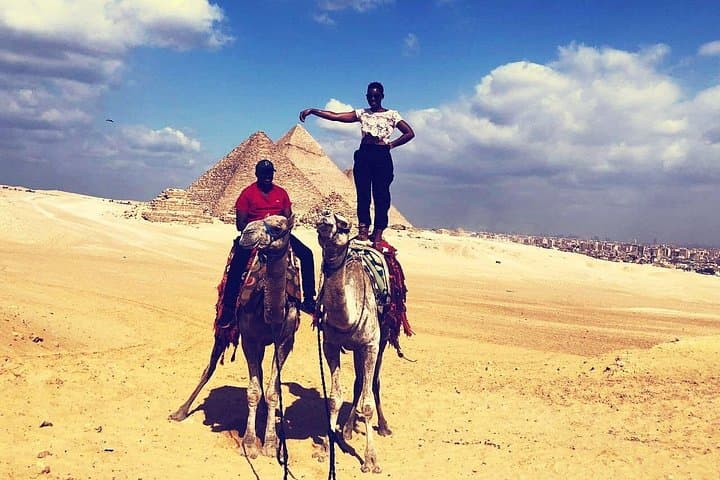
The sun dips low over the Giza Plateau and the desert exhales warmth; you climb onto a camel’s broad back and the animals begin a slow, rolling gait that makes the pyramids shift from monumental silhouettes to intimate companions.
Verified experiences and guided adventures in the surrounding area.
Operated by Three Pyramids Tours · Giza, Cairo Governorate
The sun dips low over the Giza Plateau and the desert exhales warmth; you climb onto a camel’s broad back and the animals begin a slow, rolling gait that makes the pyramids shift from monumental silhouettes to intimate companions.
This short safari places you beside the three main pyramids—Khufu (Great Pyramid), Khafre and Menkaure—built in the Fourth Dynasty around 2500 BCE as royal tombs. The limestone plateau is not only archaeology but geology: wind-polished bedrock and quarry scars intermingle with millennia-old masonry. Local camel handlers maintain a living tradition of camel husbandry and caravan skills that have shaped the area's culture for generations.
Expect a calm, guided ride that lasts under an hour on flat, sandy ground; the camels are domesticated and trained for tourists, but the desert keeps its own tempo—hot by day, cooling quickly at sunset. Evenings often finish with light snacks and a chance to watch the pyramids change color as the light fades.
Practical guidance: arrive hydrated and sun-smart, wear closed-toe shoes for sandy footing, and budget time for photos from multiple angles (the Sphinx plaza and the Solar Boat Museum are nearby). Note physical limits: camel mounting involves a brief, coordinated lean and saddle shift; travelers with spinal issues should avoid riding. Respect restricted zones—do not climb on monuments—and follow your guide’s directions for both safety and preservation.
A camel ride at Giza is brief but sensory: the animal’s steady sway, the grit of sand, and a sunset that makes ancient stone feel present and urgent.
The riding portion is typically 30–60 minutes; the full tour with hotel transfer, stops and snacks runs about 3–5 hours.
Children often ride with adult supervision; however, the tour is not recommended for people with spinal injuries or serious back issues due to the camel’s motion.
Climbing the pyramids is prohibited; access to the Sphinx area is possible from designated viewing points, and the Solar Boat Museum requires a separate admission.
Tipping is customary in Egypt; a small tip for the camel handler and the guide is appreciated and supports local staff.
Three Pyramids Tours operates guided outdoor trips and adventures with an emphasis on safety, stewardship, and memorable experiences.

The sun dips low over the Giza Plateau and the desert exhales warmth; you climb onto a camel’s broad back and the animals begin a slow, rolling gait that makes the pyramids shift from monumental silhouettes to intimate companions.
The sun dips low over the Giza Plateau and the desert exhales warmth; you climb onto a camel’s broad back and the animals begin a slow, rolling gait that makes the pyramids shift from monumental silhouettes to intimate companions.
This short safari places you beside the three main pyramids—Khufu (Great Pyramid), Khafre and Menkaure—built in the Fourth Dynasty around 2500 BCE as royal tombs. The limestone plateau is not only archaeology but geology: wind-polished bedrock and quarry scars intermingle with millennia-old masonry. Local camel handlers maintain a living tradition of camel husbandry and caravan skills that have shaped the area's culture for generations.
Expect a calm, guided ride that lasts under an hour on flat, sandy ground; the camels are domesticated and trained for tourists, but the desert keeps its own tempo—hot by day, cooling quickly at sunset. Evenings often finish with light snacks and a chance to watch the pyramids change color as the light fades.
Practical guidance: arrive hydrated and sun-smart, wear closed-toe shoes for sandy footing, and budget time for photos from multiple angles (the Sphinx plaza and the Solar Boat Museum are nearby). Note physical limits: camel mounting involves a brief, coordinated lean and saddle shift; travelers with spinal issues should avoid riding. Respect restricted zones—do not climb on monuments—and follow your guide’s directions for both safety and preservation.
A camel ride at Giza is brief but sensory: the animal’s steady sway, the grit of sand, and a sunset that makes ancient stone feel present and urgent.