THE ADVENTURE COLLECTIVE® · Independent discovery and booking for outdoor travel

Ride a camel around the Giza Plateau for a slow, panoramic approach to the Great Pyramids and Sphinx. This guided 5–6 hour tour combines hotel transfer, expert narration and desert scenery—ideal for first‑time visitors who want an immersive historic view without strenuous effort.
Ride a camel around the Giza Plateau for a slow, panoramic approach to the Great Pyramids and Sphinx. This guided 5–6 hour tour combines hotel transfer, expert narration and desert scenery—ideal for first‑time visitors who want an immersive historic view without strenuous effort.
You step from an air‑conditioned vehicle into a sun‑bright plain where the stone faces of Cheops, Chephren and Mykerinus command the skyline. A camel waits, patient and steady, its slow sway already setting the pace as you circle the plateau and the Great Sphinx watches from its limestone pedestal.
Verified experiences and guided adventures in the surrounding area.
Operated by Visitors Egypt Tours · Giza, Giza Governorate
You step from an air‑conditioned vehicle into a sun‑bright plain where the stone faces of Cheops, Chephren and Mykerinus command the skyline. A camel waits, patient and steady, its slow sway already setting the pace as you circle the plateau and the Great Sphinx watches from its limestone pedestal.
These monuments date to the Fourth Dynasty (c. 2600–2500 BCE), built as royal tombs lodged on a bedrock ridge carved by ancient Nile floods. The surrounding painted desert—wind‑scoured sand and low scrub—frames the pyramids and keeps the sound level small: the creak of a saddle, the guide’s voice, distant traffic from modern Cairo.
Local guides mix archaeology with oral lore, pointing out the Valley Temple, the Solar Boat Museum site and the way the casing stones once caught the dawn. Cultural rhythms are visible in the small mosques, the vendors offering tea, and the timeless caravans of tourist camels and horses.
Practicalities: tours run about 5–6 hours including hotel transfer; rides are gentle and suitable for most fitness levels, but mounting requires basic mobility. Carry water, sun protection and wear closed‑toe shoes—sand gets in everywhere. Photography is exceptional at golden hour when shadows sharpen the pyramid profiles; avoid midday heat. Respect barriers and signage—climbing the pyramids is prohibited and enforced. If you prefer, a horse can be arranged instead of a camel. Expect a mix of paved approaches and soft sand underfoot, intermittent saddle sway and wide, panoramic sightlines that keep the ancient stone in constant focus.
Yes — this tour lists admission included, so the guide handles park entry for the group.
Generally yes; the ride is gentle and suitable for most fitness levels, but it's not recommended for people with spinal injuries or severe mobility limits.
Yes — the operator can arrange a horse instead of a camel on request.
No — climbing the pyramids is prohibited and enforced; follow signage and your guide’s instructions for permitted viewing areas.
Visitors Egypt Tours operates guided outdoor trips and adventures with an emphasis on safety, stewardship, and memorable experiences.
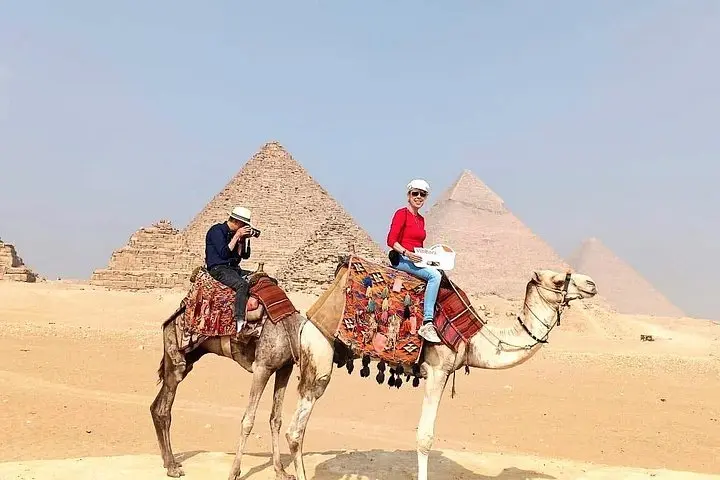
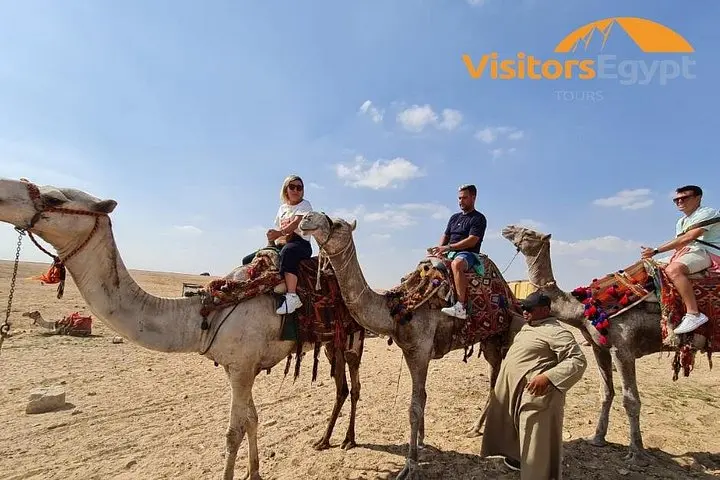
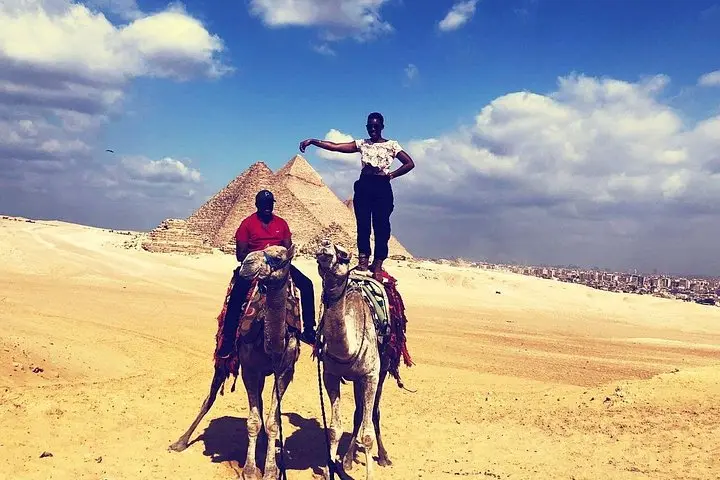
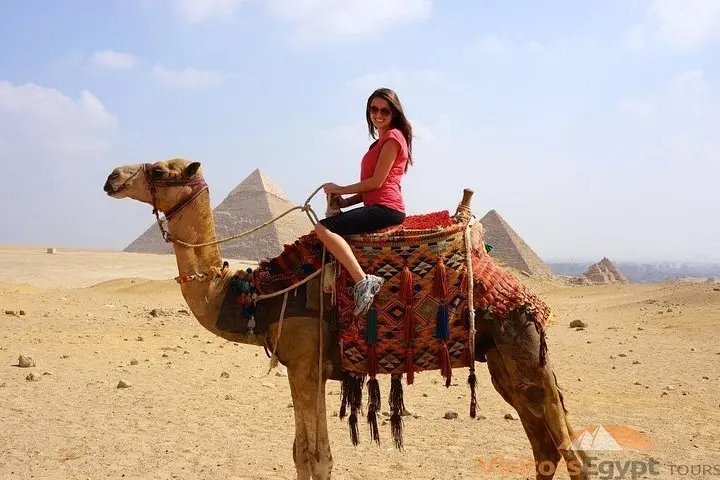
You step from an air‑conditioned vehicle into a sun‑bright plain where the stone faces of Cheops, Chephren and Mykerinus command the skyline. A camel waits, patient and steady, its slow sway already setting the pace as you circle the plateau and the Great Sphinx watches from its limestone pedestal.
You step from an air‑conditioned vehicle into a sun‑bright plain where the stone faces of Cheops, Chephren and Mykerinus command the skyline. A camel waits, patient and steady, its slow sway already setting the pace as you circle the plateau and the Great Sphinx watches from its limestone pedestal.
These monuments date to the Fourth Dynasty (c. 2600–2500 BCE), built as royal tombs lodged on a bedrock ridge carved by ancient Nile floods. The surrounding painted desert—wind‑scoured sand and low scrub—frames the pyramids and keeps the sound level small: the creak of a saddle, the guide’s voice, distant traffic from modern Cairo.
Local guides mix archaeology with oral lore, pointing out the Valley Temple, the Solar Boat Museum site and the way the casing stones once caught the dawn. Cultural rhythms are visible in the small mosques, the vendors offering tea, and the timeless caravans of tourist camels and horses.
Practicalities: tours run about 5–6 hours including hotel transfer; rides are gentle and suitable for most fitness levels, but mounting requires basic mobility. Carry water, sun protection and wear closed‑toe shoes—sand gets in everywhere. Photography is exceptional at golden hour when shadows sharpen the pyramid profiles; avoid midday heat. Respect barriers and signage—climbing the pyramids is prohibited and enforced. If you prefer, a horse can be arranged instead of a camel. Expect a mix of paved approaches and soft sand underfoot, intermittent saddle sway and wide, panoramic sightlines that keep the ancient stone in constant focus.