THE ADVENTURE COLLECTIVE® · Independent discovery and booking for outdoor travel

Mount a gentle camel and cross the wind-shaped dunes of Maspalomas on a short, guided 30-minute ride. Learn the reserve’s natural history, practical tips for sun and sand, and what to expect from this classic Gran Canaria experience.
Mount a gentle camel and cross the wind-shaped dunes of Maspalomas on a short, guided 30-minute ride. Learn the reserve’s natural history, practical tips for sun and sand, and what to expect from this classic Gran Canaria experience.
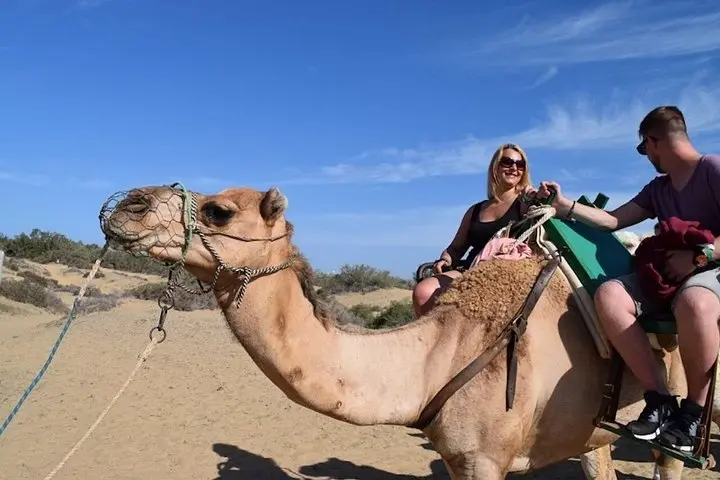
Stand on the warm edge of the Atlantic and the dunes rise and shift like a living map — wind-sculpted ridges that push inland from the shoreline. A single-file line of camels moves slowly across that pale sea of sand; the animals’ steady gait and two-seater saddles make the dunes feel momentarily like an ancient caravan route reimagined for today’s traveler.
Verified experiences and guided adventures in the surrounding area.
Operated by Tour2b · Maspalomas, Gran Canaria
Stand on the warm edge of the Atlantic and the dunes rise and shift like a living map — wind-sculpted ridges that push inland from the shoreline. A single-file line of camels moves slowly across that pale sea of sand; the animals’ steady gait and two-seater saddles make the dunes feel momentarily like an ancient caravan route reimagined for today’s traveler.
The Dunas de Maspalomas are a protected coastal reserve shaped by wind, tides and sediment from nearby beaches. Close by, the Maspalomas lighthouse and the old salt flats speak to the island’s maritime and economic past: salt extraction and navigation anchored this stretch long before tourism arrived. The camel trek itself is a modern, visitor-focused experience — short, guided and designed for people of all ages who want a tactile way to meet the landscape and the animals.
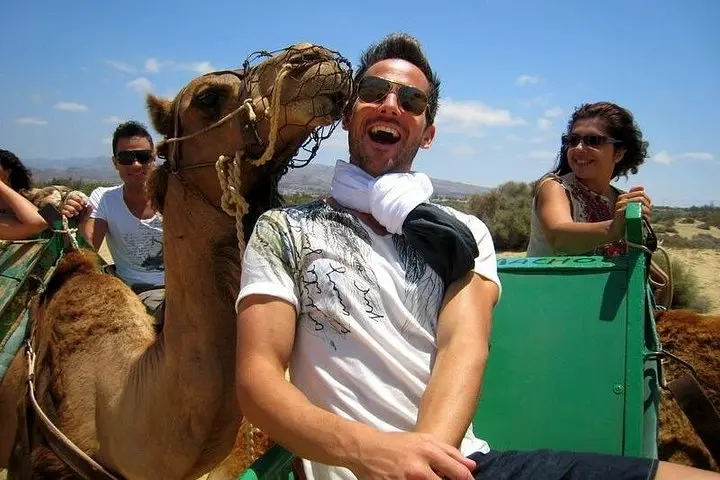
Expect about 30 minutes on camelback with departures every 20 minutes in morning slots; the provider uses two-seater saddles and enforces a 100 kg (220 lb) rider limit for safety. The terrain is compacted sand and gentle slopes — no scrambling, but sun and reflected heat amplify exposure. Public transit serves Maspalomas and Playa del Inglés, and a brief walk takes you to the dune edge where guides handle mounting and dismounting.
Practical preparation matters: strong sun protection, a refillable water bottle, and footwear that stays on in sand make the ride easier. Respect the reserve by staying on designated tracks and follow the guide’s instructions around the animals — they are calm, but part of a sensitive ecosystem that deserves quiet, careful visitation.
The guided ride itself runs about 30 minutes; allow extra time for check-in, briefing and mounting.
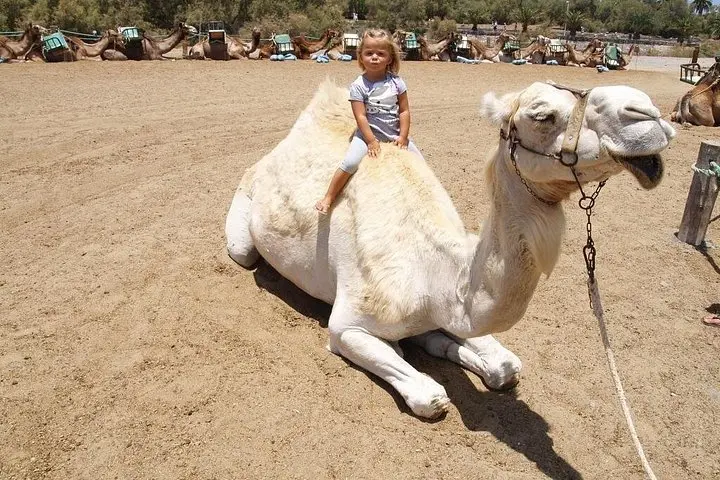
There’s a usual maximum weight of around 100 kg (220 lbs); children under 3 often ride free on a parent’s lap—confirm specifics with the operator.
Rides typically operate in morning windows with departures every 20 minutes (commonly around 09:00–11:00); schedules may vary seasonally.
Access is limited by sand terrain and mounting steps; assistance is provided but those with significant mobility restrictions should check with the operator beforehand.
Tour2b operates guided outdoor trips and adventures with an emphasis on safety, stewardship, and memorable experiences.
Stand on the warm edge of the Atlantic and the dunes rise and shift like a living map — wind-sculpted ridges that push inland from the shoreline. A single-file line of camels moves slowly across that pale sea of sand; the animals’ steady gait and two-seater saddles make the dunes feel momentarily like an ancient caravan route reimagined for today’s traveler.
Stand on the warm edge of the Atlantic and the dunes rise and shift like a living map — wind-sculpted ridges that push inland from the shoreline. A single-file line of camels moves slowly across that pale sea of sand; the animals’ steady gait and two-seater saddles make the dunes feel momentarily like an ancient caravan route reimagined for today’s traveler.
The Dunas de Maspalomas are a protected coastal reserve shaped by wind, tides and sediment from nearby beaches. Close by, the Maspalomas lighthouse and the old salt flats speak to the island’s maritime and economic past: salt extraction and navigation anchored this stretch long before tourism arrived. The camel trek itself is a modern, visitor-focused experience — short, guided and designed for people of all ages who want a tactile way to meet the landscape and the animals.
Expect about 30 minutes on camelback with departures every 20 minutes in morning slots; the provider uses two-seater saddles and enforces a 100 kg (220 lb) rider limit for safety. The terrain is compacted sand and gentle slopes — no scrambling, but sun and reflected heat amplify exposure. Public transit serves Maspalomas and Playa del Inglés, and a brief walk takes you to the dune edge where guides handle mounting and dismounting.
Practical preparation matters: strong sun protection, a refillable water bottle, and footwear that stays on in sand make the ride easier. Respect the reserve by staying on designated tracks and follow the guide’s instructions around the animals — they are calm, but part of a sensitive ecosystem that deserves quiet, careful visitation.