THE ADVENTURE COLLECTIVE® · Independent discovery and booking for outdoor travel

Ride a camel across Luxor’s West Bank at sunrise or sunset, pausing for tea and sweeping valley views. This gentle, guided experience requires no prior skill and pairs historical sights with quiet desert landscapes.
Ride a camel across Luxor’s West Bank at sunrise or sunset, pausing for tea and sweeping valley views. This gentle, guided experience requires no prior skill and pairs historical sights with quiet desert landscapes.
You climb into the saddle as the desert breathes around you — sand warming underfoot, the Nile glinting in the distance, and a caravan of camels easing into a slow, swaying rhythm.
Verified experiences and guided adventures in the surrounding area.
Operated by Nobi Stables - Luxorstables · Luxor, Luxor Governorate
You climb into the saddle as the desert breathes around you — sand warming underfoot, the Nile glinting in the distance, and a caravan of camels easing into a slow, swaying rhythm.
On Luxor’s West Bank, where the valley rolls from cultivated fields to scrub and low desert, camel rides thread past local villages and ancient sites. The landscape here is geologically simple — alluvial plains giving way to limestone escarpments that hold the tombs and temples of Thebes. Historically the West Bank was the burial ground of pharaohs; today its quiet tracks still carry the echo of processions and farmers’ donkeys. Camels, long used by Bedouin and Nile‑valley communities, offer a steady, human-paced way to take in that history.
Guides typically time excursions for sunrise balloons or for golden‑hour sunsets; special packages include tea in the desert or longer mountain viewpoints above the valley. Expect gentle riding — no prior experience needed — and regular pauses to rest and drink water.
Practicalities: wear long sleeves for sun protection, closed-toe shoes for mounting, and bring layered clothing for cool mornings and warm afternoons. Hydration matters — carry at least 1–2 liters per person for multi‑hour rides. Respect the animals: follow your guide’s instructions mounting, dismounting, and hand‑feeding rules. If you have spinal, cardiovascular concerns, or are pregnant, choose another activity; the ride’s motion and mounting can strain vulnerable bodies.
A camel tour in Luxor is equal parts cultural snapshot and slow-travel adventure — immersive, accessible, and easy to slot into a day of temple visits.
No — guides provide basic instruction and camels used on these tours are trained for riders of all levels.
Reputable operators maintain animal welfare standards; ask about rest breaks, feeding, and veterinary care before booking.
Many operators offer pickup from central Luxor hotels; confirm pickup point and any additional fees when booking.
Children can ride; infants may ride if supported — check age and weight limits and request appropriate safety arrangements.
Nobi Stables - Luxorstables operates guided outdoor trips and adventures with an emphasis on safety, stewardship, and memorable experiences.


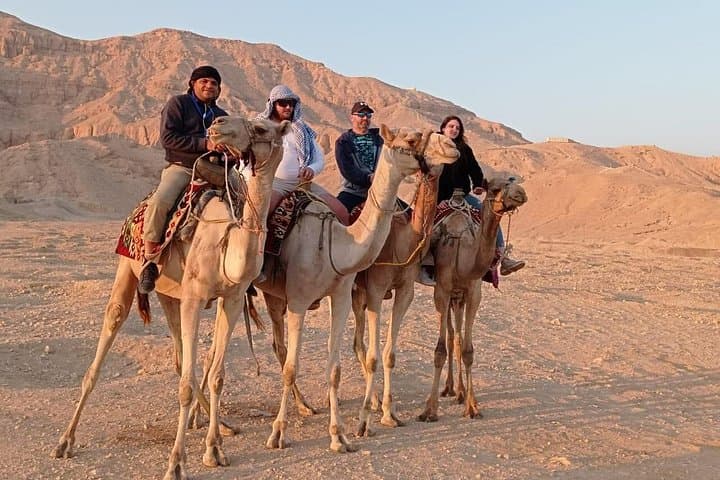

You climb into the saddle as the desert breathes around you — sand warming underfoot, the Nile glinting in the distance, and a caravan of camels easing into a slow, swaying rhythm.
You climb into the saddle as the desert breathes around you — sand warming underfoot, the Nile glinting in the distance, and a caravan of camels easing into a slow, swaying rhythm.
On Luxor’s West Bank, where the valley rolls from cultivated fields to scrub and low desert, camel rides thread past local villages and ancient sites. The landscape here is geologically simple — alluvial plains giving way to limestone escarpments that hold the tombs and temples of Thebes. Historically the West Bank was the burial ground of pharaohs; today its quiet tracks still carry the echo of processions and farmers’ donkeys. Camels, long used by Bedouin and Nile‑valley communities, offer a steady, human-paced way to take in that history.
Guides typically time excursions for sunrise balloons or for golden‑hour sunsets; special packages include tea in the desert or longer mountain viewpoints above the valley. Expect gentle riding — no prior experience needed — and regular pauses to rest and drink water.
Practicalities: wear long sleeves for sun protection, closed-toe shoes for mounting, and bring layered clothing for cool mornings and warm afternoons. Hydration matters — carry at least 1–2 liters per person for multi‑hour rides. Respect the animals: follow your guide’s instructions mounting, dismounting, and hand‑feeding rules. If you have spinal, cardiovascular concerns, or are pregnant, choose another activity; the ride’s motion and mounting can strain vulnerable bodies.
A camel tour in Luxor is equal parts cultural snapshot and slow-travel adventure — immersive, accessible, and easy to slot into a day of temple visits.