THE ADVENTURE COLLECTIVE® · Independent discovery and booking for outdoor travel

Ride a camel along Sawangan’s white sand and pair a quiet beachfront hour with a visit to the cliffside Uluwatu Temple. This half-day tour blends unique photo ops with Balinese coastal history and straightforward logistics for travelers.
Ride a camel along Sawangan’s white sand and pair a quiet beachfront hour with a visit to the cliffside Uluwatu Temple. This half-day tour blends unique photo ops with Balinese coastal history and straightforward logistics for travelers.
The first step onto Sawangan’s white sand feels deliberate: the ocean pulls at the shoreline while a patient camel rises and lowers like a small dune of muscle and fur. Riders move off the beach in a steady, caravan-like pace, silhouettes etched against an open sea that pushes the horizon wide.
Verified experiences and guided adventures in the surrounding area.
Operated by Sewa Mobil Bali · Nusa Dua, Bali
The first step onto Sawangan’s white sand feels deliberate: the ocean pulls at the shoreline while a patient camel rises and lowers like a small dune of muscle and fur. Riders move off the beach in a steady, caravan-like pace, silhouettes etched against an open sea that pushes the horizon wide.
This strip of southern Bali sits on the Bukit Peninsula, a limestone shelf folded by ancient coral uplift and wave-cut cliffs. Nearby, Uluwatu Temple perches on a jagged promontory—an 11th-century sea temple that has watched local fishermen and Kecak dancers for generations. The camel ride itself is a modern insertion: camels are not native here but create Sahara-like photo moments against tropical surf and the low, stubbled scrub of the bukit.
Culture and coastline meet: expect Balinese offerings, cliffside shrines, and the watchful macaques that frequent Uluwatu. The experience is sensory and straightforward—wind, salt, the slow gait of an animal calibrated for steady travel.
Practical guidance: rides run about 60 minutes on the sand within a half-day tour that often includes hotel transfers and an Uluwatu entrance. Note strict weight and health limits; riders should be reasonably steady mounting and dismounting. Aim for late afternoon for softer light and cooler temperatures, and bring sun protection and a low-profile day pack. Hydrate ahead of time and wear supportive closed shoes for sandy and occasionally rocky approaches. The operator provides basic safety briefings; longer waits between activities are common, so pack patience along with camera memory.
The camel ride on the beach is approximately 60 minutes, usually part of a half-day tour that includes transfers and time at Uluwatu Temple.
Yes—many operators limit riders to around 75 kg and restrict people with certain spinal, heart, or pregnancy-related conditions; check before booking.
Typical itineraries include Uluwatu entrance and parking fees, but confirm inclusions when you book as offerings vary by operator.
Children can ride but must meet the operator’s size and safety rules; young kids are usually paired with an adult on the same camel or require a solo camel if over the minimum safe weight.
Sewa Mobil Bali operates guided outdoor trips and adventures with an emphasis on safety, stewardship, and memorable experiences.
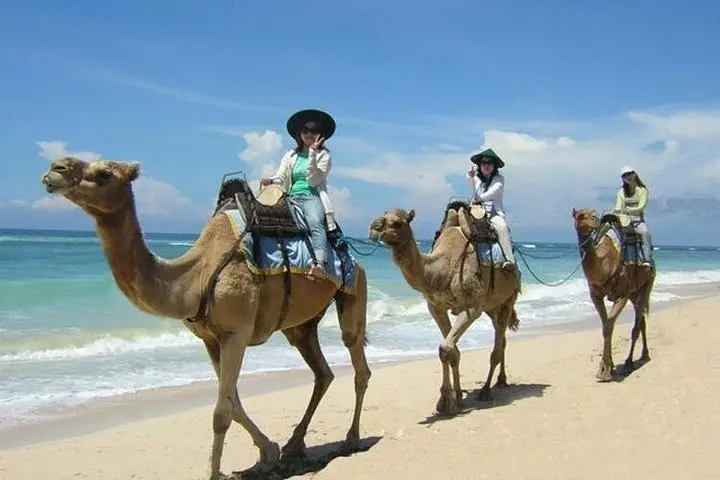
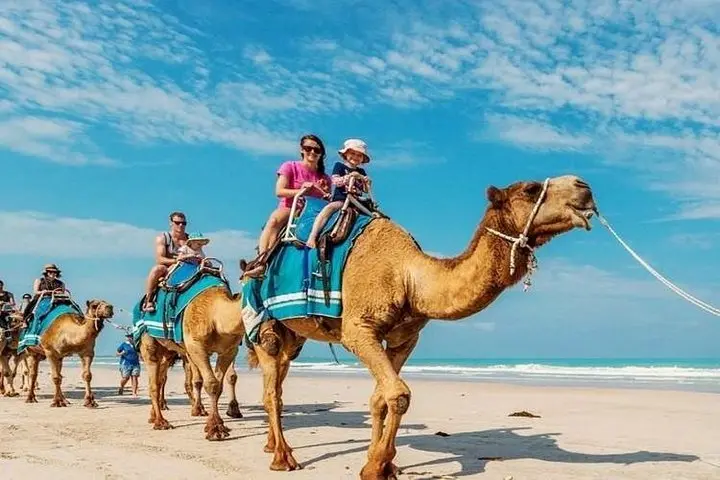
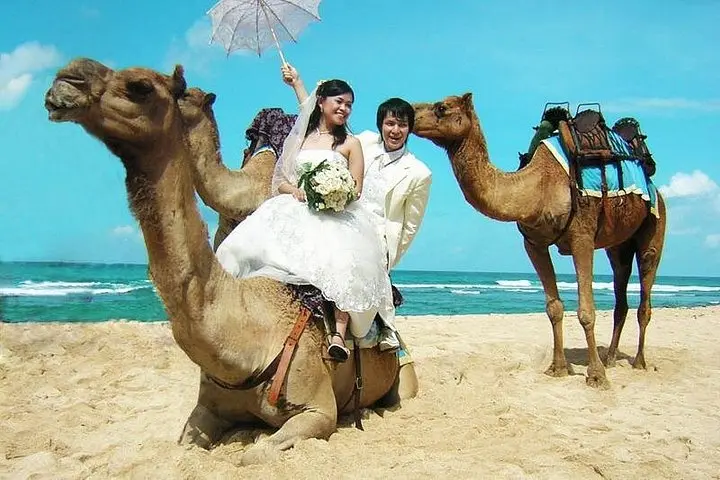
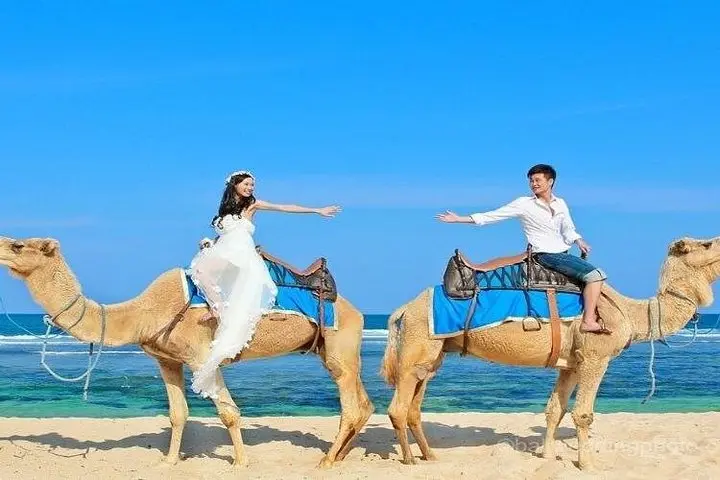
The first step onto Sawangan’s white sand feels deliberate: the ocean pulls at the shoreline while a patient camel rises and lowers like a small dune of muscle and fur. Riders move off the beach in a steady, caravan-like pace, silhouettes etched against an open sea that pushes the horizon wide.
The first step onto Sawangan’s white sand feels deliberate: the ocean pulls at the shoreline while a patient camel rises and lowers like a small dune of muscle and fur. Riders move off the beach in a steady, caravan-like pace, silhouettes etched against an open sea that pushes the horizon wide.
This strip of southern Bali sits on the Bukit Peninsula, a limestone shelf folded by ancient coral uplift and wave-cut cliffs. Nearby, Uluwatu Temple perches on a jagged promontory—an 11th-century sea temple that has watched local fishermen and Kecak dancers for generations. The camel ride itself is a modern insertion: camels are not native here but create Sahara-like photo moments against tropical surf and the low, stubbled scrub of the bukit.
Culture and coastline meet: expect Balinese offerings, cliffside shrines, and the watchful macaques that frequent Uluwatu. The experience is sensory and straightforward—wind, salt, the slow gait of an animal calibrated for steady travel.
Practical guidance: rides run about 60 minutes on the sand within a half-day tour that often includes hotel transfers and an Uluwatu entrance. Note strict weight and health limits; riders should be reasonably steady mounting and dismounting. Aim for late afternoon for softer light and cooler temperatures, and bring sun protection and a low-profile day pack. Hydrate ahead of time and wear supportive closed shoes for sandy and occasionally rocky approaches. The operator provides basic safety briefings; longer waits between activities are common, so pack patience along with camera memory.