THE ADVENTURE COLLECTIVE® · Independent discovery and booking for outdoor travel

Ride a camel around the Great Pyramids at Giza with a private guide and air‑conditioned transfers. This 5–6 hour tour pairs close-up pyramid views with local stories, sunset light and practical tips for a comfortable desert experience.
Ride a camel around the Great Pyramids at Giza with a private guide and air‑conditioned transfers. This 5–6 hour tour pairs close-up pyramid views with local stories, sunset light and practical tips for a comfortable desert experience.
You step down from an air‑conditioned minivan onto a sweep of wind‑scoured sand and the silhouettes of three pyramids cut the horizon like slow-moving ships. A camel shifts its weight, patient and low to the ground, and the Sphinx watches from its stone plinth while Cairo’s distant hum hangs behind you.
Verified experiences and guided adventures in the surrounding area.
Operated by Visitors Egypt Tours · Giza, Cairo Governorate
You step down from an air‑conditioned minivan onto a sweep of wind‑scoured sand and the silhouettes of three pyramids cut the horizon like slow-moving ships. A camel shifts its weight, patient and low to the ground, and the Sphinx watches from its stone plinth while Cairo’s distant hum hangs behind you.
These stone giants — Khufu, Khafre and Menkaure — date to Egypt's Old Kingdom (c. 2600–2500 BCE). Built as royal tombs from local limestone and granite, the plateau sits on a raised bedrock plateau with thin desert soils and occasional windswept gravel. The area blends pharaonic history, Bedouin living culture and a painted desert that changes color through the day; guides often point out the Valley Temple, workers’ tombs and the relocated solar boat exhibit that reveal the logistics behind pyramid building.
The tour typically runs 5–6 hours including hotel transfer, time for photography and a guided camel or horse ride (30–60 minutes around the plateau). Practical notes: go early for softer light and cooler temperatures, drink plenty of water, wear closed-toe shoes to handle sand and rock, and carry modest clothing for respect at heritage sites. Camel handlers will lead animals and are experienced, but the ride is best for those without significant spinal issues.
Expect hands-on storytelling from local guides, panoramic photo opportunities, and the unusual juxtaposition of living desert life against 4,500‑year‑old stone. Book a private pickup to control timing, and plan an extra hour on site if you want to enter the Great Pyramid or visit the Solar Boat Museum.
This operator’s itinerary lists admission as included; confirm at booking which tickets (plateau entry, Solar Boat Museum, Great Pyramid interior) are covered, as interior access may be extra.
Typical camel circuits last 30–60 minutes around the plateau; the full excursion including transfers and time on site runs about 5–6 hours.
Camel rides are not recommended for travelers with spinal injuries, severe back problems or certain pregnancies—ask the vendor for alternative horse options or stay on flat viewing areas.
Drone use at Giza is generally restricted and may require permits; do not launch drones without explicit authorization from Egyptian authorities and site management.
Visitors Egypt Tours operates guided outdoor trips and adventures with an emphasis on safety, stewardship, and memorable experiences.
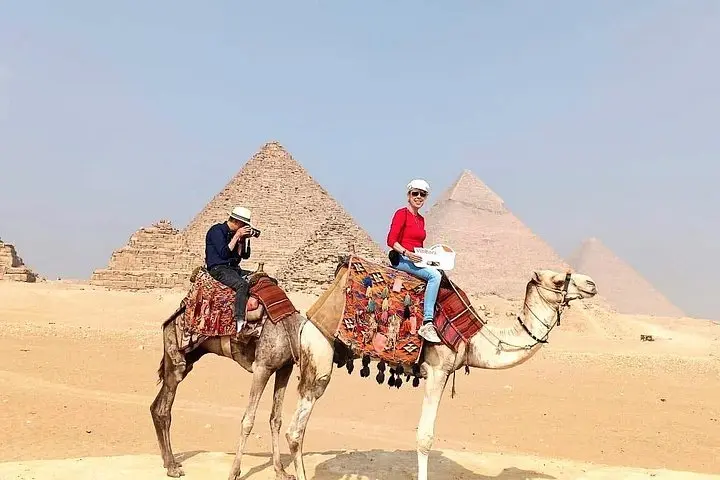
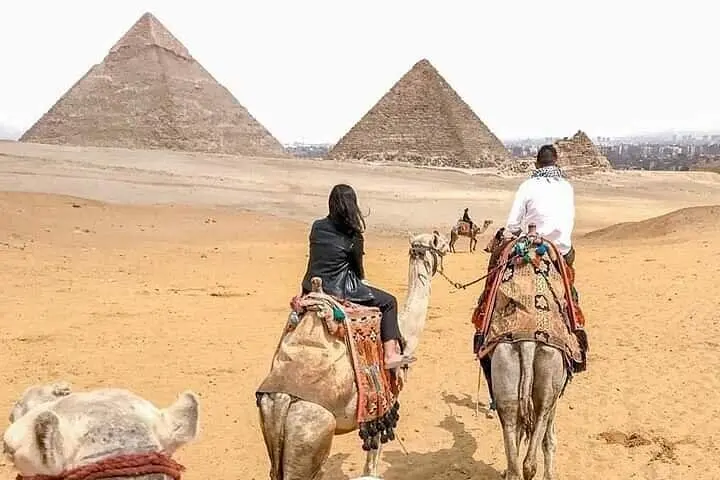
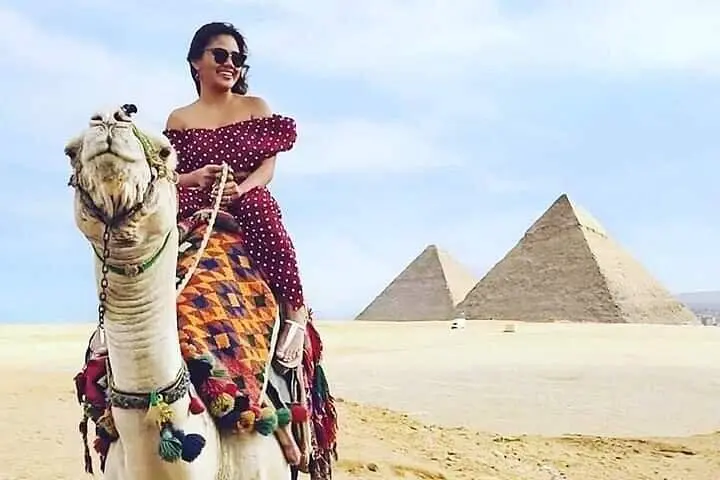
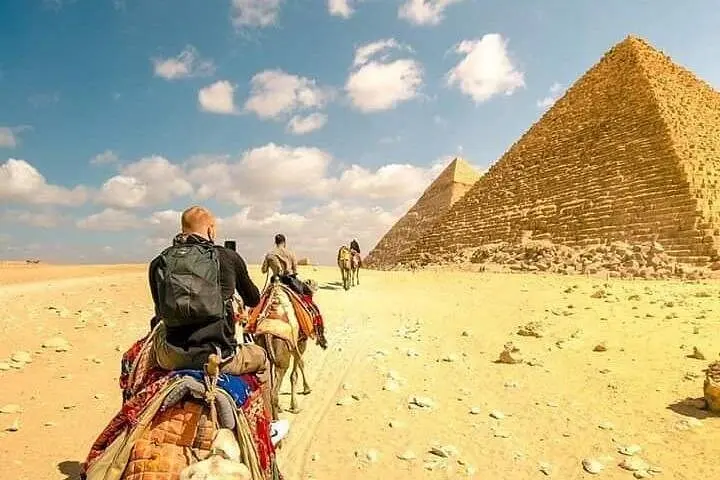
You step down from an air‑conditioned minivan onto a sweep of wind‑scoured sand and the silhouettes of three pyramids cut the horizon like slow-moving ships. A camel shifts its weight, patient and low to the ground, and the Sphinx watches from its stone plinth while Cairo’s distant hum hangs behind you.
You step down from an air‑conditioned minivan onto a sweep of wind‑scoured sand and the silhouettes of three pyramids cut the horizon like slow-moving ships. A camel shifts its weight, patient and low to the ground, and the Sphinx watches from its stone plinth while Cairo’s distant hum hangs behind you.
These stone giants — Khufu, Khafre and Menkaure — date to Egypt's Old Kingdom (c. 2600–2500 BCE). Built as royal tombs from local limestone and granite, the plateau sits on a raised bedrock plateau with thin desert soils and occasional windswept gravel. The area blends pharaonic history, Bedouin living culture and a painted desert that changes color through the day; guides often point out the Valley Temple, workers’ tombs and the relocated solar boat exhibit that reveal the logistics behind pyramid building.
The tour typically runs 5–6 hours including hotel transfer, time for photography and a guided camel or horse ride (30–60 minutes around the plateau). Practical notes: go early for softer light and cooler temperatures, drink plenty of water, wear closed-toe shoes to handle sand and rock, and carry modest clothing for respect at heritage sites. Camel handlers will lead animals and are experienced, but the ride is best for those without significant spinal issues.
Expect hands-on storytelling from local guides, panoramic photo opportunities, and the unusual juxtaposition of living desert life against 4,500‑year‑old stone. Book a private pickup to control timing, and plan an extra hour on site if you want to enter the Great Pyramid or visit the Solar Boat Museum.