THE ADVENTURE COLLECTIVE® · Independent discovery and booking for outdoor travel

Ride a camel through Marrakech’s Palmeraie, an easy two-hour loop of palm groves, village edges, and a traditional mint-tea pause. This accessible outing pairs a gentle animal-led journey with cultural insight and convenient hotel pickup.
Ride a camel through Marrakech’s Palmeraie, an easy two-hour loop of palm groves, village edges, and a traditional mint-tea pause. This accessible outing pairs a gentle animal-led journey with cultural insight and convenient hotel pickup.
You climb onto a patient camel as the Palmeraie unfolds: a fringe of long-stemmed date palms scratching the sky, dry dust lifting from the Haouz plain, and the Atlas Mountains a blue line on the horizon. The animals sway with a slow, intentional rhythm; each step moves you away from Marrakech’s alleys and into a landscape shaped by water and human hands.
Verified experiences and guided adventures in the surrounding area.
Operated by Marrakesh Travel Services · Marrakech, Marrakech-Safi
You climb onto a patient camel as the Palmeraie unfolds: a fringe of long-stemmed date palms scratching the sky, dry dust lifting from the Haouz plain, and the Atlas Mountains a blue line on the horizon. The animals sway with a slow, intentional rhythm; each step moves you away from Marrakech’s alleys and into a landscape shaped by water and human hands.
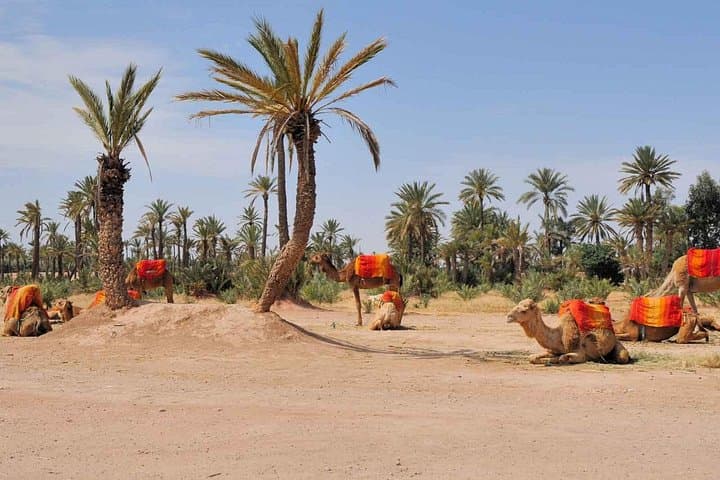
The Palmeraie is a centuries-old palm oasis formed where groundwater and simple irrigation allowed palms to thrive on the city’s edge. Geologically the area sits on the flat Haouz basin, drained historically toward the Tensift River, with the High Atlas looming to the south and providing seasonal runoff that made this green belt possible.
Culturally, the ride folds into local life: camels were work and transport animals for nomadic and rural communities, and tea breaks are an everyday ritual—hot mint tea offered by guides is both hospitality and a chance to slow down. Expect to pass small villages and fields where traditional practices continue alongside tourism.
Practically, this is a two-hour, low-impact activity that includes hotel pickup in an air-conditioned minivan, a guided camel loop through the palms, and a sit-down mint-tea break. It’s suitable for most fitness levels but not recommended for people with serious back or spinal injuries. Bring sun protection, a lightweight long-sleeve, closed shoes, and a camera with a strap—camel saddles can be bouncy and sudden movement is common. Arrive hydrated, confirm your pickup details, and carry some dirhams for tips; a small gratuity to the handler is customary. The trek offers an accessible way to experience Marrakech’s oasis edge—slow, tactile, and distinctly local.
The guided experience runs about two hours total, including hotel pickup, the camel circuit through the Palmeraie, and a tea break.
Yes—transport by air-conditioned minivan is included from hotels or riads within central Marrakech; confirm your pickup point when booking.
Children can ride but must be accompanied by an adult; infant seats are available and operators note stroller accessibility for very young children.
Tipping is customary; small dirhams (20–50 MAD total split among handlers) are appreciated for good service.
Marrakesh Travel Services operates guided outdoor trips and adventures with an emphasis on safety, stewardship, and memorable experiences.
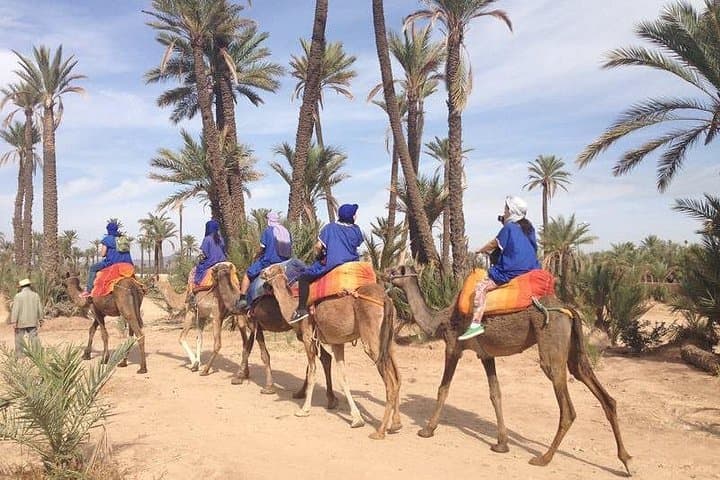
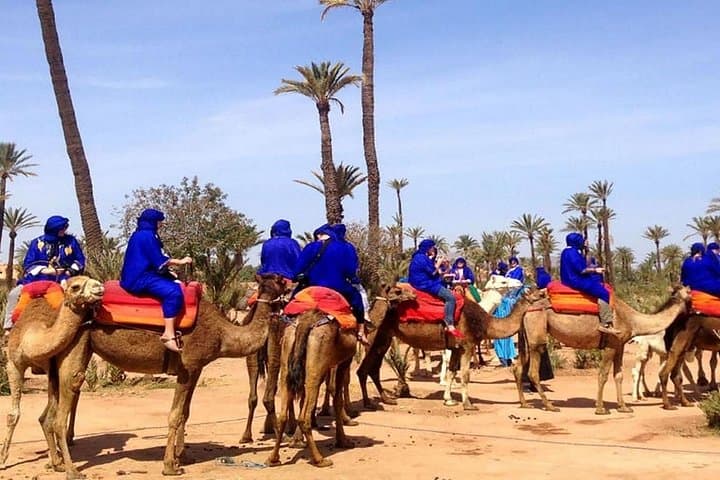
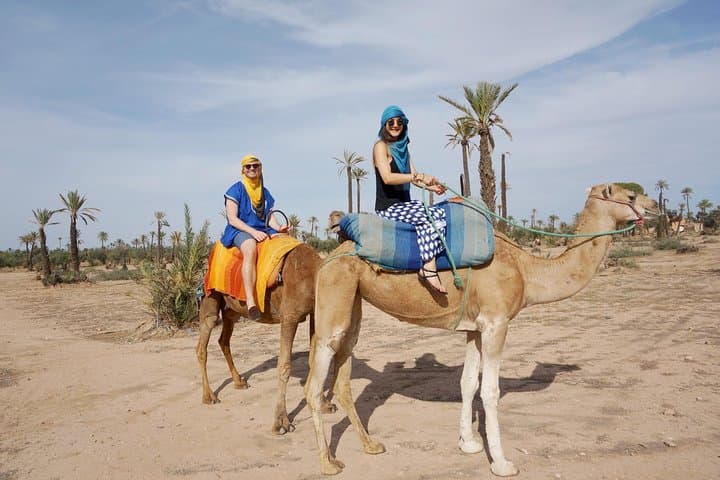
You climb onto a patient camel as the Palmeraie unfolds: a fringe of long-stemmed date palms scratching the sky, dry dust lifting from the Haouz plain, and the Atlas Mountains a blue line on the horizon. The animals sway with a slow, intentional rhythm; each step moves you away from Marrakech’s alleys and into a landscape shaped by water and human hands.
You climb onto a patient camel as the Palmeraie unfolds: a fringe of long-stemmed date palms scratching the sky, dry dust lifting from the Haouz plain, and the Atlas Mountains a blue line on the horizon. The animals sway with a slow, intentional rhythm; each step moves you away from Marrakech’s alleys and into a landscape shaped by water and human hands.
The Palmeraie is a centuries-old palm oasis formed where groundwater and simple irrigation allowed palms to thrive on the city’s edge. Geologically the area sits on the flat Haouz basin, drained historically toward the Tensift River, with the High Atlas looming to the south and providing seasonal runoff that made this green belt possible.
Culturally, the ride folds into local life: camels were work and transport animals for nomadic and rural communities, and tea breaks are an everyday ritual—hot mint tea offered by guides is both hospitality and a chance to slow down. Expect to pass small villages and fields where traditional practices continue alongside tourism.
Practically, this is a two-hour, low-impact activity that includes hotel pickup in an air-conditioned minivan, a guided camel loop through the palms, and a sit-down mint-tea break. It’s suitable for most fitness levels but not recommended for people with serious back or spinal injuries. Bring sun protection, a lightweight long-sleeve, closed shoes, and a camera with a strap—camel saddles can be bouncy and sudden movement is common. Arrive hydrated, confirm your pickup details, and carry some dirhams for tips; a small gratuity to the handler is customary. The trek offers an accessible way to experience Marrakech’s oasis edge—slow, tactile, and distinctly local.