THE ADVENTURE COLLECTIVE® · Independent discovery and booking for outdoor travel

Walk the vertiginous boardwalk of the Caminito del Rey with pickup from Nerja, Torrox, or Torre del Mar. This guided day trip pairs an air-conditioned coach and timed entry with 2–2.5 hours of spectacular canyon hiking along the Gaitanes Gorge.
Walk the vertiginous boardwalk of the Caminito del Rey with pickup from Nerja, Torrox, or Torre del Mar. This guided day trip pairs an air-conditioned coach and timed entry with 2–2.5 hours of spectacular canyon hiking along the Gaitanes Gorge.
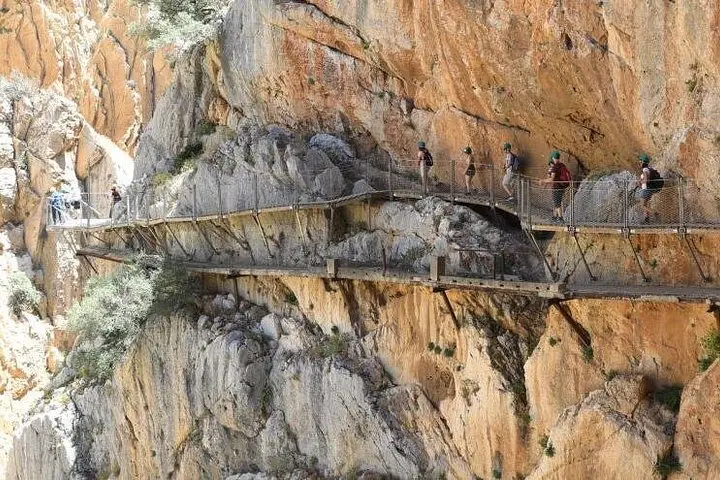
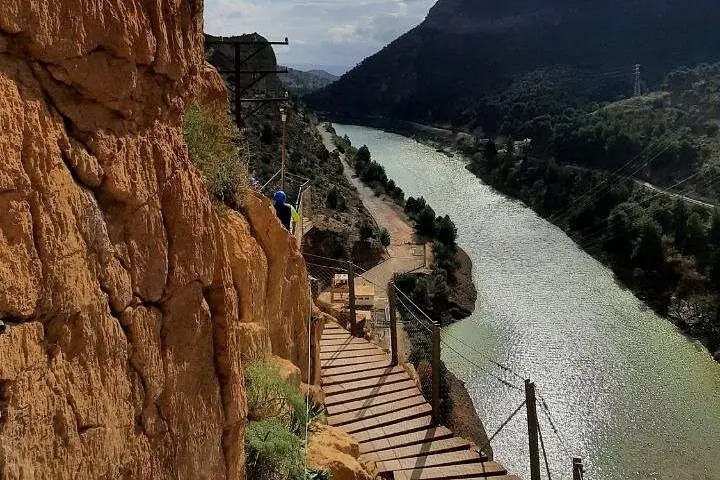
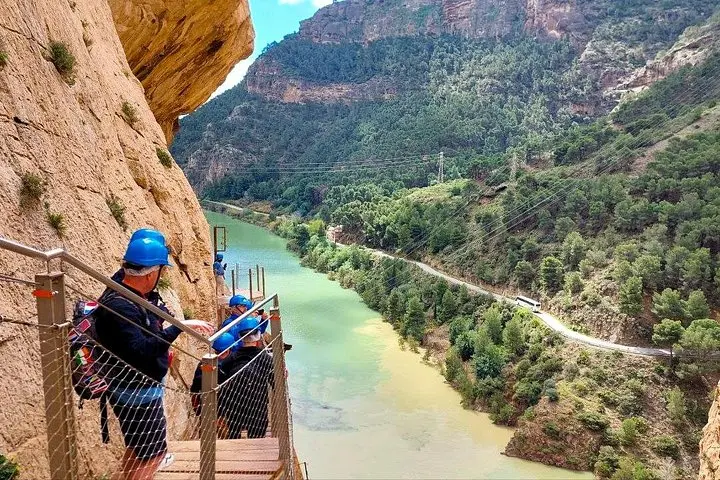
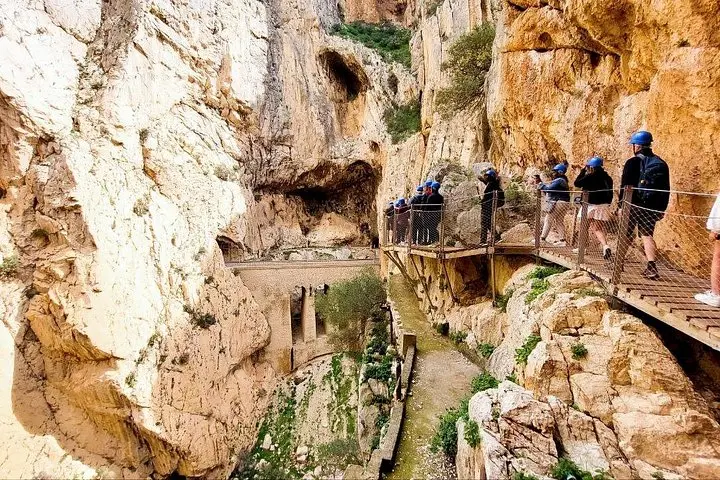
The boardwalk appears before the valley opens — a narrow ribbon of wood and steel clinging to the limestone, the river far below daring you to look down. On a bright morning, the air between Nerja and El Chorro smells of sun-warmed rock and eucalyptus; an air-conditioned coach eases into the parking area and guides shepherd guests toward helmets stacked like astronaut caps. The walk begins at Restaurante El Kiosko and, for the next two and a half hours, the Caminito del Rey forces you to move at the pace of the gorge: deliberate, steady, and wide-eyed.
Verified experiences and guided adventures in the surrounding area.
Operated by Viajes Pareja Tours · El Chorro, Málaga
The boardwalk appears before the valley opens — a narrow ribbon of wood and steel clinging to the limestone, the river far below daring you to look down. On a bright morning, the air between Nerja and El Chorro smells of sun-warmed rock and eucalyptus; an air-conditioned coach eases into the parking area and guides shepherd guests toward helmets stacked like astronaut caps. The walk begins at Restaurante El Kiosko and, for the next two and a half hours, the Caminito del Rey forces you to move at the pace of the gorge: deliberate, steady, and wide-eyed.
The route follows the canyon carved by the Guadalhorce River through Miocene limestone — steep walls rising hundreds of meters, cut by water that once powered the mills and, later, the hydroelectric projects that gave birth to the original walkway in the early 20th century. Built to service workers who maintained the dams and pipelines, the path gained notoriety after King Alfonso XIII’s 1921 crossing; decades of neglect turned it dangerous until a full restoration reopened it safely in 2015. Today the boardwalk is both engineering and theater: suspended catwalks, narrow cliffs, and gaps bridged by metal that feel precarious and secure at once.
Culturally, this stretch of Málaga province is still shaped by industry and irrigation — small towns and old railway infrastructure peek through the scrub. Local guides blend natural history with stories of the dam builders, the railway that once linked rural Andalusia, and the conservation decisions that keep visitor numbers controlled.
Practically speaking, the full excursion is a half- to full-day commitment: expect about 8 hours from pickup to return (the coach schedule varies), with roughly 2–2.5 hours on the trail covering about 8 km. Safety helmets and a bottle of water are provided; closed shoes with ankle support are mandatory. The route is exposed in places — sunscreen, a hat, and plenty of water are non-negotiable. The ticketed entrance limits crowding, but the walk remains unsuitable for anyone with severe vertigo or uncontrolled cardiovascular conditions.
Timing and logistics are straightforward: select your pickup in Nerja, Torrox, or Torre del Mar, meet at the designated bus stop in the morning, and be back by mid- to late-afternoon. Photography is generous and often dramatic — bring a camera with a secure strap and expect to stop at official viewpoints rather than stray from the path. Drones, walking sticks, and umbrellas are not permitted. For travelers who want a compact, high-reward day trip from the coast, this guided transfer-to-hike option removes the worry of parking and permits, leaving only the walk and the view.
Yes — choose your preferred pickup point when booking; meeting times are provided in your confirmation.
The official circuit is roughly 8 km with about 2–2.5 hours walking over boardwalks and paths; it’s moderate effort but exposed in parts.
Yes — helmets are supplied at the start and a bottled water is given before the walk; bringing extra water is recommended.
Children are allowed from age 8 but must carry original identification for age verification; the path is not suitable for very young kids.
No — drones, walking sticks, and umbrellas are prohibited for safety and to avoid disturbing wildlife and other visitors.
The route is not recommended for people with severe vertigo, uncontrolled heart conditions, or significant mobility limitations due to exposed sections and stairs.
Viajes Pareja Tours operates guided outdoor trips and adventures with an emphasis on safety, stewardship, and memorable experiences.
The boardwalk appears before the valley opens — a narrow ribbon of wood and steel clinging to the limestone, the river far below daring you to look down. On a bright morning, the air between Nerja and El Chorro smells of sun-warmed rock and eucalyptus; an air-conditioned coach eases into the parking area and guides shepherd guests toward helmets stacked like astronaut caps. The walk begins at Restaurante El Kiosko and, for the next two and a half hours, the Caminito del Rey forces you to move at the pace of the gorge: deliberate, steady, and wide-eyed.
The boardwalk appears before the valley opens — a narrow ribbon of wood and steel clinging to the limestone, the river far below daring you to look down. On a bright morning, the air between Nerja and El Chorro smells of sun-warmed rock and eucalyptus; an air-conditioned coach eases into the parking area and guides shepherd guests toward helmets stacked like astronaut caps. The walk begins at Restaurante El Kiosko and, for the next two and a half hours, the Caminito del Rey forces you to move at the pace of the gorge: deliberate, steady, and wide-eyed.
The route follows the canyon carved by the Guadalhorce River through Miocene limestone — steep walls rising hundreds of meters, cut by water that once powered the mills and, later, the hydroelectric projects that gave birth to the original walkway in the early 20th century. Built to service workers who maintained the dams and pipelines, the path gained notoriety after King Alfonso XIII’s 1921 crossing; decades of neglect turned it dangerous until a full restoration reopened it safely in 2015. Today the boardwalk is both engineering and theater: suspended catwalks, narrow cliffs, and gaps bridged by metal that feel precarious and secure at once.
Culturally, this stretch of Málaga province is still shaped by industry and irrigation — small towns and old railway infrastructure peek through the scrub. Local guides blend natural history with stories of the dam builders, the railway that once linked rural Andalusia, and the conservation decisions that keep visitor numbers controlled.
Practically speaking, the full excursion is a half- to full-day commitment: expect about 8 hours from pickup to return (the coach schedule varies), with roughly 2–2.5 hours on the trail covering about 8 km. Safety helmets and a bottle of water are provided; closed shoes with ankle support are mandatory. The route is exposed in places — sunscreen, a hat, and plenty of water are non-negotiable. The ticketed entrance limits crowding, but the walk remains unsuitable for anyone with severe vertigo or uncontrolled cardiovascular conditions.
Timing and logistics are straightforward: select your pickup in Nerja, Torrox, or Torre del Mar, meet at the designated bus stop in the morning, and be back by mid- to late-afternoon. Photography is generous and often dramatic — bring a camera with a secure strap and expect to stop at official viewpoints rather than stray from the path. Drones, walking sticks, and umbrellas are not permitted. For travelers who want a compact, high-reward day trip from the coast, this guided transfer-to-hike option removes the worry of parking and permits, leaving only the walk and the view.