THE ADVENTURE COLLECTIVE® · Independent discovery and booking for outdoor travel

Step onto the Caminito del Rey and walk a restored, cliffside pathway above the El Chorro gorge. This full-day trip from Seville pairs easy-to-follow logistics with dramatic views, local history, and tight visitor limits—book early to secure your timed entry.
Step onto the Caminito del Rey and walk a restored, cliffside pathway above the El Chorro gorge. This full-day trip from Seville pairs easy-to-follow logistics with dramatic views, local history, and tight visitor limits—book early to secure your timed entry.
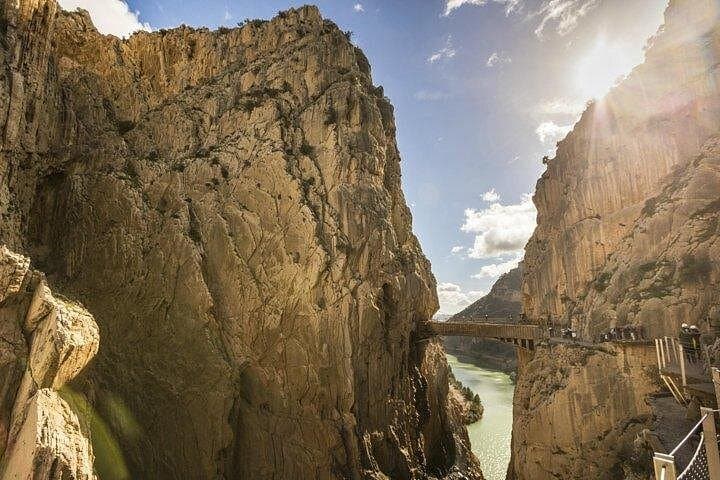
You arrive before the crowds at a sleepy bus stop outside Ardales and the valley ahead feels like a line drawn in chalk—sheer limestone walls, a narrow river threading the gorge, and a sliver of walkway clinging to rock 100 meters above the water. The Caminito del Rey is not a postcard scene so much as a constructed conversation between human engineering and wild geology: a century-old service path rebuilt for safety, now daring visitors to walk the ledge and read the canyon like a layered book.
Verified experiences and guided adventures in the surrounding area.
Operated by Andalsur Viajes, Congresos y excursiones S.L · Ardales, Málaga
You arrive before the crowds at a sleepy bus stop outside Ardales and the valley ahead feels like a line drawn in chalk—sheer limestone walls, a narrow river threading the gorge, and a sliver of walkway clinging to rock 100 meters above the water. The Caminito del Rey is not a postcard scene so much as a constructed conversation between human engineering and wild geology: a century-old service path rebuilt for safety, now daring visitors to walk the ledge and read the canyon like a layered book.
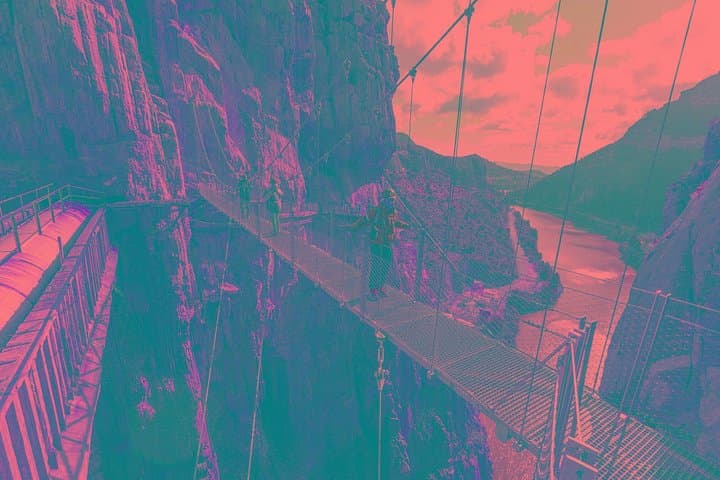
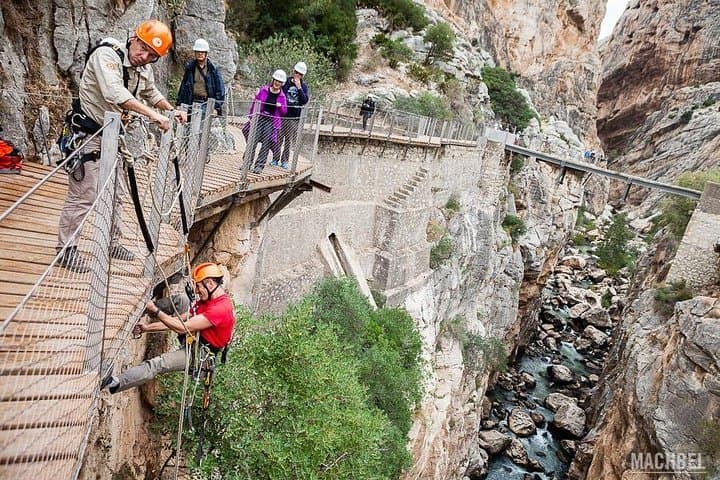
Originally carved between 1901 and 1905 to link hydroelectric plants at El Chorro and Gaitanejo Falls, the walkway once served workers who hauled materials and inspected channels. The route’s rehabilitation in 2015 preserved the original line while installing modern steel boardwalks and safety rails—so the drama feels immediate, not theatrical. Geologically, the gorge is a product of limestone karst carved by millennia of water—narrow passages, vertical walls, and windows that drop to the turquoise river below.
Local life around Ardales and Álora is quietly rural: olive groves, small tapas bars and a slow rhythm that contrasts with the walkway’s adrenaline. Guides on organized day trips weave in regional history—how dam projects reshaped the valley—and point out griffon vultures riding thermals and the occasional ibex on ledges, both adapted to the steep landscape.
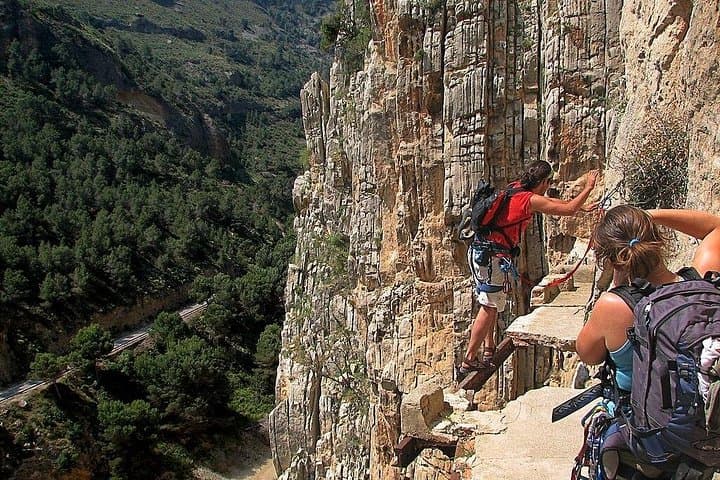
For travelers, the Caminito is a tightly managed experience: timed-entry tickets, mandatory helmets provided on site, and clearly marked paths. A typical day-trip from Seville includes round-trip transfer (about 1.5 hours each way), a guided walk across the 7.7-kilometer circuit with 3–4 kilometers on the elevated path, and a leisurely meal before the return. Expect exposed sections and short stair climbs; elevation gain is modest but continuous underfoot.
Practical planning matters: arrive hydrated, wear sturdy closed-toe shoes, and choose a morning slot to avoid the hottest hours in summer. The site limits numbers—book in advance, especially in spring and autumn—and respect the closure rules: the boardwalk is fragile if overcrowded and weather-dependent.
On the far side, pause at the viewing platforms and let the canyon’s soundscape—wind, wings, and distant sluices—reset your pace. For many, the Caminito is less about conquering height than about a paced encounter with limestone, river, and history—an engineered path that invites careful attention and rewards it with sustained views and a sharp sense of place.
The full route through the Desfiladero de los Gaitanes is about 7.7 km; the elevated boardwalk sections cover roughly 3–4 km of that distance.
Yes—site staff distribute helmets at the entrance and guide compliance with safety rules.
Children are allowed but should be supervised; the cliffside sections have steps and narrow parts so it’s not suitable for wheelchair users despite some accessible facilities near visitor centers.
Tours often include a local guide who provides history and points out wildlife; independent visits are possible with timed tickets but guided options add context.
Closed-toe, grippy shoes, layered clothing for changing conditions, sun protection in summer, and a light wind jacket for spring/autumn.
Yes—strong winds, heavy rain, or maintenance can prompt temporary closures; check the official site or your operator before departure.
Andalsur Viajes, Congresos y excursiones S.L operates guided outdoor trips and adventures with an emphasis on safety, stewardship, and memorable experiences.
You arrive before the crowds at a sleepy bus stop outside Ardales and the valley ahead feels like a line drawn in chalk—sheer limestone walls, a narrow river threading the gorge, and a sliver of walkway clinging to rock 100 meters above the water. The Caminito del Rey is not a postcard scene so much as a constructed conversation between human engineering and wild geology: a century-old service path rebuilt for safety, now daring visitors to walk the ledge and read the canyon like a layered book.
You arrive before the crowds at a sleepy bus stop outside Ardales and the valley ahead feels like a line drawn in chalk—sheer limestone walls, a narrow river threading the gorge, and a sliver of walkway clinging to rock 100 meters above the water. The Caminito del Rey is not a postcard scene so much as a constructed conversation between human engineering and wild geology: a century-old service path rebuilt for safety, now daring visitors to walk the ledge and read the canyon like a layered book.
Originally carved between 1901 and 1905 to link hydroelectric plants at El Chorro and Gaitanejo Falls, the walkway once served workers who hauled materials and inspected channels. The route’s rehabilitation in 2015 preserved the original line while installing modern steel boardwalks and safety rails—so the drama feels immediate, not theatrical. Geologically, the gorge is a product of limestone karst carved by millennia of water—narrow passages, vertical walls, and windows that drop to the turquoise river below.
Local life around Ardales and Álora is quietly rural: olive groves, small tapas bars and a slow rhythm that contrasts with the walkway’s adrenaline. Guides on organized day trips weave in regional history—how dam projects reshaped the valley—and point out griffon vultures riding thermals and the occasional ibex on ledges, both adapted to the steep landscape.
For travelers, the Caminito is a tightly managed experience: timed-entry tickets, mandatory helmets provided on site, and clearly marked paths. A typical day-trip from Seville includes round-trip transfer (about 1.5 hours each way), a guided walk across the 7.7-kilometer circuit with 3–4 kilometers on the elevated path, and a leisurely meal before the return. Expect exposed sections and short stair climbs; elevation gain is modest but continuous underfoot.
Practical planning matters: arrive hydrated, wear sturdy closed-toe shoes, and choose a morning slot to avoid the hottest hours in summer. The site limits numbers—book in advance, especially in spring and autumn—and respect the closure rules: the boardwalk is fragile if overcrowded and weather-dependent.
On the far side, pause at the viewing platforms and let the canyon’s soundscape—wind, wings, and distant sluices—reset your pace. For many, the Caminito is less about conquering height than about a paced encounter with limestone, river, and history—an engineered path that invites careful attention and rewards it with sustained views and a sharp sense of place.