THE ADVENTURE COLLECTIVE® · Independent discovery and booking for outdoor travel

Step off the bus from Málaga and onto a narrow plankway carved into 19th-century industrial history. This guided group tour takes you across the dramatic Caminito del Rey—an engineered boardwalk along the Gaitanes Gorge—combining geology, heritage, and close-up canyon views.
Step off the bus from Málaga and onto a narrow plankway carved into 19th-century industrial history. This guided group tour takes you across the dramatic Caminito del Rey—an engineered boardwalk along the Gaitanes Gorge—combining geology, heritage, and close-up canyon views.
The bus peels away from Málaga and the city’s heat gives up to a raw, sun-baked limestone horizon. In an hour the landscape chisels itself into sharp profiles: jagged cliffs, terraces of scrub, and a river that has carved a narrow throat through the heart of Andalusia. You step out near El Chorro and the sound of the Guadalhorce River—low and persistent—pulls you toward the wooden and metal plankway clinging to the canyon wall.
Verified experiences and guided adventures in the surrounding area.
Operated by Tours in Malaga · El Chorro, Andalusia
The bus peels away from Málaga and the city’s heat gives up to a raw, sun-baked limestone horizon. In an hour the landscape chisels itself into sharp profiles: jagged cliffs, terraces of scrub, and a river that has carved a narrow throat through the heart of Andalusia. You step out near El Chorro and the sound of the Guadalhorce River—low and persistent—pulls you toward the wooden and metal plankway clinging to the canyon wall.
The Caminito del Rey feels like a rediscovered spine of industrial Spain. The original path was built between 1860 and 1866 to service the Guadalhorce reservoir and the associated power works; later it earned a fearsome reputation for danger before a major reconstruction reopened a safer, engineered trail that preserves the raw drama of the Gaitanes Gorge.
Geology here reads like a slow-motion action movie: water has gouged limestone into vertical faces and deep pools, exposing folded strata and caves that once hid smugglers and workers. Culturally, the canyon sits at the crossroads of Andalusian rural life and the region’s industrial heritage—the old railway and power plants are threaded through the story you’ll hear on the walk.
The guided group tour from Málaga bundles transport, entrance ticket, and a local guide into a six-hour day. Expect roughly 3 km of elevated walkway (the boardwalk itself) embedded within an overall approach and exit that can bring your total walking distance to 6–8 km with about 150–250 m of elevation change spread over the route. Trails alternate between narrow metal catwalks under sheer drops, short stone staircases, and sun-exposed foothpaths.
Practicalities matter: wear sturdy sport shoes (heels or sandals are not allowed), bring 1–1.5 liters of water for warm days, and apply sunscreen—the gorge traps the sun. The tour is family-friendly down to age eight (ID required) but isn’t suitable for people with serious heart or back problems. Photographers should aim for early departures to catch side-lit walls and long shadows; afternoon light can blow out the canyon’s contrast.
Logistics are straightforward: pickup at Málaga’s Vialia bus stop, a roughly 40–60 minute drive to Ardales/El Chorro, guided passage along the walkway, then time to linger for photos before returning to the bus. The boardwalk can close for safety in bad weather—operators will offer alternatives or refunds per their policy—so leave flexible time in your schedule.
The Caminito is best approached as a focused, sensory day: keep your pace steady, listen for the river and the grit of boots on metal, and let the gorge do the talking. It’s not just a hike; it’s a slice of Andalusian geology and industrial history suspended above a river daring you to look down.
The engineered boardwalk section is about 3 km, but with approach and exit paths you’ll typically cover 6–8 km during the tour.
Children 8 and older are permitted (ID required) and many families join; minors must be supervised and follow guide instructions.
The operator may offer an alternative activity, reschedule for the following day, or provide a partial/total refund depending on timing and the Caminito Board decision.
No—walking sticks are prohibited on the Caminito for safety and to keep the path clear.
Bring snacks for the day—there is limited time and few food options on-site; the tour typically includes a short free-time period for a snack.
No—the route includes narrow catwalks, steps, and uneven surfaces and is not suitable for people with significant mobility impairments.
Tours in Malaga operates guided outdoor trips and adventures with an emphasis on safety, stewardship, and memorable experiences.
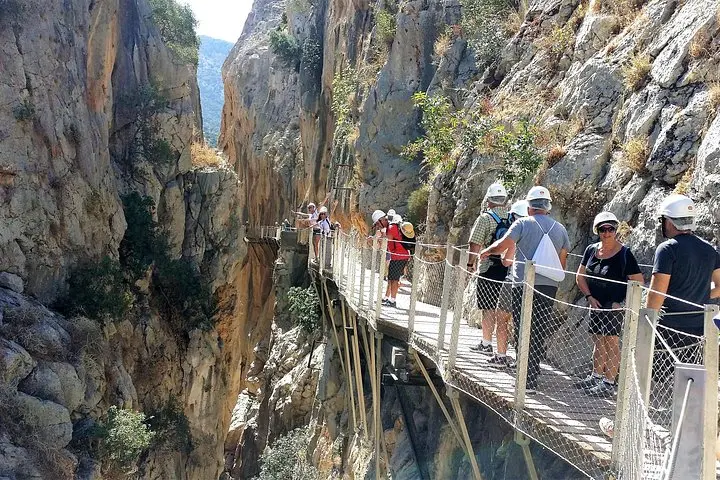
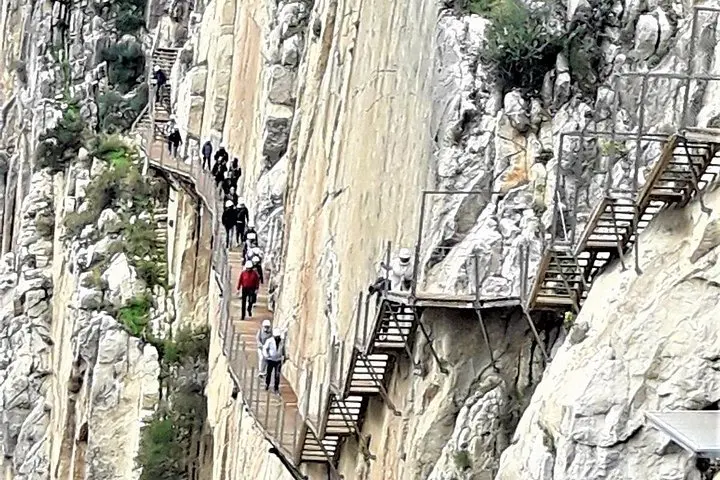
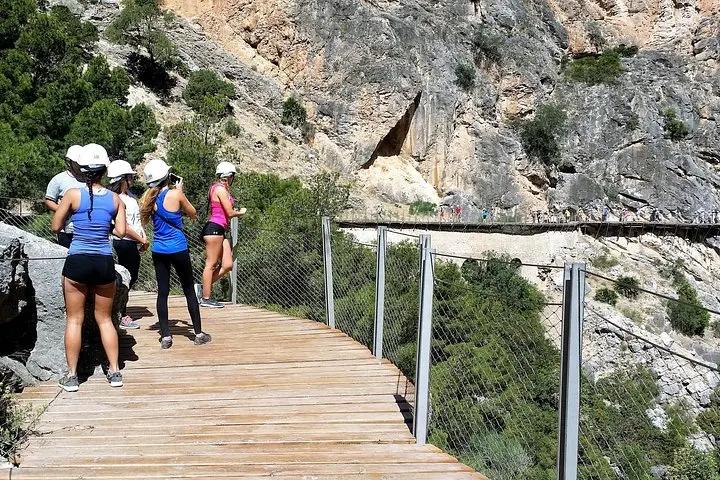
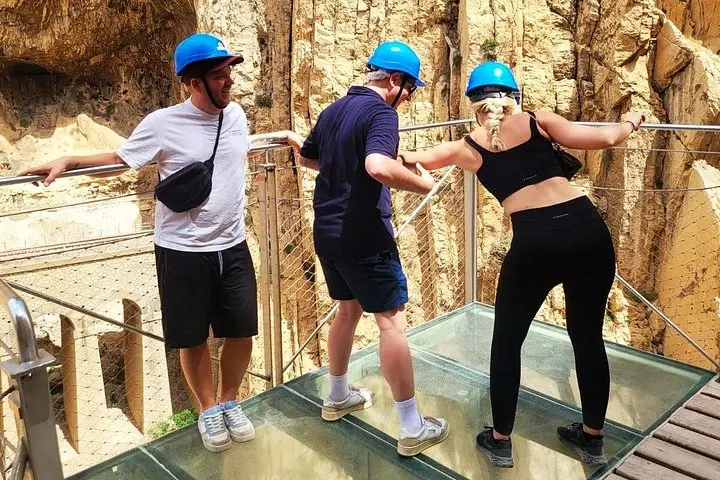
The bus peels away from Málaga and the city’s heat gives up to a raw, sun-baked limestone horizon. In an hour the landscape chisels itself into sharp profiles: jagged cliffs, terraces of scrub, and a river that has carved a narrow throat through the heart of Andalusia. You step out near El Chorro and the sound of the Guadalhorce River—low and persistent—pulls you toward the wooden and metal plankway clinging to the canyon wall.
The bus peels away from Málaga and the city’s heat gives up to a raw, sun-baked limestone horizon. In an hour the landscape chisels itself into sharp profiles: jagged cliffs, terraces of scrub, and a river that has carved a narrow throat through the heart of Andalusia. You step out near El Chorro and the sound of the Guadalhorce River—low and persistent—pulls you toward the wooden and metal plankway clinging to the canyon wall.
The Caminito del Rey feels like a rediscovered spine of industrial Spain. The original path was built between 1860 and 1866 to service the Guadalhorce reservoir and the associated power works; later it earned a fearsome reputation for danger before a major reconstruction reopened a safer, engineered trail that preserves the raw drama of the Gaitanes Gorge.
Geology here reads like a slow-motion action movie: water has gouged limestone into vertical faces and deep pools, exposing folded strata and caves that once hid smugglers and workers. Culturally, the canyon sits at the crossroads of Andalusian rural life and the region’s industrial heritage—the old railway and power plants are threaded through the story you’ll hear on the walk.
The guided group tour from Málaga bundles transport, entrance ticket, and a local guide into a six-hour day. Expect roughly 3 km of elevated walkway (the boardwalk itself) embedded within an overall approach and exit that can bring your total walking distance to 6–8 km with about 150–250 m of elevation change spread over the route. Trails alternate between narrow metal catwalks under sheer drops, short stone staircases, and sun-exposed foothpaths.
Practicalities matter: wear sturdy sport shoes (heels or sandals are not allowed), bring 1–1.5 liters of water for warm days, and apply sunscreen—the gorge traps the sun. The tour is family-friendly down to age eight (ID required) but isn’t suitable for people with serious heart or back problems. Photographers should aim for early departures to catch side-lit walls and long shadows; afternoon light can blow out the canyon’s contrast.
Logistics are straightforward: pickup at Málaga’s Vialia bus stop, a roughly 40–60 minute drive to Ardales/El Chorro, guided passage along the walkway, then time to linger for photos before returning to the bus. The boardwalk can close for safety in bad weather—operators will offer alternatives or refunds per their policy—so leave flexible time in your schedule.
The Caminito is best approached as a focused, sensory day: keep your pace steady, listen for the river and the grit of boots on metal, and let the gorge do the talking. It’s not just a hike; it’s a slice of Andalusian geology and industrial history suspended above a river daring you to look down.