THE ADVENTURE COLLECTIVE® · Independent discovery and booking for outdoor travel

Cling to the steel boardwalk, feel wind through the gorge, and trace a century of railway and hydroelectric history on the Caminito del Rey. This day trip from Seville delivers raw geology, dramatic viewpoints, and practical logistics for the modern hiker.
Cling to the steel boardwalk, feel wind through the gorge, and trace a century of railway and hydroelectric history on the Caminito del Rey. This day trip from Seville delivers raw geology, dramatic viewpoints, and practical logistics for the modern hiker.
The first steps onto the Caminito del Rey feel deliberately small: a narrow boardwalk clinging to limestone, a few planks and a steel railing between you and the gorge that drops in a clean, vertical wall to the river below. Wind threads through the ravine and carries the cry of a griffon vulture as it wheels above the canyon. If you close your eyes for a second you can almost hear the old railway — the original lifeline that stitched inland Andalucía to Málaga — and imagine workers walking this ledge a century ago.
Verified experiences and guided adventures in the surrounding area.
Operated by Naturanda Turismo Ambiental · Ardales, Andalusia
The first steps onto the Caminito del Rey feel deliberately small: a narrow boardwalk clinging to limestone, a few planks and a steel railing between you and the gorge that drops in a clean, vertical wall to the river below. Wind threads through the ravine and carries the cry of a griffon vulture as it wheels above the canyon. If you close your eyes for a second you can almost hear the old railway — the original lifeline that stitched inland Andalucía to Málaga — and imagine workers walking this ledge a century ago.
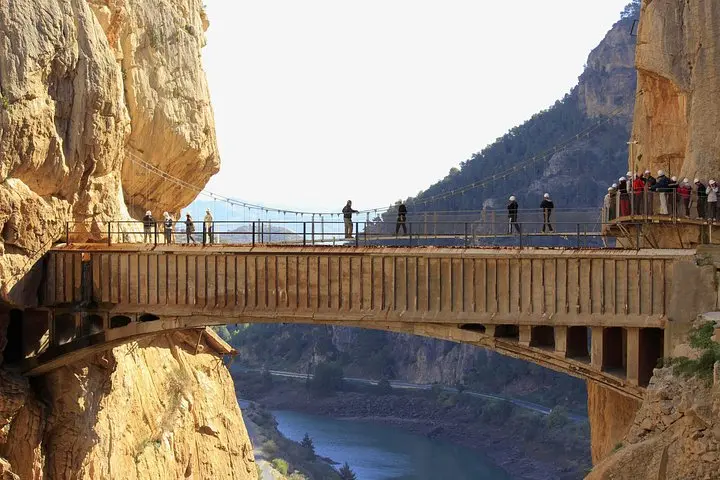
The route itself has drama but not mystery. Built in the early 20th century to service the hydroelectric plants, the Caminito earned the nickname "most dangerous hike in the world" until a comprehensive renovation made it safe for the public in 2015. The geology is bare and direct: steep, weathered limestone carved by the Guadalhorce and its tributaries, exposing veins and pockets that catch afternoon light. Villages like El Chorro and Ardales sit at the gorge’s edges, small white settlements whose histories are tied to water management, rail traffic, and rural Andalucían life.
On some departures the van from Seville stops at Osuna, a baroque town whose stone squares and 16th–19th century palaces reveal the wealth that flowed from olive estates and trade. In Ardales you get a last coffee before the walk — the reservoir surface below the viewing platforms is often glassy, reflecting the harsh canyon walls in a style that feels unforgiving and austere.
Practicalities matter here. The whole day from Seville is long — expect a 10–12 hour window including round-trip transport. The official walking stretch is about 3 km of suspended pathway within a roughly 7.7 km corridor that includes approach trails and transfer points; plan for 2–3 hours on the path itself. Elevation changes are modest but the path sits up to 100 meters above the river in places, so vertigo is a real consideration. Guided groups move steadily; there are no shortcuts or detours and general rules prohibit walking sticks, tripods, crutches, or selfie sticks.
Dress for sun and wind: solid hiking shoes with grip, a light windproof layer, and a refillable water bottle are non-negotiable. In winter pack a warm layer and rain protection. Tickets are timed and capacity-controlled — an upgrade to morning slots yields better light and fewer crowds. Respect the corridor: stay on the path, carry out waste, and keep an eye on local wildlife from a distance. For anyone based in Seville looking for a day that stitches history, geology, and raw, exposed landscape into one long, human-scale corridor, this guided march along the walls of El Chorro is hard to beat.
The suspended boardwalked section is roughly 3 km; the full corridor including approaches is about 7.7 km, and you should allow 2–3 hours to traverse the walkway portion.
Not recommended; parts of the path are exposed and sit high above the river. The operator advises against participation for those with serious heart issues or severe vertigo.
Minimum age is 8 years. Flip-flops, high heels, selfie sticks, tripods, crutches, and animals are not allowed; wear proper hiking shoes.
Yes — the tour departs from designated meeting points in Seville and includes round-trip air-conditioned transport as described in your booking confirmation.
Photography from handheld cameras and phones is permitted, but drones, tripods, and selfie sticks are prohibited for safety and conservation reasons.
The operator may cancel for bad weather or insufficient travelers; you can get a full refund if you cancel at least 24 hours before departure per the stated policy.
Naturanda Turismo Ambiental operates guided outdoor trips and adventures with an emphasis on safety, stewardship, and memorable experiences.
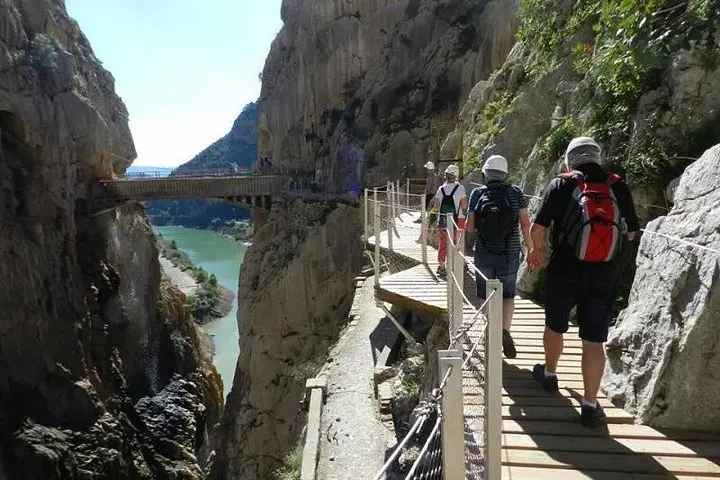
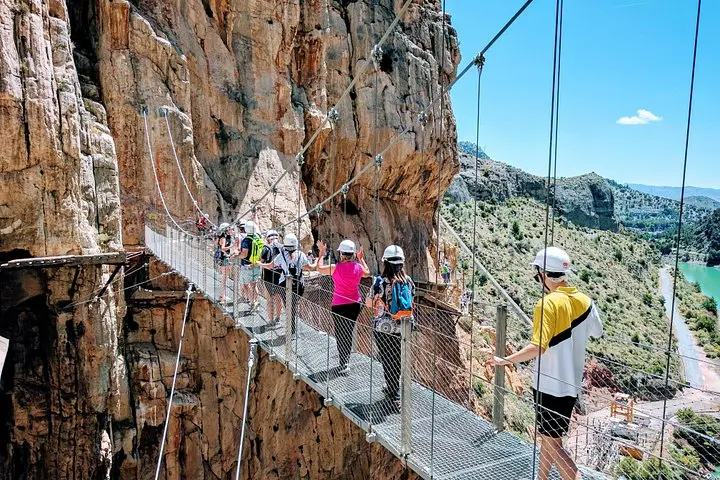
The first steps onto the Caminito del Rey feel deliberately small: a narrow boardwalk clinging to limestone, a few planks and a steel railing between you and the gorge that drops in a clean, vertical wall to the river below. Wind threads through the ravine and carries the cry of a griffon vulture as it wheels above the canyon. If you close your eyes for a second you can almost hear the old railway — the original lifeline that stitched inland Andalucía to Málaga — and imagine workers walking this ledge a century ago.
The first steps onto the Caminito del Rey feel deliberately small: a narrow boardwalk clinging to limestone, a few planks and a steel railing between you and the gorge that drops in a clean, vertical wall to the river below. Wind threads through the ravine and carries the cry of a griffon vulture as it wheels above the canyon. If you close your eyes for a second you can almost hear the old railway — the original lifeline that stitched inland Andalucía to Málaga — and imagine workers walking this ledge a century ago.
The route itself has drama but not mystery. Built in the early 20th century to service the hydroelectric plants, the Caminito earned the nickname "most dangerous hike in the world" until a comprehensive renovation made it safe for the public in 2015. The geology is bare and direct: steep, weathered limestone carved by the Guadalhorce and its tributaries, exposing veins and pockets that catch afternoon light. Villages like El Chorro and Ardales sit at the gorge’s edges, small white settlements whose histories are tied to water management, rail traffic, and rural Andalucían life.
On some departures the van from Seville stops at Osuna, a baroque town whose stone squares and 16th–19th century palaces reveal the wealth that flowed from olive estates and trade. In Ardales you get a last coffee before the walk — the reservoir surface below the viewing platforms is often glassy, reflecting the harsh canyon walls in a style that feels unforgiving and austere.
Practicalities matter here. The whole day from Seville is long — expect a 10–12 hour window including round-trip transport. The official walking stretch is about 3 km of suspended pathway within a roughly 7.7 km corridor that includes approach trails and transfer points; plan for 2–3 hours on the path itself. Elevation changes are modest but the path sits up to 100 meters above the river in places, so vertigo is a real consideration. Guided groups move steadily; there are no shortcuts or detours and general rules prohibit walking sticks, tripods, crutches, or selfie sticks.
Dress for sun and wind: solid hiking shoes with grip, a light windproof layer, and a refillable water bottle are non-negotiable. In winter pack a warm layer and rain protection. Tickets are timed and capacity-controlled — an upgrade to morning slots yields better light and fewer crowds. Respect the corridor: stay on the path, carry out waste, and keep an eye on local wildlife from a distance. For anyone based in Seville looking for a day that stitches history, geology, and raw, exposed landscape into one long, human-scale corridor, this guided march along the walls of El Chorro is hard to beat.