THE ADVENTURE COLLECTIVE® · Independent discovery and booking for outdoor travel

Glide silent in a traditional dugout along the Rapti or Narayani to watch over 500 bird species and spot riverine wildlife up close. This private four-hour canoe and birding tour combines intimate access with expert local guidance.
Glide silent in a traditional dugout along the Rapti or Narayani to watch over 500 bird species and spot riverine wildlife up close. This private four-hour canoe and birding tour combines intimate access with expert local guidance.
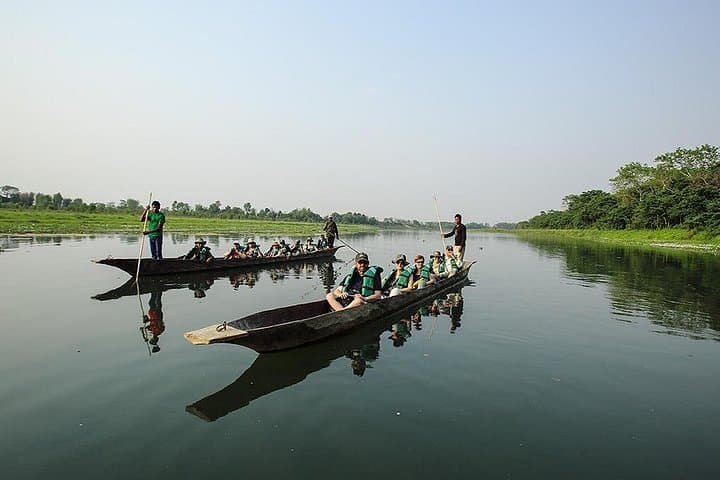
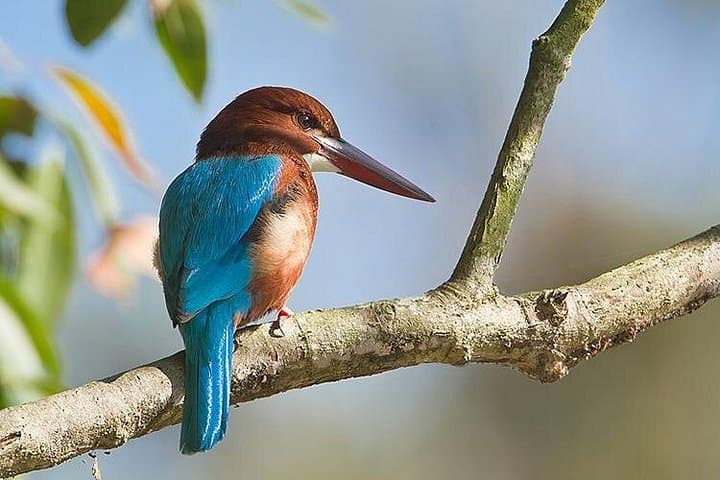
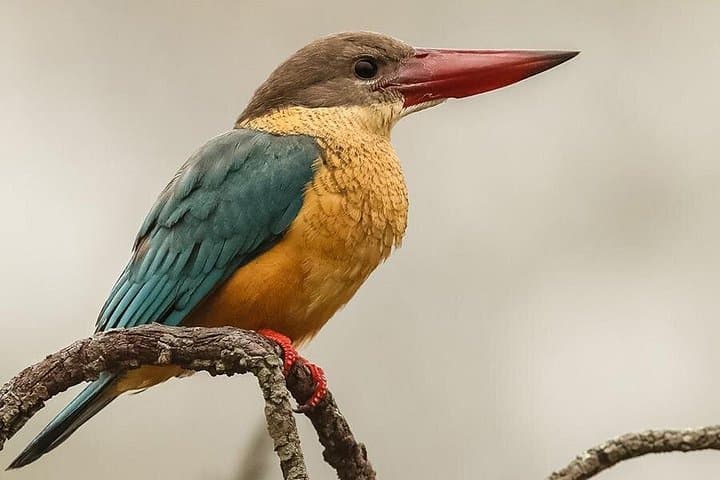
At first light the Rapti loosens its surface into glass and the canoe slips forward with no sound but the paddle's whisper. Kingfishers flash like coins; a distant hornbill calls from the sal forest, and the river banks, low and reed-lined, lean toward you as if curious.
Verified experiences and guided adventures in the surrounding area.
Operated by AM Travels and Tours · Sauraha, Bagmati Province
At first light the Rapti loosens its surface into glass and the canoe slips forward with no sound but the paddle's whisper. Kingfishers flash like coins; a distant hornbill calls from the sal forest, and the river banks, low and reed-lined, lean toward you as if curious.
Chitwan National Park, established in 1973 and a UNESCO World Heritage site since 1984, sits on Terai floodplain geology—broad alluvial flats cut by the Narayani and Rapti rivers, with patches of sal forest and tall grass that support concentrated wildlife. The area is also home to the Tharu people, whose riverine knowledge shaped local canoe craft and guided ecotourism traditions.
This private, four-hour trip pairs slow canoeing with guided birding. Expect river-edge viewing of herons, kingfishers, assorted eagles, and the secretive Bengal florican in grassland pockets; marsh gharials and otters often sun on sandbanks. The dugout canoe offers intimate access—low, quiet, and closer to shore than a motorboat.
Practical guidance: wear sturdy shoes and long sleeves for sun and insects, bring binoculars and a camera with a tele lens, and plan for early-morning departures when birds are most active. Guides provide local safety briefings—keep elbows inside the canoe, avoid sudden movements near crocodile basking spots, and listen to instructions for embarkation and disembarkation.
Timing, patience and a steady eye reward visitors: the river gives up sightings slowly, and the best views come when you move with the current rather than against it.
Guides are trained to avoid known basking spots and will keep a safe distance; do not attempt to feed or approach any crocodile or gharial.
Early morning is best—roughly sunrise to mid-morning—when bird activity and visibility are highest.
The tour is listed as physically easy; children should sit on laps when required and all participants must follow guide safety instructions.
No; the dugout canoe is guided by professionals and requires no paddling skill from participants.
AM Travels and Tours operates guided outdoor trips and adventures with an emphasis on safety, stewardship, and memorable experiences.

At first light the Rapti loosens its surface into glass and the canoe slips forward with no sound but the paddle's whisper. Kingfishers flash like coins; a distant hornbill calls from the sal forest, and the river banks, low and reed-lined, lean toward you as if curious.
At first light the Rapti loosens its surface into glass and the canoe slips forward with no sound but the paddle's whisper. Kingfishers flash like coins; a distant hornbill calls from the sal forest, and the river banks, low and reed-lined, lean toward you as if curious.
Chitwan National Park, established in 1973 and a UNESCO World Heritage site since 1984, sits on Terai floodplain geology—broad alluvial flats cut by the Narayani and Rapti rivers, with patches of sal forest and tall grass that support concentrated wildlife. The area is also home to the Tharu people, whose riverine knowledge shaped local canoe craft and guided ecotourism traditions.
This private, four-hour trip pairs slow canoeing with guided birding. Expect river-edge viewing of herons, kingfishers, assorted eagles, and the secretive Bengal florican in grassland pockets; marsh gharials and otters often sun on sandbanks. The dugout canoe offers intimate access—low, quiet, and closer to shore than a motorboat.
Practical guidance: wear sturdy shoes and long sleeves for sun and insects, bring binoculars and a camera with a tele lens, and plan for early-morning departures when birds are most active. Guides provide local safety briefings—keep elbows inside the canoe, avoid sudden movements near crocodile basking spots, and listen to instructions for embarkation and disembarkation.
Timing, patience and a steady eye reward visitors: the river gives up sightings slowly, and the best views come when you move with the current rather than against it.