THE ADVENTURE COLLECTIVE® · Independent discovery and booking for outdoor travel

Drift down the Rapti by canoe and then follow a trained nature guide into Chitwan’s riverine forest. This 2–3 hour private tour pairs quiet paddling with an interpretive jungle walk ideal for first-time visitors.
Drift down the Rapti by canoe and then follow a trained nature guide into Chitwan’s riverine forest. This 2–3 hour private tour pairs quiet paddling with an interpretive jungle walk ideal for first-time visitors.
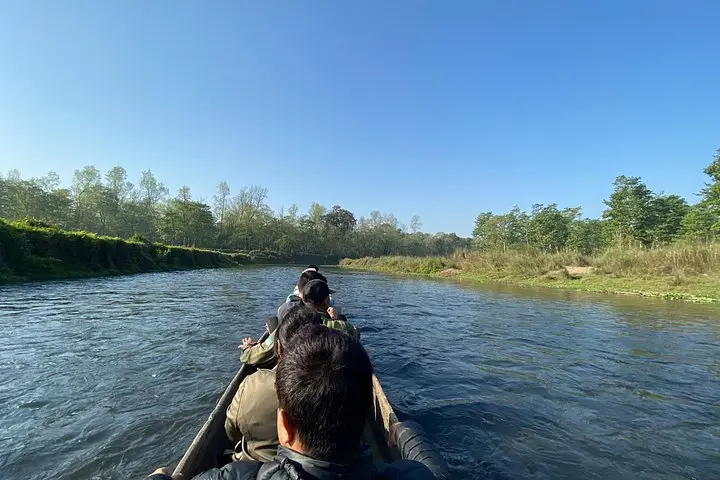
You push off from a narrow bank and the Rapti takes you — a slow, wide river that moves like a living map through tall riverine forest. The canoe drifts for about 45 minutes, river birds cutting low over the water and the opposite bank occasionally revealing a grazing deer or a wall of reeds hiding a crocodile’s snout.
Verified experiences and guided adventures in the surrounding area.
Operated by AM Travels and Tours · Sauraha, Bagmati Province
You push off from a narrow bank and the Rapti takes you — a slow, wide river that moves like a living map through tall riverine forest. The canoe drifts for about 45 minutes, river birds cutting low over the water and the opposite bank occasionally revealing a grazing deer or a wall of reeds hiding a crocodile’s snout.
Chitwan National Park was Nepal’s first national park (established 1973) and a global refuge for the one-horned rhinoceros. Geologically, the park sits on alluvial plains carved by the Narayani and Rapti rivers; soils are rich and the floodplain supports sal forests, grasslands, and riverine scrub.
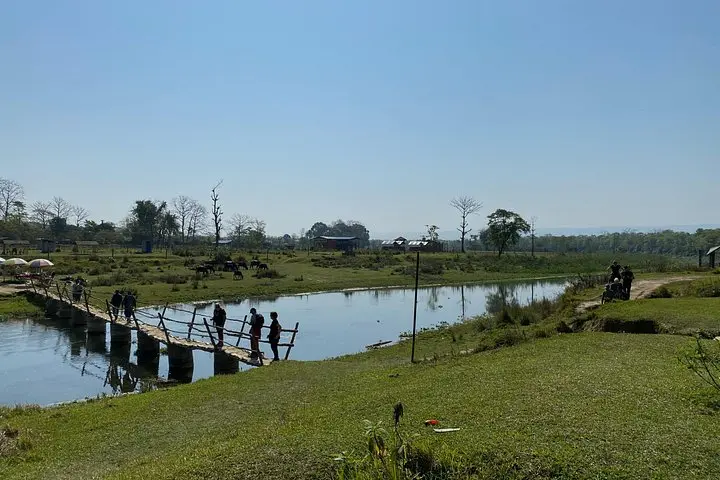
Culturally, Sauraha has grown as the gateway village, where Tharu communities share local crafts and stories about living beside big mammals. A trained nature guide interprets tracks and bird calls, explaining how seasonal floods shape habitat and why river channels shift after monsoon.
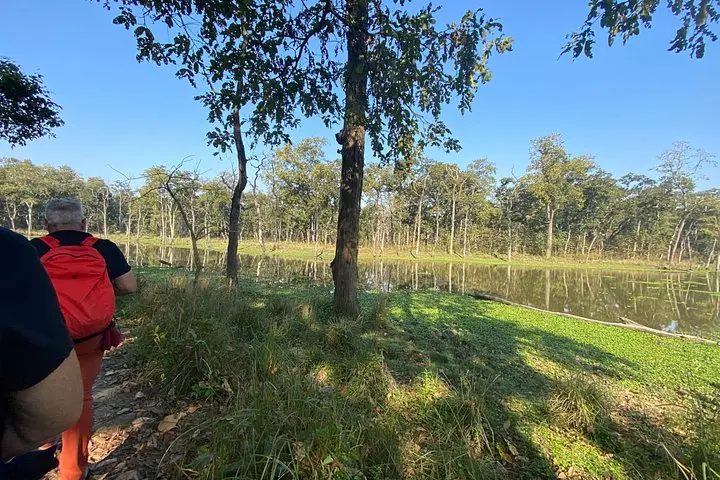
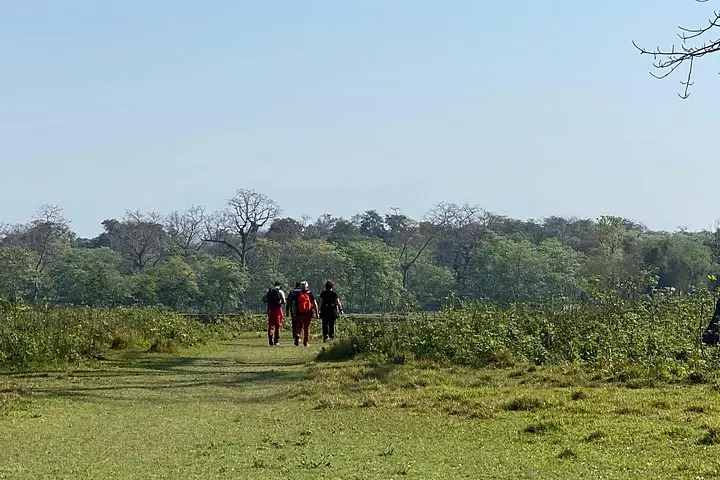
Practically: the full experience runs about 2–3 hours, combining a 45-minute canoe trip with roughly 90 minutes of guided jungle walking on flat terrain. National park entry and hotel pickup are typically included. Wear quick-drying clothes, insect protection, and sturdy shoes for muddy trails. Morning departures give the best light and wildlife activity; afternoons can be hot and more humid.
Expect respectful distances from wildlife — guides prioritize safety and minimum disturbance. This is an accessible introduction to Terai riverine ecosystems, ideal for travelers looking to pair gentle paddling with low-impact wildlife observation.
Yes—this is a low-impact, private tour suitable for children when supervised; confirm specific age policies with the operator.
Rhino sightings are possible but not guaranteed; tiger sightings are rare and require patience and luck or longer safaris.
Most bookings include national park entrance and hotel pickup/drop-off; confirm inclusions at booking time.
Tours may be canceled or rescheduled for heavy rain or unsafe river conditions; operators typically offer full refunds if canceled 24 hours in advance.
AM Travels and Tours operates guided outdoor trips and adventures with an emphasis on safety, stewardship, and memorable experiences.
You push off from a narrow bank and the Rapti takes you — a slow, wide river that moves like a living map through tall riverine forest. The canoe drifts for about 45 minutes, river birds cutting low over the water and the opposite bank occasionally revealing a grazing deer or a wall of reeds hiding a crocodile’s snout.
You push off from a narrow bank and the Rapti takes you — a slow, wide river that moves like a living map through tall riverine forest. The canoe drifts for about 45 minutes, river birds cutting low over the water and the opposite bank occasionally revealing a grazing deer or a wall of reeds hiding a crocodile’s snout.
Chitwan National Park was Nepal’s first national park (established 1973) and a global refuge for the one-horned rhinoceros. Geologically, the park sits on alluvial plains carved by the Narayani and Rapti rivers; soils are rich and the floodplain supports sal forests, grasslands, and riverine scrub.
Culturally, Sauraha has grown as the gateway village, where Tharu communities share local crafts and stories about living beside big mammals. A trained nature guide interprets tracks and bird calls, explaining how seasonal floods shape habitat and why river channels shift after monsoon.
Practically: the full experience runs about 2–3 hours, combining a 45-minute canoe trip with roughly 90 minutes of guided jungle walking on flat terrain. National park entry and hotel pickup are typically included. Wear quick-drying clothes, insect protection, and sturdy shoes for muddy trails. Morning departures give the best light and wildlife activity; afternoons can be hot and more humid.
Expect respectful distances from wildlife — guides prioritize safety and minimum disturbance. This is an accessible introduction to Terai riverine ecosystems, ideal for travelers looking to pair gentle paddling with low-impact wildlife observation.