THE ADVENTURE COLLECTIVE® · Independent discovery and booking for outdoor travel

Walk above one of East Africa’s oldest rainforests on Nyungwe’s canopy bridge. This one-day outing pairs high-elevation views, active wildlife, and a compact, guided route accessible from Gisakura or Huye.
Walk above one of East Africa’s oldest rainforests on Nyungwe’s canopy bridge. This one-day outing pairs high-elevation views, active wildlife, and a compact, guided route accessible from Gisakura or Huye.
Wet earth breathes beneath your boots as the trail climbs from Gisakura toward the canopy walkway, ropes and planked platforms swaying a short distance ahead. The bridge stretches between giant fig and podocarpus crowns — a suspended corridor that places you at eye level with colobus monkeys and birds that treat the upper branches like a highway.
Verified experiences and guided adventures in the surrounding area.
Operated by Usalama Tours Rwanda · Gisakura, Southern Province
Wet earth breathes beneath your boots as the trail climbs from Gisakura toward the canopy walkway, ropes and planked platforms swaying a short distance ahead. The bridge stretches between giant fig and podocarpus crowns — a suspended corridor that places you at eye level with colobus monkeys and birds that treat the upper branches like a highway.
Nyungwe is one of Africa’s oldest montane rainforests, carved into the highlands of southwest Rwanda and shaped by volcanic soils and millennia of heavy rain. The forest supports an extraordinary botany — orchids and giant lobelia — and a primate community that includes colobus, mangabeys and, in other sectors, chimpanzees. Local Kinyarwanda-speaking communities historically harvested honey and medicinal plants here; today the park is a focal point for conservation and community tourism.
The canopy walk itself is a compact, high-adrenaline experience: expect a loop of secured suspension bridges and viewing platforms accessed by well-maintained trails with moderate elevation gain. Wildlife is most active in early morning; clouds often drift through the crowns in the afternoon.
Practical notes: arrive early to avoid afternoon rain and crowds, wear grippy waterproof boots and layers, and leave plastics and loud music behind to respect wildlife. Guided walks include bottled water and a lunch stop at Gisakura, and guides will brief you on safety and wildlife etiquette. The route requires a moderate fitness level and steady footing; for many visitors it’s a single, unforgettable day that pairs high viewpoints with close-up forest life.
The full day tour, including transport, lunch at Gisakura and time on the bridge, lasts roughly 9–10 hours; on-site canopy time is shorter, typically 1–2 hours.
Children can join but infants must sit on an adult’s lap; the tour requires steady footing and is not recommended for those with heart conditions or pregnancy.
Most operators arrange pickup from Kigali or nearby towns; confirm pickup location and travel time (approx. 4–5 hours from Kigali) when booking.
The canopy area hosts many primates like colobus and blue monkeys; chimpanzee sightings are more common on separate habituated trekking routes rather than the canopy walk itself.
Usalama Tours Rwanda operates guided outdoor trips and adventures with an emphasis on safety, stewardship, and memorable experiences.
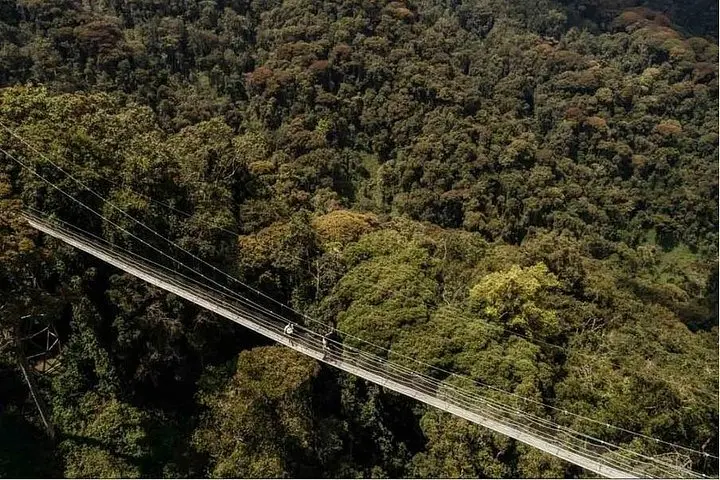
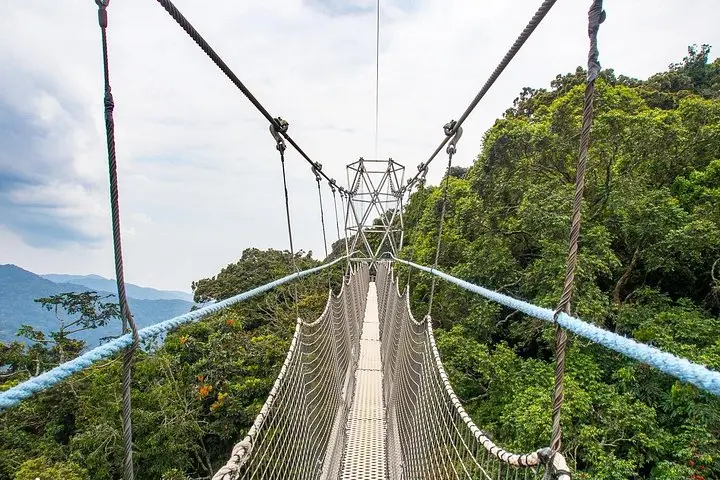
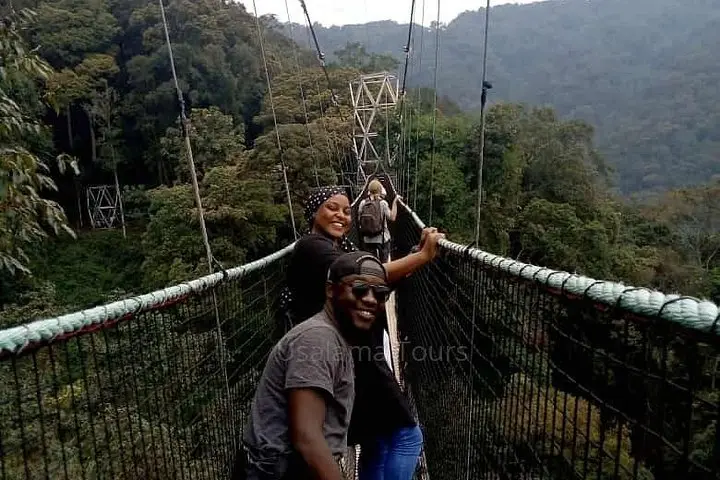
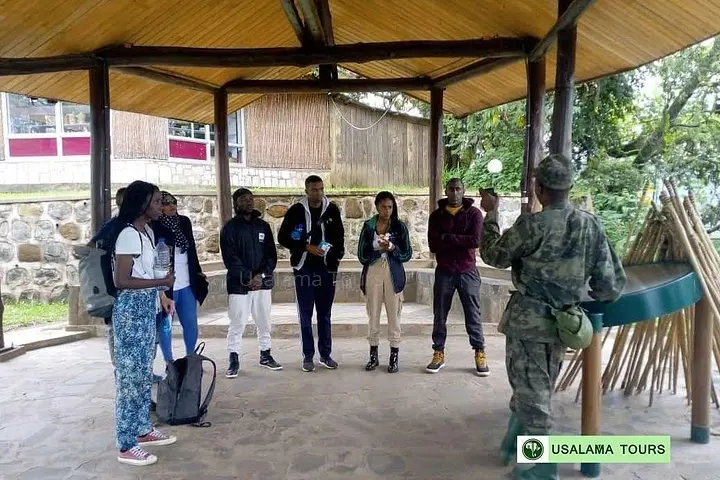
Wet earth breathes beneath your boots as the trail climbs from Gisakura toward the canopy walkway, ropes and planked platforms swaying a short distance ahead. The bridge stretches between giant fig and podocarpus crowns — a suspended corridor that places you at eye level with colobus monkeys and birds that treat the upper branches like a highway.
Wet earth breathes beneath your boots as the trail climbs from Gisakura toward the canopy walkway, ropes and planked platforms swaying a short distance ahead. The bridge stretches between giant fig and podocarpus crowns — a suspended corridor that places you at eye level with colobus monkeys and birds that treat the upper branches like a highway.
Nyungwe is one of Africa’s oldest montane rainforests, carved into the highlands of southwest Rwanda and shaped by volcanic soils and millennia of heavy rain. The forest supports an extraordinary botany — orchids and giant lobelia — and a primate community that includes colobus, mangabeys and, in other sectors, chimpanzees. Local Kinyarwanda-speaking communities historically harvested honey and medicinal plants here; today the park is a focal point for conservation and community tourism.
The canopy walk itself is a compact, high-adrenaline experience: expect a loop of secured suspension bridges and viewing platforms accessed by well-maintained trails with moderate elevation gain. Wildlife is most active in early morning; clouds often drift through the crowns in the afternoon.
Practical notes: arrive early to avoid afternoon rain and crowds, wear grippy waterproof boots and layers, and leave plastics and loud music behind to respect wildlife. Guided walks include bottled water and a lunch stop at Gisakura, and guides will brief you on safety and wildlife etiquette. The route requires a moderate fitness level and steady footing; for many visitors it’s a single, unforgettable day that pairs high viewpoints with close-up forest life.