THE ADVENTURE COLLECTIVE® · Independent discovery and booking for outdoor travel

Step into Laggan Canyon and follow the river’s push through slides, scrambles, jumps and abseils. This 3‑hour guided descent near Roybridge blends glacial geology, cool highland water and approachable technical moves.
Step into Laggan Canyon and follow the river’s push through slides, scrambles, jumps and abseils. This 3‑hour guided descent near Roybridge blends glacial geology, cool highland water and approachable technical moves.
You push past bracken and heather and the sound changes—stones clatter, water narrows, the river begins to dare you. Laggan Canyon’s basalt walls cut a cold, bright throat through the Highlands; sunlight skitters across seams of wet rock as the guides kit you up for a downstream descent.
Verified experiences and guided adventures in the surrounding area.
Operated by River Wild Adventures · Laggan, Highland
You push past bracken and heather and the sound changes—stones clatter, water narrows, the river begins to dare you. Laggan Canyon’s basalt walls cut a cold, bright throat through the Highlands; sunlight skitters across seams of wet rock as the guides kit you up for a downstream descent.
The canyon takes its formal name from the Gaelic Allt na h-Uamha and sits on the western edge of the Cairngorms uplands where glacial action and repeated floods carved steep slabs and potholes. Locals have used these burns for centuries; today the gorge offers a raw, accessible slice of Scottish geology and working-class outdoor culture—sheep grazes and hydro-fed burns above, adventure below.
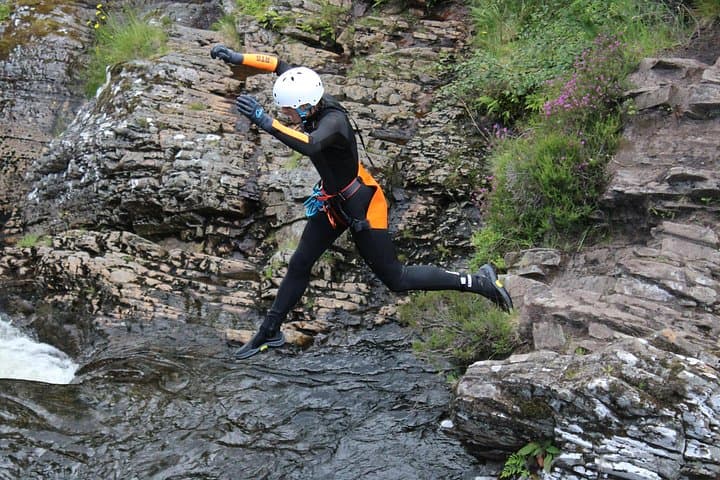
Expect a mixed descent of scrambling, short jumps into deep pools, natural slides and at least one controlled abseil. Typical trips run about 3 hours, covering roughly 1–2 km with an overall vertical change on the order of 80–120 m depending on the line chosen. Terrain alternates between polished bedrock and loose talus; water is cold year-round.
The operator supplies wetsuits, neoprene boots, helmets, harnesses and photos; practical prep on your side includes a close-fitting base layer, a secure camera strap, and dry clothes for after. Fitness should be moderate—comfortable on uneven ground and able to swim in cold water. Choose mid-summer for longer daylight and warmer air, or late spring for higher flows and bigger slides. Pay attention to guide briefings, treat the river with respect, and you’ll leave with a sharper sense of how water shapes the Highlands.
No. Guides run lines suitable for beginners and experienced canyoneers, and will teach necessary techniques during the safety briefing.
A close-fitting synthetic or merino base layer is best—no cotton; it stays wet and chills you faster.
Operators typically require a minimum age and have weight/fitness guidelines—confirm at booking; children must be supervised and meet physical requirements.
Trips can be cancelled for safety due to heavy rain or high flows; the provider usually refunds if conditions are unsafe and may reschedule.
River Wild Adventures operates guided outdoor trips and adventures with an emphasis on safety, stewardship, and memorable experiences.


You push past bracken and heather and the sound changes—stones clatter, water narrows, the river begins to dare you. Laggan Canyon’s basalt walls cut a cold, bright throat through the Highlands; sunlight skitters across seams of wet rock as the guides kit you up for a downstream descent.
You push past bracken and heather and the sound changes—stones clatter, water narrows, the river begins to dare you. Laggan Canyon’s basalt walls cut a cold, bright throat through the Highlands; sunlight skitters across seams of wet rock as the guides kit you up for a downstream descent.
The canyon takes its formal name from the Gaelic Allt na h-Uamha and sits on the western edge of the Cairngorms uplands where glacial action and repeated floods carved steep slabs and potholes. Locals have used these burns for centuries; today the gorge offers a raw, accessible slice of Scottish geology and working-class outdoor culture—sheep grazes and hydro-fed burns above, adventure below.
Expect a mixed descent of scrambling, short jumps into deep pools, natural slides and at least one controlled abseil. Typical trips run about 3 hours, covering roughly 1–2 km with an overall vertical change on the order of 80–120 m depending on the line chosen. Terrain alternates between polished bedrock and loose talus; water is cold year-round.
The operator supplies wetsuits, neoprene boots, helmets, harnesses and photos; practical prep on your side includes a close-fitting base layer, a secure camera strap, and dry clothes for after. Fitness should be moderate—comfortable on uneven ground and able to swim in cold water. Choose mid-summer for longer daylight and warmer air, or late spring for higher flows and bigger slides. Pay attention to guide briefings, treat the river with respect, and you’ll leave with a sharper sense of how water shapes the Highlands.