THE ADVENTURE COLLECTIVE® · Independent discovery and booking for outdoor travel

From behind Kotor’s medieval walls you hike an hour to a narrow limestone throat where waterfalls and pools shape a playground of rappels, jumps and slippery scrambles. This 3–4 hour canyoning trip balances adrenaline with careful guiding—ideal for fit adventurers who want an intense taste of Montenegro’s rugged interior.
From behind Kotor’s medieval walls you hike an hour to a narrow limestone throat where waterfalls and pools shape a playground of rappels, jumps and slippery scrambles. This 3–4 hour canyoning trip balances adrenaline with careful guiding—ideal for fit adventurers who want an intense taste of Montenegro’s rugged interior.
The first footfalls leave dust in the narrow lane behind Kotor’s stone walls; a city that looks outward to the bay suddenly sends you inward, up a serpentine flank toward the throat of a canyon carved into coastal limestone. On a bright morning the inland air is cooler, the soundscape shifting from gulls and church bells to rushing water and the sharp clack of boots on wet rock. Guides fit helmets and harnesses at the canyon mouth, the gear catching the light like small promises of controlled risk.
Verified experiences and guided adventures in the surrounding area.
Operated by Attraction Montenegro Tour · Kotor, Kotor Municipality
The first footfalls leave dust in the narrow lane behind Kotor’s stone walls; a city that looks outward to the bay suddenly sends you inward, up a serpentine flank toward the throat of a canyon carved into coastal limestone. On a bright morning the inland air is cooler, the soundscape shifting from gulls and church bells to rushing water and the sharp clack of boots on wet rock. Guides fit helmets and harnesses at the canyon mouth, the gear catching the light like small promises of controlled risk.
Skurda River’s gorge feels like an archaeological layer of geology and human habit. Millennia of karst erosion smoothed cliffs into chimneys and bowls, and winter floods still write new lines into the stone. Kotor’s medieval walls—built to watch the Bay—stand in cultural contrast to the raw, vertical country this canyon cuts through. Locals have long treated these gorges as both resource and challenge: routes for shepherds, seasonal water for villages, and now playgrounds for adventure travelers.
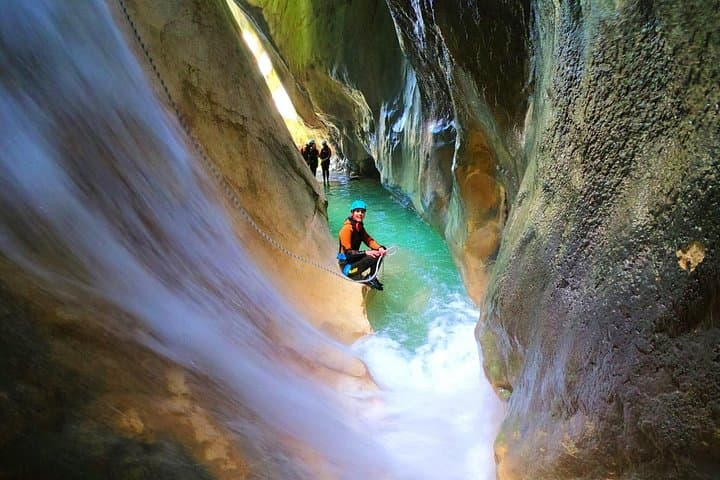
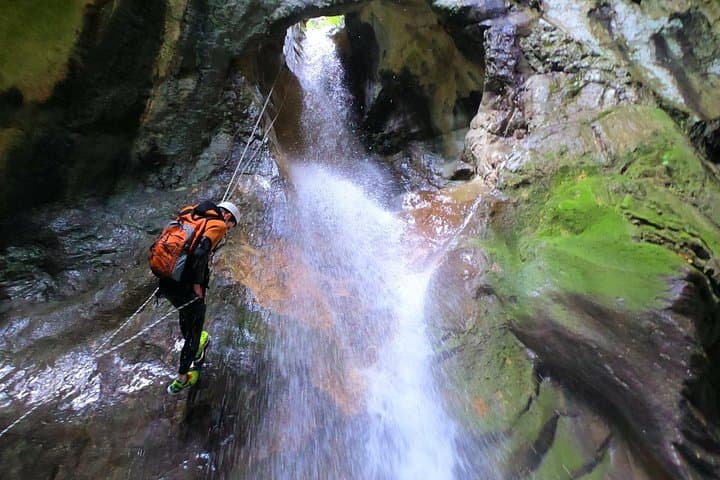
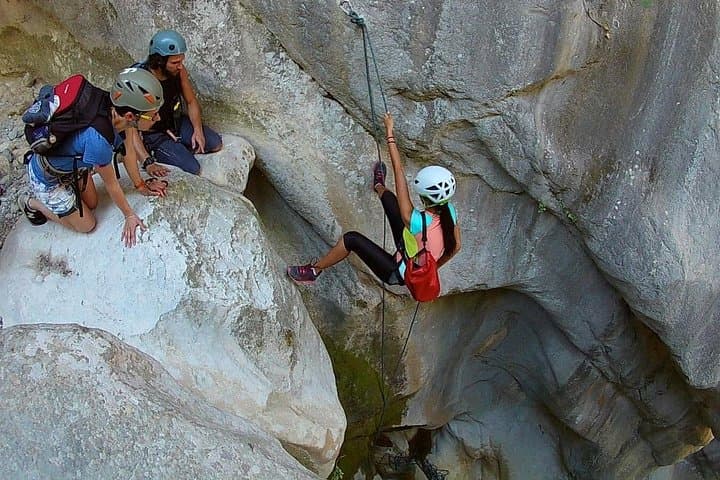
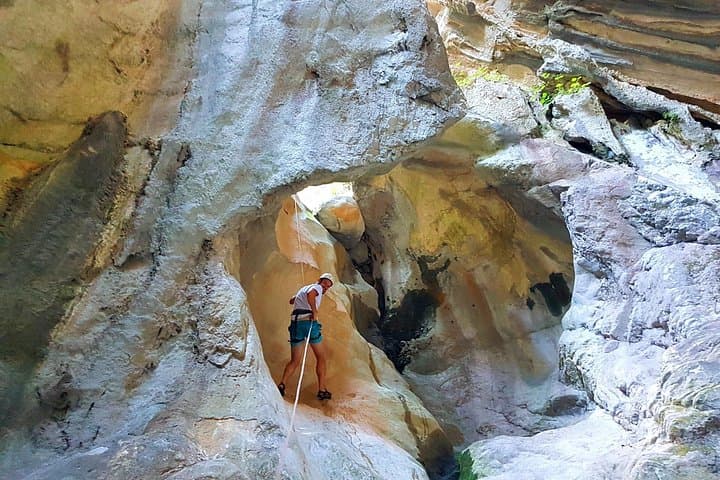
The route begins with a roughly one-hour hike from the Old Town gate to the canyon’s upper lip—an approach that gives a slow reveal: first the distant roar, then the cliff mouths, then cataracts falling into green-blue pools. Inside, the canyon demands movement variety: scrambling over slippery steps, short swims, controlled jumps into pools, and rappels of up to 25 meters where rope and anchor translate height into opportunity. In summer the river retreats into isolated emerald basins and most obstacles are dry or shallow; shoulder seasons and winter bring dramatically larger waterfalls and necessitate a neoprene suit supplied by the operator.
Practical edge: the full experience takes about 3–4 hours from gate to exit and ends just behind Kotor’s Old Town walls. Guides supply helmets, dry bags, rappelling equipment, water, snacks and usually photos or video of the run. The standard group size tops out near 15, so book early in high season. This itinerary is physically demanding—expect steep uneven approaches, cold water if seasonal flows are high, and repeated weight-bearing on legs and arms.
To prepare, bring quick-dry clothing, sturdy canyon-appropriate footwear with good grip, and a small daypack with sunscreen and a water bottle (the operator supplies bottled water). If you have back, heart, or pregnancy concerns, this is not the trip for you; the operator flags the same restrictions. Timing matters: summer offers warmer pools and fewer surprises, while spring and autumn provide the drama of waterfalls but colder water and harder conditions.
For travelers who want an unplugged rush anchored in place—where cliffs feel alive and the canyon tests both nerve and technique—Skurda is a concise, intense slice of Montenegro’s wild side, bookable from Kotor and guided by operators who know how to move groups safely through collapsing light and churning water.
The canyoning itself lasts about 2–3 hours within a 3–4 hour total outing including approach and return.
No technical certificate is needed, but you should be comfortable rappelling, swimming short distances, and moving on uneven, slippery terrain.
Guides provide helmets, harnesses, rappelling equipment, neoprene suits when needed, dry bags, bottled water, snacks and usually photos or video.
Operators set age and fitness limits; check with the provider—this route is best for older teens with good physical ability.
In high-flow conditions guides will supply neoprene suits and may alter or postpone sections; the operator can cancel for safety, with refund rules applying.
Meeting and return point is the main gate of Kotor Old Town; the route hikes out of town to the canyon and finishes behind the Old Town walls.
Attraction Montenegro Tour operates guided outdoor trips and adventures with an emphasis on safety, stewardship, and memorable experiences.
The first footfalls leave dust in the narrow lane behind Kotor’s stone walls; a city that looks outward to the bay suddenly sends you inward, up a serpentine flank toward the throat of a canyon carved into coastal limestone. On a bright morning the inland air is cooler, the soundscape shifting from gulls and church bells to rushing water and the sharp clack of boots on wet rock. Guides fit helmets and harnesses at the canyon mouth, the gear catching the light like small promises of controlled risk.
The first footfalls leave dust in the narrow lane behind Kotor’s stone walls; a city that looks outward to the bay suddenly sends you inward, up a serpentine flank toward the throat of a canyon carved into coastal limestone. On a bright morning the inland air is cooler, the soundscape shifting from gulls and church bells to rushing water and the sharp clack of boots on wet rock. Guides fit helmets and harnesses at the canyon mouth, the gear catching the light like small promises of controlled risk.
Skurda River’s gorge feels like an archaeological layer of geology and human habit. Millennia of karst erosion smoothed cliffs into chimneys and bowls, and winter floods still write new lines into the stone. Kotor’s medieval walls—built to watch the Bay—stand in cultural contrast to the raw, vertical country this canyon cuts through. Locals have long treated these gorges as both resource and challenge: routes for shepherds, seasonal water for villages, and now playgrounds for adventure travelers.
The route begins with a roughly one-hour hike from the Old Town gate to the canyon’s upper lip—an approach that gives a slow reveal: first the distant roar, then the cliff mouths, then cataracts falling into green-blue pools. Inside, the canyon demands movement variety: scrambling over slippery steps, short swims, controlled jumps into pools, and rappels of up to 25 meters where rope and anchor translate height into opportunity. In summer the river retreats into isolated emerald basins and most obstacles are dry or shallow; shoulder seasons and winter bring dramatically larger waterfalls and necessitate a neoprene suit supplied by the operator.
Practical edge: the full experience takes about 3–4 hours from gate to exit and ends just behind Kotor’s Old Town walls. Guides supply helmets, dry bags, rappelling equipment, water, snacks and usually photos or video of the run. The standard group size tops out near 15, so book early in high season. This itinerary is physically demanding—expect steep uneven approaches, cold water if seasonal flows are high, and repeated weight-bearing on legs and arms.
To prepare, bring quick-dry clothing, sturdy canyon-appropriate footwear with good grip, and a small daypack with sunscreen and a water bottle (the operator supplies bottled water). If you have back, heart, or pregnancy concerns, this is not the trip for you; the operator flags the same restrictions. Timing matters: summer offers warmer pools and fewer surprises, while spring and autumn provide the drama of waterfalls but colder water and harder conditions.
For travelers who want an unplugged rush anchored in place—where cliffs feel alive and the canyon tests both nerve and technique—Skurda is a concise, intense slice of Montenegro’s wild side, bookable from Kotor and guided by operators who know how to move groups safely through collapsing light and churning water.