THE ADVENTURE COLLECTIVE® · Independent discovery and booking for outdoor travel

Slide, rappel and jump through a narrow limestone gorge just inland from Benidorm. This three‑hour guided canyoning trip leads to a 20‑m waterfall and warm pool exits, with all core safety kit supplied.
Slide, rappel and jump through a narrow limestone gorge just inland from Benidorm. This three‑hour guided canyoning trip leads to a 20‑m waterfall and warm pool exits, with all core safety kit supplied.
The canyon opens like a dark corridor etched into warm limestone; light slices in where pools collect and the rock narrows. Participants move single-file, the sound of water shifting from a trickle to confident pools that invite jumps and the occasional rappel. Guides check knots, offer a hand, and call out lines where the route tightens.
Verified experiences and guided adventures in the surrounding area.
Operated by Grieta Aventura · Callosa d'en Sarrià, Alicante
The canyon opens like a dark corridor etched into warm limestone; light slices in where pools collect and the rock narrows. Participants move single-file, the sound of water shifting from a trickle to confident pools that invite jumps and the occasional rappel. Guides check knots, offer a hand, and call out lines where the route tightens.
This stretch of the Marina Baixa sits on karstified limestone carved over millennia—sinkholes, narrow gorges and the 20‑metre Toll Salt waterfall mark the route’s geology. The area’s villages, including Callosa d’en Sarrià and Bolulla, carry agricultural and Moorish irrigation traces: terraced groves and stone footpaths that lead into the ravine.
Expect mostly dry entry channels, then a sequence of water-worn steps, waist-to-shoulder pools and rope work. The descent uses basic canyoning techniques—guides set up rappels and signal jumps into deep basins. Equipment (helmet, harness, neoprene, booties) is provided; participants need to be comfortable in moving water and able to swim short distances.
Practical edge: the run is about three hours door-to-door for the activity, groups cap at around 15, and operators require no vertigo and basic swimming ability. Midday light is strongest for swimming holes; spring and autumn deliver cooler water and fewer crowds. Bring a swimsuit, water shoes if you prefer your own, and a waterproof phone container for the guided photo report. The route rewards steady technique more than brute strength—move deliberately, trust the rope systems, and the canyon’s warm pools will do the rest.
No prior canyoning experience is required; guides set up rope systems and coach jumps and rappels throughout the route.
Operators require participants to know how to swim; exposure to deep pools makes swimming ability essential.
Age and weight policies vary by operator—booking questions request age, height and weight so the guide can assign appropriate equipment.
Bring a waterproof pouch if you want to keep a phone; many companies also provide a guided photo report taken by the instructors.
Grieta Aventura operates guided outdoor trips and adventures with an emphasis on safety, stewardship, and memorable experiences.
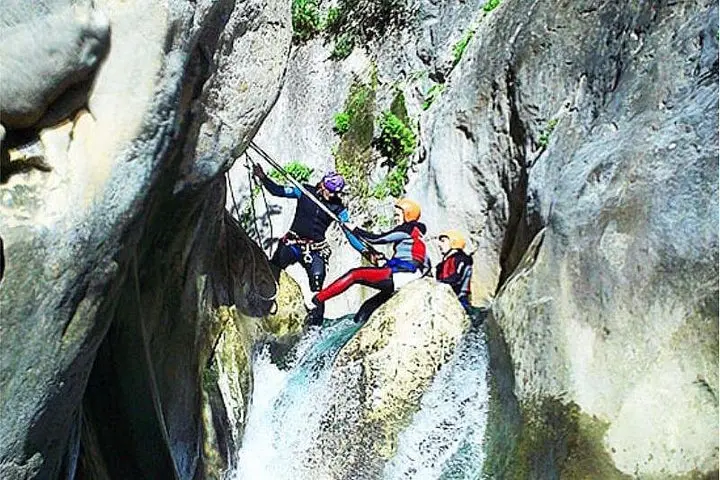
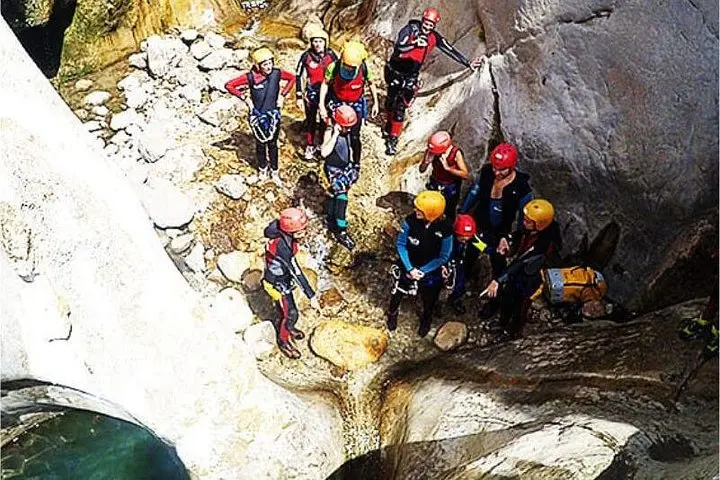
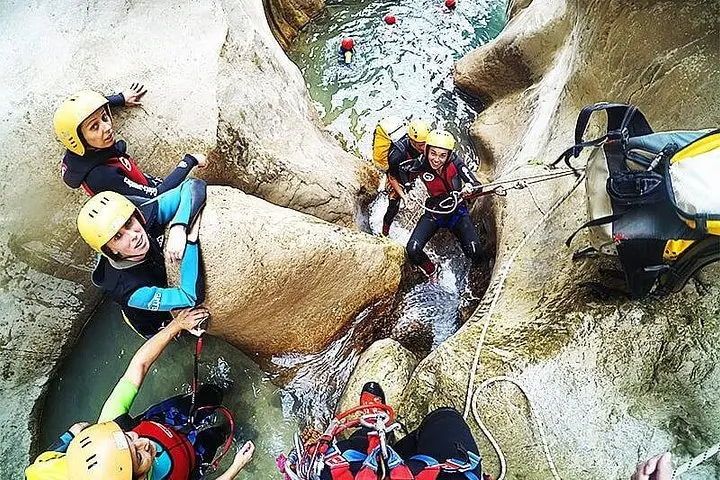
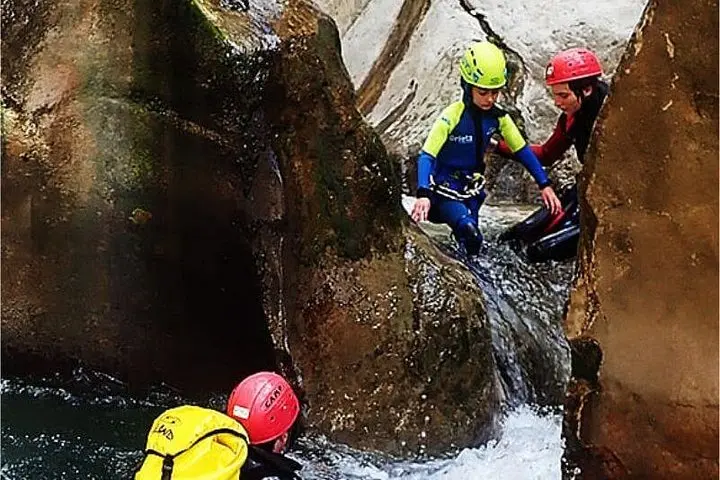
The canyon opens like a dark corridor etched into warm limestone; light slices in where pools collect and the rock narrows. Participants move single-file, the sound of water shifting from a trickle to confident pools that invite jumps and the occasional rappel. Guides check knots, offer a hand, and call out lines where the route tightens.
The canyon opens like a dark corridor etched into warm limestone; light slices in where pools collect and the rock narrows. Participants move single-file, the sound of water shifting from a trickle to confident pools that invite jumps and the occasional rappel. Guides check knots, offer a hand, and call out lines where the route tightens.
This stretch of the Marina Baixa sits on karstified limestone carved over millennia—sinkholes, narrow gorges and the 20‑metre Toll Salt waterfall mark the route’s geology. The area’s villages, including Callosa d’en Sarrià and Bolulla, carry agricultural and Moorish irrigation traces: terraced groves and stone footpaths that lead into the ravine.
Expect mostly dry entry channels, then a sequence of water-worn steps, waist-to-shoulder pools and rope work. The descent uses basic canyoning techniques—guides set up rappels and signal jumps into deep basins. Equipment (helmet, harness, neoprene, booties) is provided; participants need to be comfortable in moving water and able to swim short distances.
Practical edge: the run is about three hours door-to-door for the activity, groups cap at around 15, and operators require no vertigo and basic swimming ability. Midday light is strongest for swimming holes; spring and autumn deliver cooler water and fewer crowds. Bring a swimsuit, water shoes if you prefer your own, and a waterproof phone container for the guided photo report. The route rewards steady technique more than brute strength—move deliberately, trust the rope systems, and the canyon’s warm pools will do the rest.