THE ADVENTURE COLLECTIVE® · Independent discovery and booking for outdoor travel

Three days along Cao Bang’s limestone ridges and border rivers—visit Ban Gioc Waterfall, Pac Bo historic sites, Nguom Ngao cave and Vinh Quy grass hill. Expect long drives, short hikes, homestays and strong geological scenery.
Three days along Cao Bang’s limestone ridges and border rivers—visit Ban Gioc Waterfall, Pac Bo historic sites, Nguom Ngao cave and Vinh Quy grass hill. Expect long drives, short hikes, homestays and strong geological scenery.
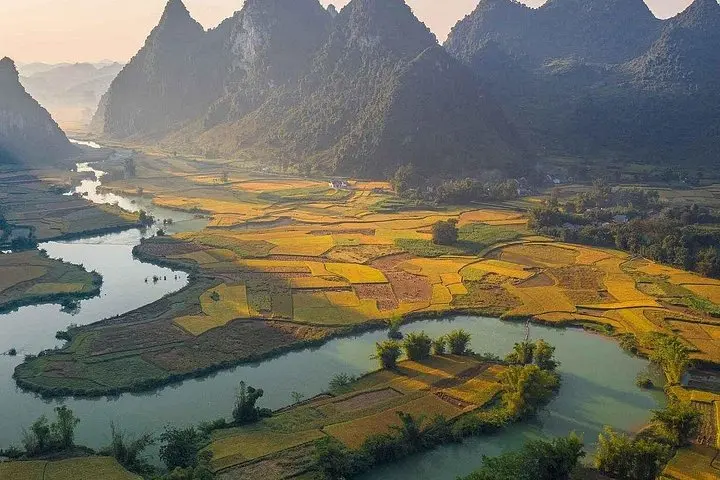
Mist hangs low over the Quây Sơn River as the bus curves through limestone ribs—first light turns the cascades into silver curtains and the road into a ribbon that dares you forward.
Verified experiences and guided adventures in the surrounding area.
Operated by Phu Tho Travel · Cao Bang City, Cao Bang
Mist hangs low over the Quây Sơn River as the bus curves through limestone ribs—first light turns the cascades into silver curtains and the road into a ribbon that dares you forward.
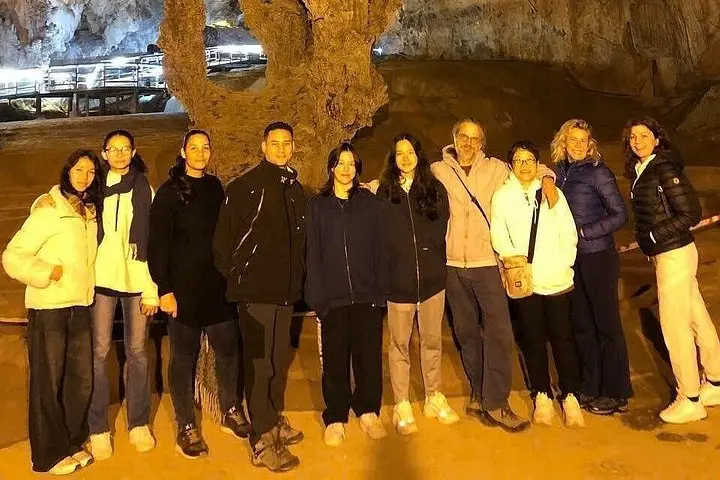
Over three days the circuit moves deliberately: Pac Bo’s Lenin Stream and Coc Bo Cave recall Ho Chi Minh’s early days in the jungle, while the Ma Phuc Pass (about 3.5 km of switchbacks) frames a procession of karst towers and green valleys. The tour spends a morning inside Động Ngườm Ngao—more than 2 km of caverns—where stalactites drip like slow clocks and the air cools by degrees.
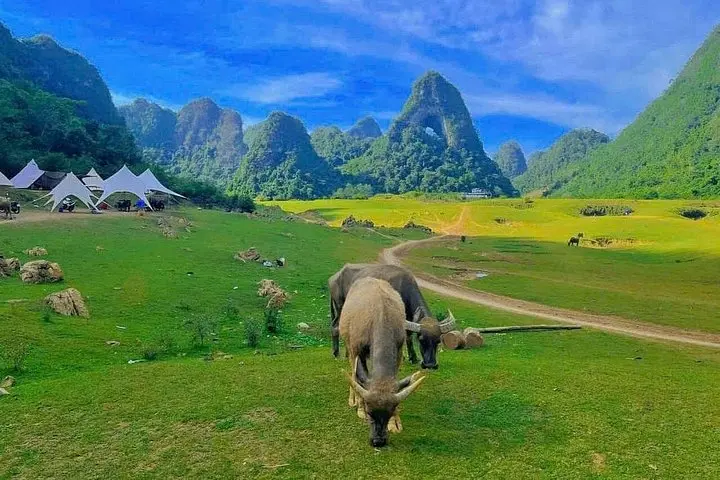
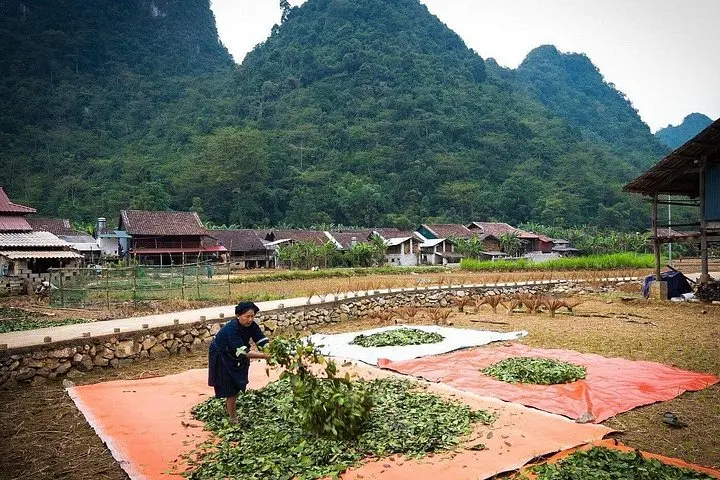
Geology shapes everything here. Cao Bang’s karst limestone has been sculpted by rivers and time into sinkholes, natural “eyes” such as Angel Eye Mountain, and the tiered sheets of Ban Gioc that spill across the Vietnam–China border. Culture is equally present: Tay, Nung and H’mong families keep incense-making and homestay traditions alive in Phia Thap and Khuoi Ky.
Practical guide: expect long drives broken by short walks (most stops involve 30–90 minute walks on uneven surfaces), simple homestays and local meals, and variable weather—pack layers and rain protection. Aim for early starts to catch Ban Gioc and Vinh Quy with fewer visitors and stronger light for photos.
This itinerary is best for travelers with moderate fitness who want a mix of history, geology and village life—bring sturdy shoes, patience for travel times, and curiosity for rural northern Vietnam.
The tour typically departs from Hanoi Old Quarter and returns to Hanoi; accommodations are in Cao Bang City and local homestays near Ban Gioc.
Most stops require short walks of 30–90 minutes over uneven terrain; nothing requires technical climbing but you should be comfortable on slippery or rocky surfaces.
The itinerary includes breakfasts, lunches and dinners listed, plus entrance fees for Nguom Ngao Cave, Pac Bo and Ban Gioc as noted in the inclusions.
Children and active seniors can join, but the tour is not recommended for travelers with serious back, heart or mobility issues due to long drives and uneven walking surfaces.
Phu Tho Travel operates guided outdoor trips and adventures with an emphasis on safety, stewardship, and memorable experiences.
Mist hangs low over the Quây Sơn River as the bus curves through limestone ribs—first light turns the cascades into silver curtains and the road into a ribbon that dares you forward.
Mist hangs low over the Quây Sơn River as the bus curves through limestone ribs—first light turns the cascades into silver curtains and the road into a ribbon that dares you forward.
Over three days the circuit moves deliberately: Pac Bo’s Lenin Stream and Coc Bo Cave recall Ho Chi Minh’s early days in the jungle, while the Ma Phuc Pass (about 3.5 km of switchbacks) frames a procession of karst towers and green valleys. The tour spends a morning inside Động Ngườm Ngao—more than 2 km of caverns—where stalactites drip like slow clocks and the air cools by degrees.
Geology shapes everything here. Cao Bang’s karst limestone has been sculpted by rivers and time into sinkholes, natural “eyes” such as Angel Eye Mountain, and the tiered sheets of Ban Gioc that spill across the Vietnam–China border. Culture is equally present: Tay, Nung and H’mong families keep incense-making and homestay traditions alive in Phia Thap and Khuoi Ky.
Practical guide: expect long drives broken by short walks (most stops involve 30–90 minute walks on uneven surfaces), simple homestays and local meals, and variable weather—pack layers and rain protection. Aim for early starts to catch Ban Gioc and Vinh Quy with fewer visitors and stronger light for photos.
This itinerary is best for travelers with moderate fitness who want a mix of history, geology and village life—bring sturdy shoes, patience for travel times, and curiosity for rural northern Vietnam.