THE ADVENTURE COLLECTIVE® · Independent discovery and booking for outdoor travel

Half-day from Tangier to Cape Spartel and the Caves of Hercules, finished with a short camel ride on the beach—perfect for history lovers and coastal photographers. Learn local lore, walk limestone chambers, and watch two seas meet.
Half-day from Tangier to Cape Spartel and the Caves of Hercules, finished with a short camel ride on the beach—perfect for history lovers and coastal photographers. Learn local lore, walk limestone chambers, and watch two seas meet.
You step out of the minivan and the sea takes over — wind-driven spray, the hollow call of gulls, and a cliff-edge view where two oceans argue across the horizon.
Verified experiences and guided adventures in the surrounding area.
Operated by Welcome Morocco · Tangier, Tanger-Tetouan-Al Hoceima
You step out of the minivan and the sea takes over — wind-driven spray, the hollow call of gulls, and a cliff-edge view where two oceans argue across the horizon.
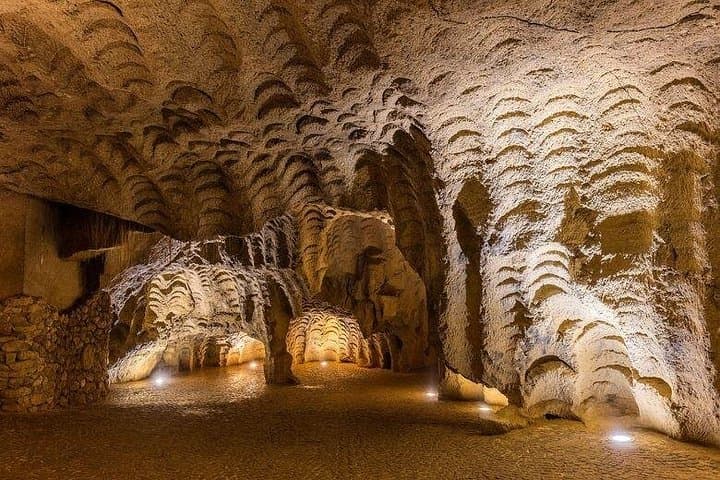
The tour threads together three distinct moments: Cape Spartel’s lighthouse perch, the cool limestone chambers of the Grotte d’Hercule, and a short camel ride along the sand. Geologically, the cape is a raised coastal promontory carved by Atlantic swell and Mediterranean currents; the cave is a worn notch in Miocene and Pliocene limestone where waves have hollowed chambers and left a naturally framed opening that many see as the "Map of Africa." Culturally, the area has long served as a navigation point for Phoenician and later European mariners, while local Berber and Arab traditions continue in the nearby villages and tea stalls.
Expect a balance of easy walking and short stair sections in the cave, relaxed photo stops at the lighthouse viewpoint, and a gentle, guided camel experience on firm sand. Guides typically outline the Hercules myth and point out maritime history while keeping the pace unhurried.
Practical notes: bring a windproof layer, closed-toe shoes for uneven cave floors, and sunscreen for exposed viewpoints. Entrance fees to the cave are often collected locally and may not be included; camel rides and transport generally are. Morning light softens the cliffs; late afternoon gives warmer tones and calmer photo conditions. The route is a half-day loop suitable for moderately fit travelers looking for a compact mix of geology, myth, and coastal motion.
Most itineraries note that cave admission may be charged locally and is not always included—bring cash and confirm with your operator before arrival.
Yes — a guided camel ride on the beach is listed among inclusions, usually brief and suited to first-time riders.
Families can join, but infants may need to sit on laps for portions of transport; check operator rules for age limits and infant seating.
This listing indicates private-tour options; contact the provider in advance for accessibility concerns or special requests.
Welcome Morocco operates guided outdoor trips and adventures with an emphasis on safety, stewardship, and memorable experiences.


You step out of the minivan and the sea takes over — wind-driven spray, the hollow call of gulls, and a cliff-edge view where two oceans argue across the horizon.
You step out of the minivan and the sea takes over — wind-driven spray, the hollow call of gulls, and a cliff-edge view where two oceans argue across the horizon.
The tour threads together three distinct moments: Cape Spartel’s lighthouse perch, the cool limestone chambers of the Grotte d’Hercule, and a short camel ride along the sand. Geologically, the cape is a raised coastal promontory carved by Atlantic swell and Mediterranean currents; the cave is a worn notch in Miocene and Pliocene limestone where waves have hollowed chambers and left a naturally framed opening that many see as the "Map of Africa." Culturally, the area has long served as a navigation point for Phoenician and later European mariners, while local Berber and Arab traditions continue in the nearby villages and tea stalls.
Expect a balance of easy walking and short stair sections in the cave, relaxed photo stops at the lighthouse viewpoint, and a gentle, guided camel experience on firm sand. Guides typically outline the Hercules myth and point out maritime history while keeping the pace unhurried.
Practical notes: bring a windproof layer, closed-toe shoes for uneven cave floors, and sunscreen for exposed viewpoints. Entrance fees to the cave are often collected locally and may not be included; camel rides and transport generally are. Morning light softens the cliffs; late afternoon gives warmer tones and calmer photo conditions. The route is a half-day loop suitable for moderately fit travelers looking for a compact mix of geology, myth, and coastal motion.