THE ADVENTURE COLLECTIVE® · Independent discovery and booking for outdoor travel

Cycle the Capachica shore of Lake Titicaca from Puno—an accessible, high-altitude ride past Quechua farms, gravel tracks and wide lake views. Perfect for amateur riders who want cultural contact, big water vistas and a short, supported ride.
Cycle the Capachica shore of Lake Titicaca from Puno—an accessible, high-altitude ride past Quechua farms, gravel tracks and wide lake views. Perfect for amateur riders who want cultural contact, big water vistas and a short, supported ride.
Start on Puno’s main square as the van eases away toward the Capachica Peninsula; Lake Titicaca stretches out like a slow-moving sea that dares you to follow its shoreline. Pedaling from the small community of Escallani, the wind off the lake pushes and pulls at your pace while distant Andean peaks stand watch, their glaciated ridgelines bright against the sky.
Verified experiences and guided adventures in the surrounding area.
Operated by Sacred Lake Servicios Turisticos · Puno, Puno
Start on Puno’s main square as the van eases away toward the Capachica Peninsula; Lake Titicaca stretches out like a slow-moving sea that dares you to follow its shoreline. Pedaling from the small community of Escallani, the wind off the lake pushes and pulls at your pace while distant Andean peaks stand watch, their glaciated ridgelines bright against the sky.
This short, high-altitude circuit sits at roughly 12,400 feet (3,780 m). Geologically, Titicaca is an uplifted basin carved by tectonic forces and ancient lacustrine processes; the Capachica shore is a mix of gravel tracks, compacted dirt roads and cultivated fields. Culturally the terrain belongs to Quechua farming communities—rows of quinoa and potatoes and coca fields, altiplano adobe houses and rugged agricultural terraces. Expect to meet locals going about daily tasks and to glimpse traditional dress and pack animals.
The ride itself is about 1.5 hours of pedaling with a support team and travel time included (total tour ~4 hours). Trails are mostly moderate on rolling terrain with occasional loose gravel; the provided carbon bikes make climbs manageable. Practical notes: acclimatize in Puno for 24–48 hours if possible, wear strong sun protection (UV is intense at altitude), carry layers for wind and sudden temperature swings, and hydrate—altitude amplifies dehydration. A support van accompanies the group for comfort and safety, and the route is suitable for confident beginners and intermediate riders. Photographing the lake at golden hour rewards patience; on a clear day the ice-line on distant peaks is visible and the lake appears to stretch forever.
The guided ride is approximately 1 hour 30 minutes of pedaling, with total tour time about four hours including transport.
No advanced skills required—this is suitable for confident beginners and families, but basic bike handling on gravel is needed.
Yes—Puno and the Capachica Peninsula are high (around 3,780 m). Allow time to acclimatize, limit alcohol beforehand, and monitor symptoms.
Yes—carbon fiber bikes and a support team/vehicle are included, along with bottled water.
Sacred Lake Servicios Turisticos operates guided outdoor trips and adventures with an emphasis on safety, stewardship, and memorable experiences.
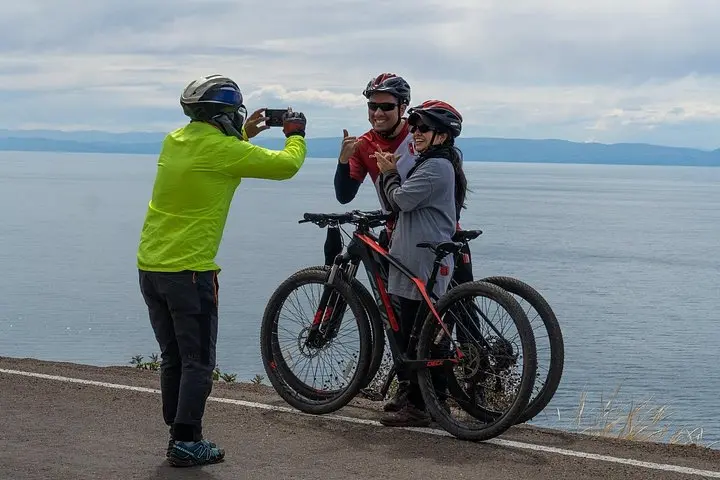
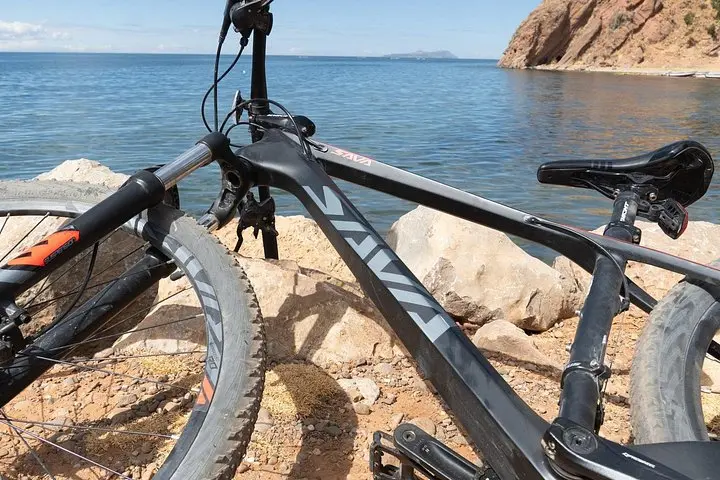
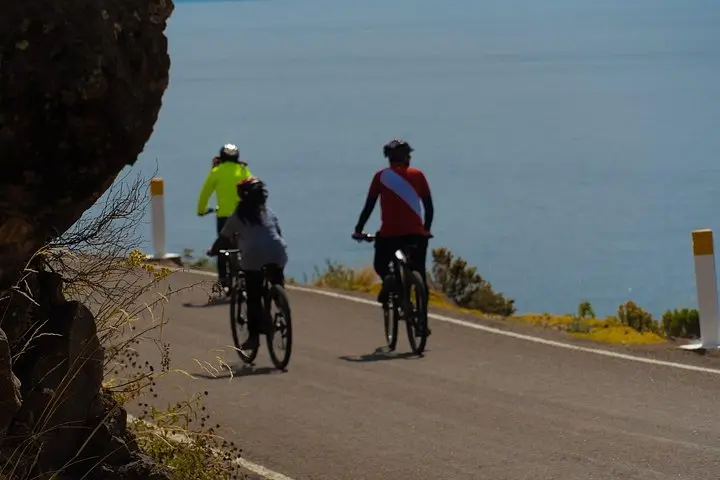
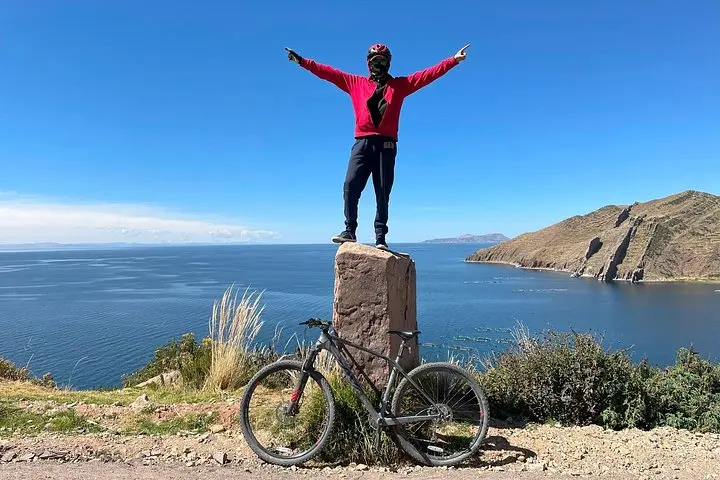
Start on Puno’s main square as the van eases away toward the Capachica Peninsula; Lake Titicaca stretches out like a slow-moving sea that dares you to follow its shoreline. Pedaling from the small community of Escallani, the wind off the lake pushes and pulls at your pace while distant Andean peaks stand watch, their glaciated ridgelines bright against the sky.
Start on Puno’s main square as the van eases away toward the Capachica Peninsula; Lake Titicaca stretches out like a slow-moving sea that dares you to follow its shoreline. Pedaling from the small community of Escallani, the wind off the lake pushes and pulls at your pace while distant Andean peaks stand watch, their glaciated ridgelines bright against the sky.
This short, high-altitude circuit sits at roughly 12,400 feet (3,780 m). Geologically, Titicaca is an uplifted basin carved by tectonic forces and ancient lacustrine processes; the Capachica shore is a mix of gravel tracks, compacted dirt roads and cultivated fields. Culturally the terrain belongs to Quechua farming communities—rows of quinoa and potatoes and coca fields, altiplano adobe houses and rugged agricultural terraces. Expect to meet locals going about daily tasks and to glimpse traditional dress and pack animals.
The ride itself is about 1.5 hours of pedaling with a support team and travel time included (total tour ~4 hours). Trails are mostly moderate on rolling terrain with occasional loose gravel; the provided carbon bikes make climbs manageable. Practical notes: acclimatize in Puno for 24–48 hours if possible, wear strong sun protection (UV is intense at altitude), carry layers for wind and sudden temperature swings, and hydrate—altitude amplifies dehydration. A support van accompanies the group for comfort and safety, and the route is suitable for confident beginners and intermediate riders. Photographing the lake at golden hour rewards patience; on a clear day the ice-line on distant peaks is visible and the lake appears to stretch forever.