THE ADVENTURE COLLECTIVE® · Independent discovery and booking for outdoor travel

Stand with one foot in the Indian Ocean and the other in the Atlantic on a private full-day tour from Cape Town. This guided trip combines lighthouse history, penguin colonies, and seasonal whale-watching with seaside villages and a wine-valley stop.
Stand with one foot in the Indian Ocean and the other in the Atlantic on a private full-day tour from Cape Town. This guided trip combines lighthouse history, penguin colonies, and seasonal whale-watching with seaside villages and a wine-valley stop.
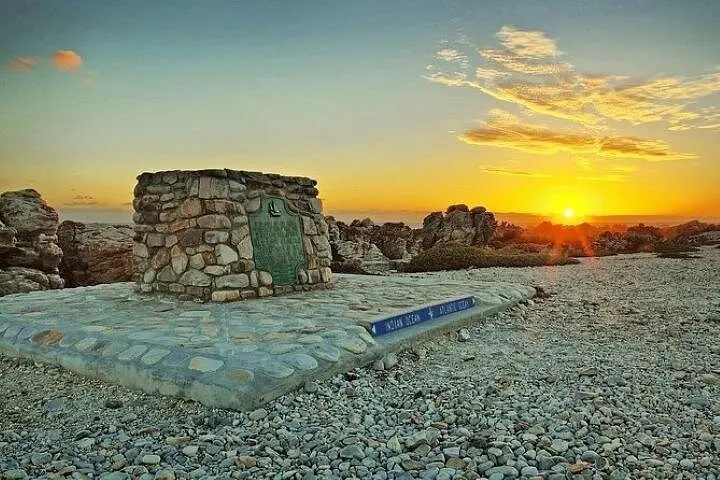
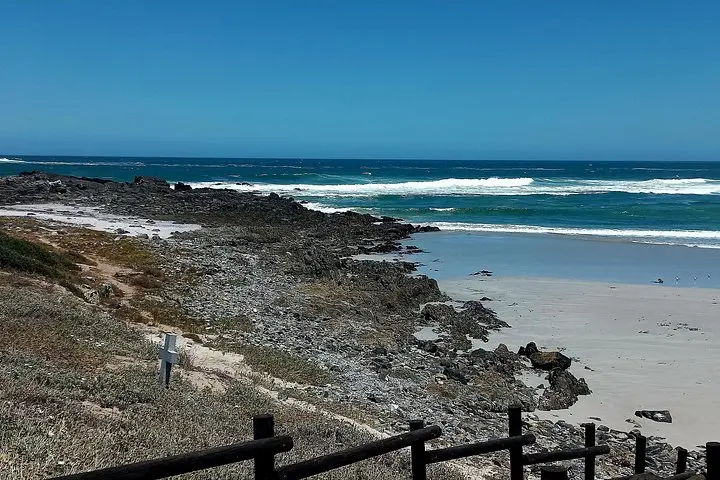
A wind-scoured pathway leads you out to a low, rocky lip where the sea throws two moods at once — the cooler, tumbling Atlantic on one side and the warmer sweep of the Indian Ocean on the other. On a clear day the South African light sharpens the lighthouse brick and the bronze plaque marking the official meeting point; on blustery afternoons the surf dares you to stand still.
Verified experiences and guided adventures in the surrounding area.
Operated by Kule Tours & Travel · L'Agulhas, Western Cape
A wind-scoured pathway leads you out to a low, rocky lip where the sea throws two moods at once — the cooler, tumbling Atlantic on one side and the warmer sweep of the Indian Ocean on the other. On a clear day the South African light sharpens the lighthouse brick and the bronze plaque marking the official meeting point; on blustery afternoons the surf dares you to stand still.
This private full-day tour covers about 220–240 km one way from Cape Town and visits the southernmost tip of Africa, home to one of the country’s oldest lighthouses (mid-19th century), shorebird habitat, and deep geological history: folded sandstones and limestone that speak to an ancient coastline and shifting currents. Cultural notes follow the route — fishing villages like Struisbaai and the Hemel-en-Aarde valley’s winemaking legacy near Hermanus, where land and sea intersect in both cuisine and craft.
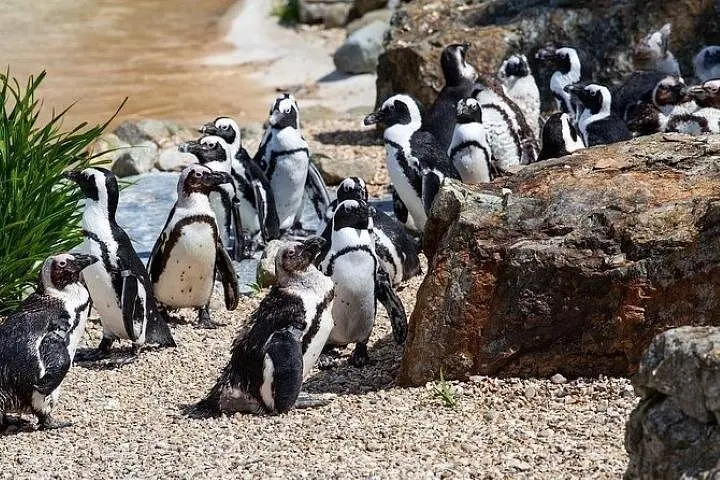
Expect boardwalks, short guided walks to marker points, a stop in the Hemel-en-Aarde for optional tastings, and a visit to Stony Point’s penguin colony and possible land-based whale spotting in season (June–Nov). The day is long — plan for a 10–12 hour itinerary that’s low on technical challenge but high on driving and coastal exposure.
Practical guidance: bring a windproof layer, sun protection, and binoculars; allow extra time for photography and winery queues; follow boardwalk rules at penguin colonies; and book whale-season windows early. The trip is a compact lesson in South African coastline, wildlife, and maritime history delivered with practical, shore-side access.
The road distance is roughly 220–240 km each way and the transfer takes about 2.5–3 hours one way, depending on traffic and stops.
The tour notes include entrance fees and admission to key sites; confirm specifics with the operator when booking.
Land-based southern right whale spotting is most reliable between June and November; spring and early summer can still yield sightings.
Yes—infant seats are available and the tour is generally family-friendly, but it’s not recommended for travelers with serious spinal or cardiovascular conditions.
Kule Tours & Travel operates guided outdoor trips and adventures with an emphasis on safety, stewardship, and memorable experiences.
A wind-scoured pathway leads you out to a low, rocky lip where the sea throws two moods at once — the cooler, tumbling Atlantic on one side and the warmer sweep of the Indian Ocean on the other. On a clear day the South African light sharpens the lighthouse brick and the bronze plaque marking the official meeting point; on blustery afternoons the surf dares you to stand still.
A wind-scoured pathway leads you out to a low, rocky lip where the sea throws two moods at once — the cooler, tumbling Atlantic on one side and the warmer sweep of the Indian Ocean on the other. On a clear day the South African light sharpens the lighthouse brick and the bronze plaque marking the official meeting point; on blustery afternoons the surf dares you to stand still.
This private full-day tour covers about 220–240 km one way from Cape Town and visits the southernmost tip of Africa, home to one of the country’s oldest lighthouses (mid-19th century), shorebird habitat, and deep geological history: folded sandstones and limestone that speak to an ancient coastline and shifting currents. Cultural notes follow the route — fishing villages like Struisbaai and the Hemel-en-Aarde valley’s winemaking legacy near Hermanus, where land and sea intersect in both cuisine and craft.
Expect boardwalks, short guided walks to marker points, a stop in the Hemel-en-Aarde for optional tastings, and a visit to Stony Point’s penguin colony and possible land-based whale spotting in season (June–Nov). The day is long — plan for a 10–12 hour itinerary that’s low on technical challenge but high on driving and coastal exposure.
Practical guidance: bring a windproof layer, sun protection, and binoculars; allow extra time for photography and winery queues; follow boardwalk rules at penguin colonies; and book whale-season windows early. The trip is a compact lesson in South African coastline, wildlife, and maritime history delivered with practical, shore-side access.