THE ADVENTURE COLLECTIVE® · Independent discovery and booking for outdoor travel

Stand on the balcony of one of Tasmania’s oldest lighthouses for raw Southern Ocean panoramas and a compact, interpretive climb through maritime history. This 30-minute guided tour pairs close-up lens photography with dolerite-cliff geology and keeper-era stories.
Stand on the balcony of one of Tasmania’s oldest lighthouses for raw Southern Ocean panoramas and a compact, interpretive climb through maritime history. This 30-minute guided tour pairs close-up lens photography with dolerite-cliff geology and keeper-era stories.
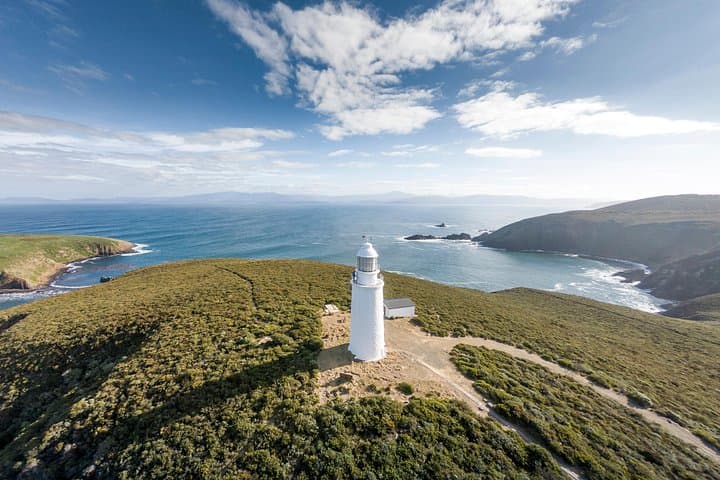
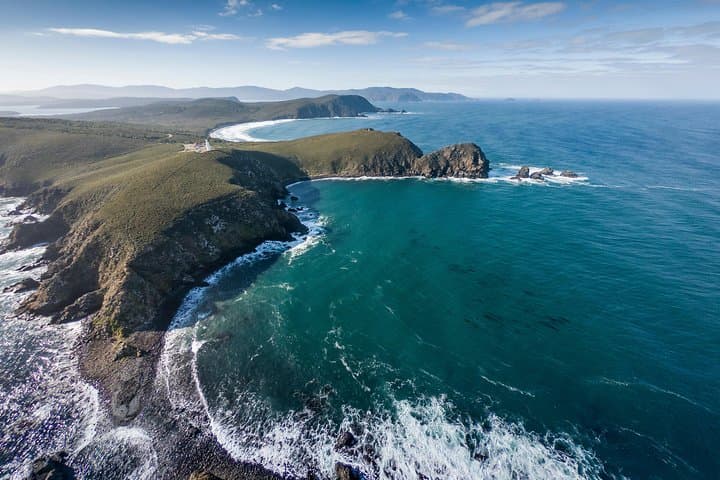
The wind hits first — cold, salty, and honest — as you hike the quick rise from the Cape Bruny car park to the white tower. On a clear day the balcony opens to an Atlantic-hard horizon and iron-dark dolerite cliffs that fall straight into the Southern Ocean; on foggy mornings the light feels like a private conversation between sea and stone.
Verified experiences and guided adventures in the surrounding area.
Operated by Bruny Island Safaris · Alonnah, Tasmania
The wind hits first — cold, salty, and honest — as you hike the quick rise from the Cape Bruny car park to the white tower. On a clear day the balcony opens to an Atlantic-hard horizon and iron-dark dolerite cliffs that fall straight into the Southern Ocean; on foggy mornings the light feels like a private conversation between sea and stone.
Built in the 1830s and one of Tasmania’s oldest operational lighthouses, Cape Bruny sits inside South Bruny National Park and marks a long maritime history of steamer routes, shipwrecks and coastal shepherding. The cliff line is late-Mesozoic dolerite — blocky, columnar rock that gives the headland its abrupt vertical faces — while shorebirds and seals use the offshore shelves as hunting grounds. The nearby communities, including Alonnah, still carry a thread of island life: small farms, seasonal fishing, and a growing eco-tourism scene.
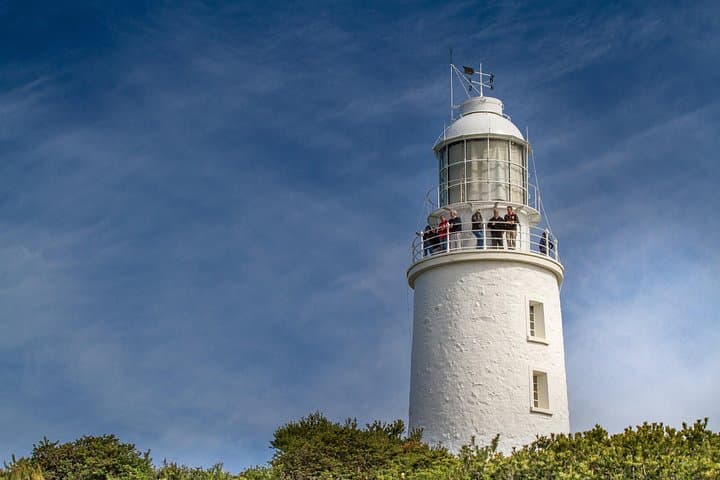
On the tour you’ll enter the tower, climb the spiral stair to the prism room and stand on the balcony for wide-angle photo ops. Guides cover lighthouse technology, keeper life, and local shipwreck stories. Bring warm layers: the wind will push at you on the balcony, and the stairs are narrow and steep. Tickets run about 30 minutes total; a parks pass is required to enter South Bruny National Park. Start mid-morning for calmer winds and better light, and use binoculars provided to scan for dolphins and seabirds. The experience is short but spatially intense — tactile history, geological theatre, and the sea all conspiring to keep your attention.
The guided visit runs about 30 minutes total, including the climb to the prism room and time on the balcony.
Yes — Cape Bruny Lighthouse is inside South Bruny National Park and entry requires a valid parks pass.
Children may attend but those under 5 are not permitted on the tour; all minors must be accompanied by an adult.
Most people can, but the spiral stair is narrow and may be unsuitable for those with severe mobility issues or vertigo; staff reserve the right to refuse service for safety reasons.
Bruny Island Safaris operates guided outdoor trips and adventures with an emphasis on safety, stewardship, and memorable experiences.

The wind hits first — cold, salty, and honest — as you hike the quick rise from the Cape Bruny car park to the white tower. On a clear day the balcony opens to an Atlantic-hard horizon and iron-dark dolerite cliffs that fall straight into the Southern Ocean; on foggy mornings the light feels like a private conversation between sea and stone.
The wind hits first — cold, salty, and honest — as you hike the quick rise from the Cape Bruny car park to the white tower. On a clear day the balcony opens to an Atlantic-hard horizon and iron-dark dolerite cliffs that fall straight into the Southern Ocean; on foggy mornings the light feels like a private conversation between sea and stone.
Built in the 1830s and one of Tasmania’s oldest operational lighthouses, Cape Bruny sits inside South Bruny National Park and marks a long maritime history of steamer routes, shipwrecks and coastal shepherding. The cliff line is late-Mesozoic dolerite — blocky, columnar rock that gives the headland its abrupt vertical faces — while shorebirds and seals use the offshore shelves as hunting grounds. The nearby communities, including Alonnah, still carry a thread of island life: small farms, seasonal fishing, and a growing eco-tourism scene.
On the tour you’ll enter the tower, climb the spiral stair to the prism room and stand on the balcony for wide-angle photo ops. Guides cover lighthouse technology, keeper life, and local shipwreck stories. Bring warm layers: the wind will push at you on the balcony, and the stairs are narrow and steep. Tickets run about 30 minutes total; a parks pass is required to enter South Bruny National Park. Start mid-morning for calmer winds and better light, and use binoculars provided to scan for dolphins and seabirds. The experience is short but spatially intense — tactile history, geological theatre, and the sea all conspiring to keep your attention.