THE ADVENTURE COLLECTIVE® · Independent discovery and booking for outdoor travel

Leave the ship for an eight-hour shore excursion from Takoradi to Cape Coast and Elmina Castles. Explore dungeon passages, coastal forts, and active fishing harbours with a local guide who frames the history and contemporary life of Ghana’s central coast.
Leave the ship for an eight-hour shore excursion from Takoradi to Cape Coast and Elmina Castles. Explore dungeon passages, coastal forts, and active fishing harbours with a local guide who frames the history and contemporary life of Ghana’s central coast.
You step off the ship into the humid Atlantic air and the road unfurls toward two of Ghana’s most solemn and striking stone forts. The drive from Takoradi threads coastal settlements, past Monkey Hill’s green crown and the busy Elmina fishing harbour where canoes crowd the water like restless punctuation.
Verified experiences and guided adventures in the surrounding area.
Operated by Hausa Tours · Cape Coast, Central Region
You step off the ship into the humid Atlantic air and the road unfurls toward two of Ghana’s most solemn and striking stone forts. The drive from Takoradi threads coastal settlements, past Monkey Hill’s green crown and the busy Elmina fishing harbour where canoes crowd the water like restless punctuation.
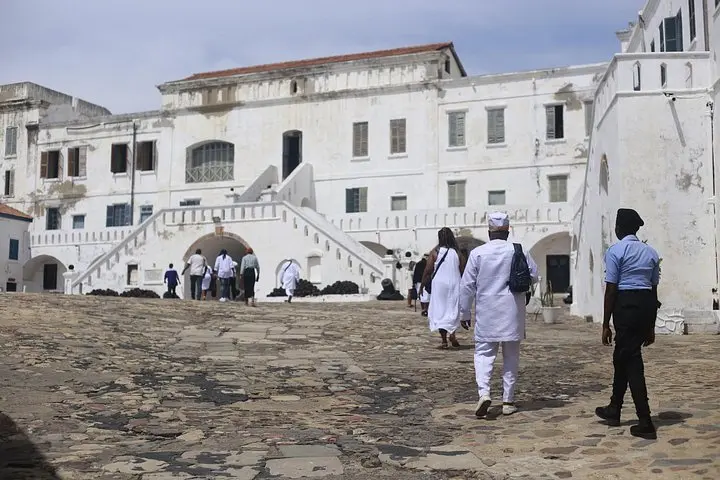
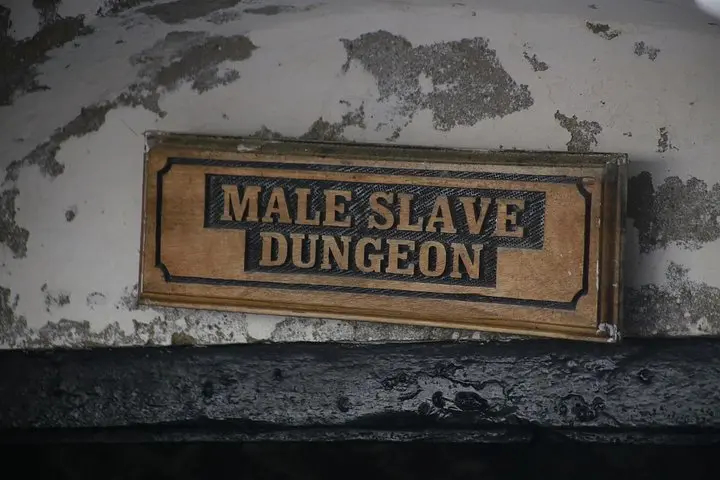
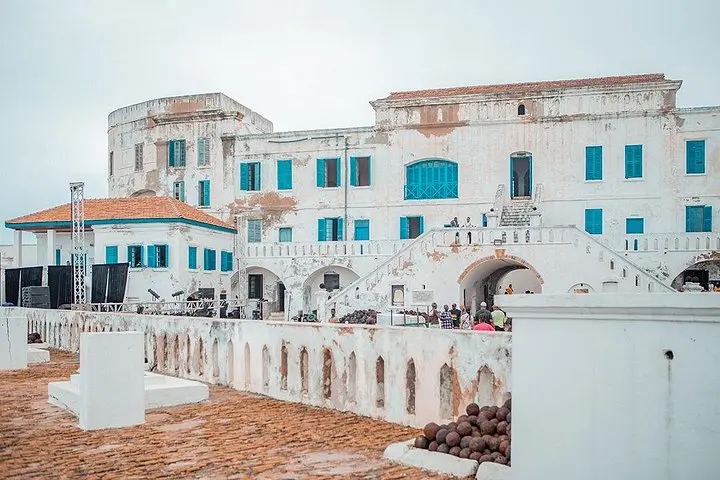
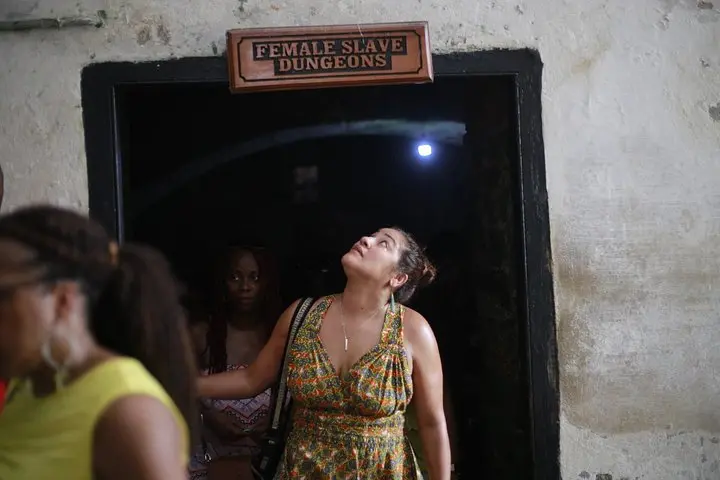
At Cape Coast Castle the guide leads you down narrow, low-ceilinged dungeons where the silence is measured and the light is thin; the West African Historical Museum next door contextualizes the trade networks, colonial politics, and the lives erased in ledger lines. Elmina Castle arrives with a different silhouette — larger, older, Portuguese in origin — its battlements facing the channel as if still bargaining with the sea.
Geology here is simple: iron-rich coastal laterite and exposed bedrock that held these stone structures firm for centuries. Culturally, the castles are focal points for Ghana’s remembrance and annual reparation dialogues, and the fishing towns around them continue living traditions of net-mending and market trade.
Practicalities shape the day: the full excursion is roughly eight hours including transfers, with two hour-long guided visits at each castle. Expect uneven stone steps, open courtyards, and coastal winds that can be sharp. Bring sun protection, a printed or mobile ticket, and allow time for photography stops at the harbour and colonial townscapes.
This is a day for listening, steady walking, and reflection — an accessible shore excursion that pairs historical depth with straightforward logistics, suitable for travelers ready to engage respectfully with a difficult past.
Yes — the itinerary lists guided visits to Cape Coast Castle and Elmina Castle with admissions included as part of the tour.
The tour and transport are listed as wheelchair accessible, but castles contain uneven stone surfaces and staircases; accessibility within the forts may be limited.
Children can join; infants are required to sit on an adult’s lap. Consider the emotional and educational nature of the sites for younger children.
Carry some Ghanaian cedi for market purchases and small tips; tipping guides and drivers (a small amount per person) is customary but discretionary.
Hausa Tours operates guided outdoor trips and adventures with an emphasis on safety, stewardship, and memorable experiences.
You step off the ship into the humid Atlantic air and the road unfurls toward two of Ghana’s most solemn and striking stone forts. The drive from Takoradi threads coastal settlements, past Monkey Hill’s green crown and the busy Elmina fishing harbour where canoes crowd the water like restless punctuation.
You step off the ship into the humid Atlantic air and the road unfurls toward two of Ghana’s most solemn and striking stone forts. The drive from Takoradi threads coastal settlements, past Monkey Hill’s green crown and the busy Elmina fishing harbour where canoes crowd the water like restless punctuation.
At Cape Coast Castle the guide leads you down narrow, low-ceilinged dungeons where the silence is measured and the light is thin; the West African Historical Museum next door contextualizes the trade networks, colonial politics, and the lives erased in ledger lines. Elmina Castle arrives with a different silhouette — larger, older, Portuguese in origin — its battlements facing the channel as if still bargaining with the sea.
Geology here is simple: iron-rich coastal laterite and exposed bedrock that held these stone structures firm for centuries. Culturally, the castles are focal points for Ghana’s remembrance and annual reparation dialogues, and the fishing towns around them continue living traditions of net-mending and market trade.
Practicalities shape the day: the full excursion is roughly eight hours including transfers, with two hour-long guided visits at each castle. Expect uneven stone steps, open courtyards, and coastal winds that can be sharp. Bring sun protection, a printed or mobile ticket, and allow time for photography stops at the harbour and colonial townscapes.
This is a day for listening, steady walking, and reflection — an accessible shore excursion that pairs historical depth with straightforward logistics, suitable for travelers ready to engage respectfully with a difficult past.