THE ADVENTURE COLLECTIVE® · Independent discovery and booking for outdoor travel

Walk through two of Ghana’s most important slave castles—Elmina and Cape Coast—on a 2–5 hour guided day tour. Expect coastal views, historic dungeons, and a sober, informative narrative about the Trans‑Atlantic Slave Trade.
Walk through two of Ghana’s most important slave castles—Elmina and Cape Coast—on a 2–5 hour guided day tour. Expect coastal views, historic dungeons, and a sober, informative narrative about the Trans‑Atlantic Slave Trade.
A salty wind pushes across the Gulf of Guinea as you step from the van onto a flagstone courtyard that has watched centuries of ships come and go.
Verified experiences and guided adventures in the surrounding area.
Operated by Ghana Tours · Cape Coast, Central Region
A salty wind pushes across the Gulf of Guinea as you step from the van onto a flagstone courtyard that has watched centuries of ships come and go.
This day tour threads two of Ghana’s most powerful colonial sites: Elmina Castle (St. George’s) and Cape Coast Castle. Elmina’s thick stone walls, first built by the Portuguese in 1482, look out over a reef-strewn shoreline; Cape Coast Castle, enlarged through successive European hands in the 17th and 18th centuries, sits where trading rooms, dungeons and chapel meet the tide. Together they map the architecture and administration of the Trans‑Atlantic Slave Trade—auction rooms, cramped holding cells and merchant journals remain as stark evidence.
Geology here is simple and immediate: black volcanic rock and laterite form the foundations, while sandy beaches and mangrove pockets frame the coast. Culturally, the forts sit within towns where Akan and Fante traditions continue alongside colonial legacies—local markets and fishing harbors vibrate with daily life.
Practical guidance: tours typically run 2–5 hours; expect uneven stone steps, narrow corridors and open courtyards exposed to sun and sea breeze. Bring sun protection and water, wear sturdy shoes, and allow time for quiet reflection in the dungeons and on the battlements. Photography is common but be respectful at memorial sites and when local guides share testimonies.
A visit here is both an outdoor walk along Ghana’s central coast and a focused historical experience—direct, sometimes heavy, and always illuminating.
Tours typically last between 2 and 5 hours depending on pacing and transfers between sites.
Many organized tours include castle admission, but confirm with your operator; small purchases and tips usually require local cash.
Yes—physical demands are moderate, but the castles have tight staircases and low lighting; families and those with mobility issues should plan accordingly.
Yes; photography is generally allowed, though guides may request sensitivity in memorial or religious spaces—ask before using flash in confined areas.
Ghana Tours operates guided outdoor trips and adventures with an emphasis on safety, stewardship, and memorable experiences.
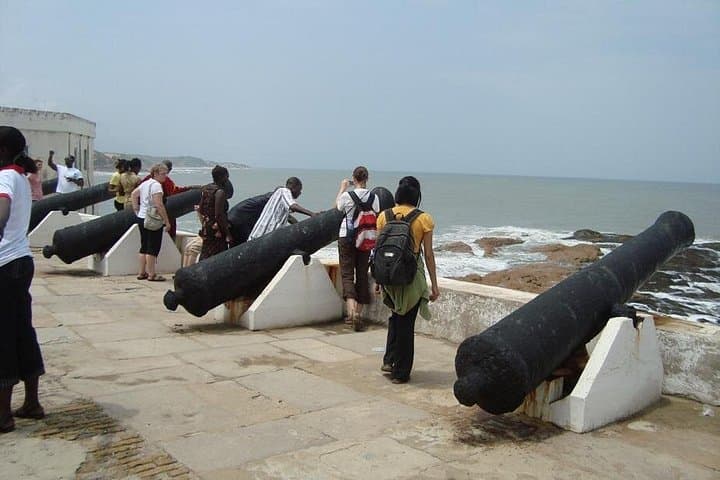
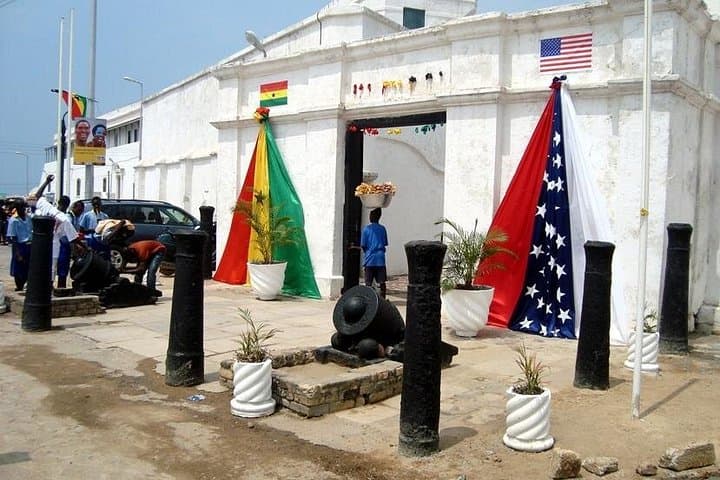
A salty wind pushes across the Gulf of Guinea as you step from the van onto a flagstone courtyard that has watched centuries of ships come and go.
A salty wind pushes across the Gulf of Guinea as you step from the van onto a flagstone courtyard that has watched centuries of ships come and go.
This day tour threads two of Ghana’s most powerful colonial sites: Elmina Castle (St. George’s) and Cape Coast Castle. Elmina’s thick stone walls, first built by the Portuguese in 1482, look out over a reef-strewn shoreline; Cape Coast Castle, enlarged through successive European hands in the 17th and 18th centuries, sits where trading rooms, dungeons and chapel meet the tide. Together they map the architecture and administration of the Trans‑Atlantic Slave Trade—auction rooms, cramped holding cells and merchant journals remain as stark evidence.
Geology here is simple and immediate: black volcanic rock and laterite form the foundations, while sandy beaches and mangrove pockets frame the coast. Culturally, the forts sit within towns where Akan and Fante traditions continue alongside colonial legacies—local markets and fishing harbors vibrate with daily life.
Practical guidance: tours typically run 2–5 hours; expect uneven stone steps, narrow corridors and open courtyards exposed to sun and sea breeze. Bring sun protection and water, wear sturdy shoes, and allow time for quiet reflection in the dungeons and on the battlements. Photography is common but be respectful at memorial sites and when local guides share testimonies.
A visit here is both an outdoor walk along Ghana’s central coast and a focused historical experience—direct, sometimes heavy, and always illuminating.