THE ADVENTURE COLLECTIVE® · Independent discovery and booking for outdoor travel

A full-day private tour that pairs the charged history of Cape Coast and Elmina castles with the high, green drama of Kakum’s canopy walkway. Expect long walking sections, guided interpretation, and a close look at Ghana’s colonial and natural landscapes.
A full-day private tour that pairs the charged history of Cape Coast and Elmina castles with the high, green drama of Kakum’s canopy walkway. Expect long walking sections, guided interpretation, and a close look at Ghana’s colonial and natural landscapes.
You step off the minivan into humid West African air and the Atlantic’s salt-spray still clings to your clothes; in front of you, the ochre walls of Cape Coast Castle rise like a weathered ledger of human history. Walking through its dungeons and high chambers, the voices of the past are kept in stone — guides move between rooms pointing to inscriptions and iron rings, the real traces of the trans-Atlantic slave trade.
Verified experiences and guided adventures in the surrounding area.
Operated by Here is Ghana Tours · Cape Coast, Central Region
You step off the minivan into humid West African air and the Atlantic’s salt-spray still clings to your clothes; in front of you, the ochre walls of Cape Coast Castle rise like a weathered ledger of human history. Walking through its dungeons and high chambers, the voices of the past are kept in stone — guides move between rooms pointing to inscriptions and iron rings, the real traces of the trans-Atlantic slave trade.
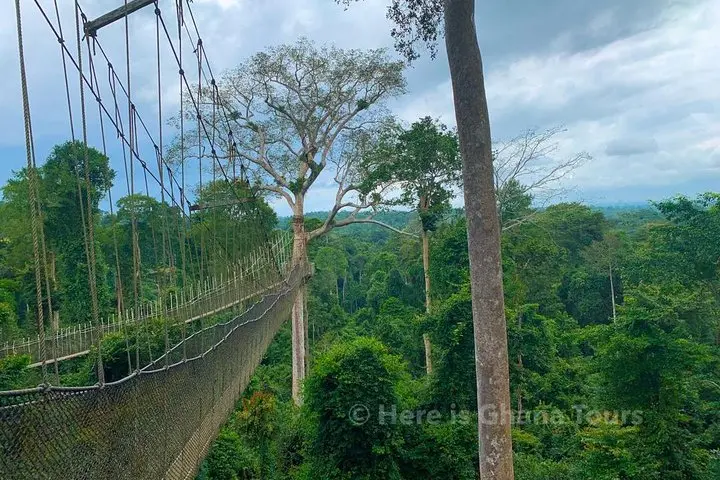
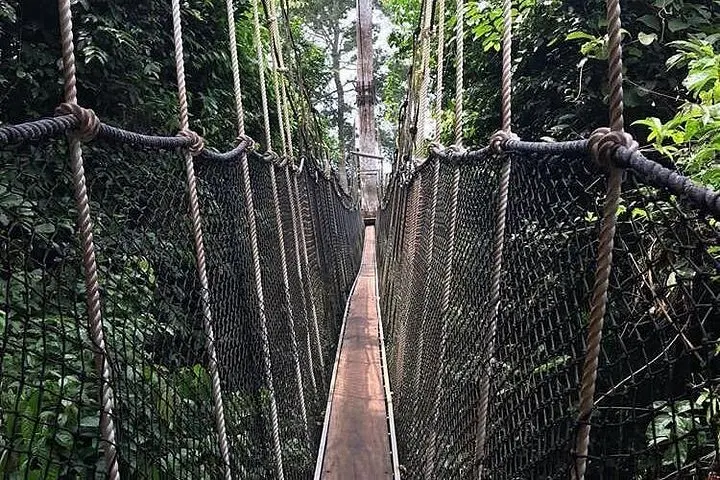
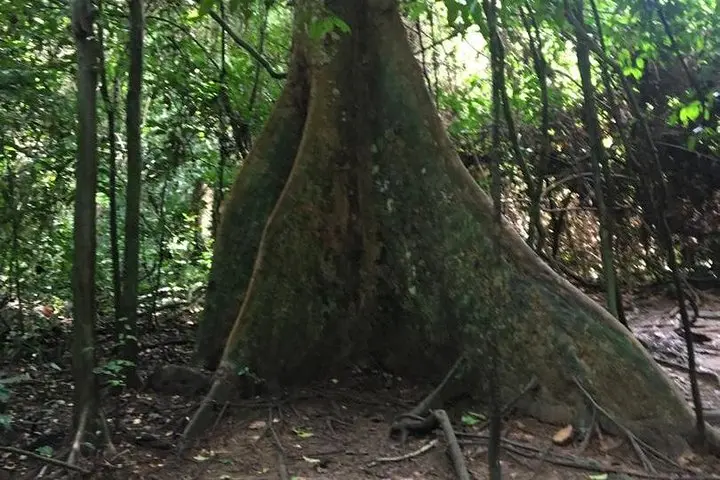
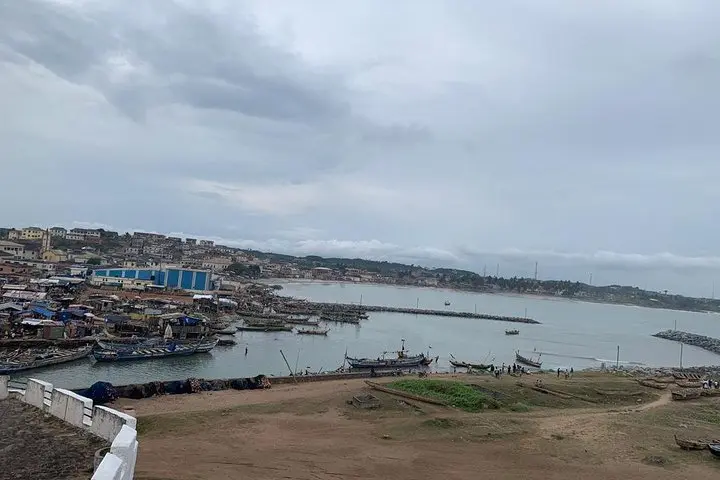
A short drive west brings Elmina, older and more Portuguese in detail, shutters and bastions meeting fishermen’s boats in the harbor. Then inland to Kakum National Park, where the forest changes tone: the canopy dares you to climb its hanging bridges. The park’s canopy walkway—roughly 330–350 meters across several suspended bridges, up to 30–40 meters above the forest floor—gives a bird’s-eye view of a rainforest that sits on ancient Guinea Savannah transition geology and deep, iron-rich soils.
Culturally, the Central Region threads fishing, Fante traditions, and colonial history into a compact narrative; local museums and markets near the forts offer crafts and Ghanaian culinary staples for a fuller picture.
Practicalities: expect an 11–12 hour day with several sets of stairs and uneven paths at the forts and in the park. Bring water, insect protection, sturdy shoes, and sun protection; allow time for explanations at each fort and a relaxed crossing on the canopy bridges. Tours typically include entrance fees, bottled water, lunch, and private transport — plan for early pickup from Accra and a late return. Respect restricted areas inside the castles, keep noise low on the canopy walk to watch birds, and budget local currency for small purchases and tips.
The canopy walkway spans roughly 330–350 meters across several suspended bridges and rises up to about 30–40 meters above the forest floor.
Both sites have steep stairs and uneven floors; much of the interpretation involves steps and narrow passages, so accessibility is limited for those with significant mobility constraints.
Photography is generally permitted for personal use, but follow guide instructions—some indoor or sensitive spots may be restricted and flash can be discouraged in certain rooms.
Typical tours include bottled water, snacks, lunch, and all entrance fees to Cape Coast Castle, Elmina Castle, and Kakum National Park as part of the package.
Here is Ghana Tours operates guided outdoor trips and adventures with an emphasis on safety, stewardship, and memorable experiences.
You step off the minivan into humid West African air and the Atlantic’s salt-spray still clings to your clothes; in front of you, the ochre walls of Cape Coast Castle rise like a weathered ledger of human history. Walking through its dungeons and high chambers, the voices of the past are kept in stone — guides move between rooms pointing to inscriptions and iron rings, the real traces of the trans-Atlantic slave trade.
You step off the minivan into humid West African air and the Atlantic’s salt-spray still clings to your clothes; in front of you, the ochre walls of Cape Coast Castle rise like a weathered ledger of human history. Walking through its dungeons and high chambers, the voices of the past are kept in stone — guides move between rooms pointing to inscriptions and iron rings, the real traces of the trans-Atlantic slave trade.
A short drive west brings Elmina, older and more Portuguese in detail, shutters and bastions meeting fishermen’s boats in the harbor. Then inland to Kakum National Park, where the forest changes tone: the canopy dares you to climb its hanging bridges. The park’s canopy walkway—roughly 330–350 meters across several suspended bridges, up to 30–40 meters above the forest floor—gives a bird’s-eye view of a rainforest that sits on ancient Guinea Savannah transition geology and deep, iron-rich soils.
Culturally, the Central Region threads fishing, Fante traditions, and colonial history into a compact narrative; local museums and markets near the forts offer crafts and Ghanaian culinary staples for a fuller picture.
Practicalities: expect an 11–12 hour day with several sets of stairs and uneven paths at the forts and in the park. Bring water, insect protection, sturdy shoes, and sun protection; allow time for explanations at each fort and a relaxed crossing on the canopy bridges. Tours typically include entrance fees, bottled water, lunch, and private transport — plan for early pickup from Accra and a late return. Respect restricted areas inside the castles, keep noise low on the canopy walk to watch birds, and budget local currency for small purchases and tips.