THE ADVENTURE COLLECTIVE® · Independent discovery and booking for outdoor travel

Climb 59 steps to the lantern room of Cape Naturaliste Lighthouse, explore the Lightkeepers' Museum, and take in sweeping views of the Indian Ocean and Leeuwin-Naturaliste coastline. This compact, fully guided tour pairs maritime history with accessible viewpoints and seasonal wildlife watching.
Climb 59 steps to the lantern room of Cape Naturaliste Lighthouse, explore the Lightkeepers' Museum, and take in sweeping views of the Indian Ocean and Leeuwin-Naturaliste coastline. This compact, fully guided tour pairs maritime history with accessible viewpoints and seasonal wildlife watching.
A brisk coastal wind meets you at the base of the white masonry tower, salt on the air and the Indian Ocean spilling out to the horizon. Climbing the 59 iron steps on a guided tour places you at the lantern room where the light still watches shipping lanes, and the balcony hands you a panoramic stage: sea cliffs, Leeuwin-Naturaliste National Park, and Geographe Bay folding into distance.
Verified experiences and guided adventures in the surrounding area.
Operated by Capes Foundation · Dunsborough, Western Australia
A brisk coastal wind meets you at the base of the white masonry tower, salt on the air and the Indian Ocean spilling out to the horizon. Climbing the 59 iron steps on a guided tour places you at the lantern room where the light still watches shipping lanes, and the balcony hands you a panoramic stage: sea cliffs, Leeuwin-Naturaliste National Park, and Geographe Bay folding into distance.
The lighthouse has stood since 1904, built during an era of expanding maritime trade and charting a treacherous coast marked by reefs and wrecks. The surrounding limestone tells a quieter story — layered headlands carved by ocean swell, pockets of sand where wildflowers flare in spring, and rocky platforms that funnel migrating whales along the coast.
Inside the Lightkeepers' Museum, personal artifacts and logbooks sketch the rhythm of keeper life: strict routines, isolation, and mechanical upkeep that kept the lamp spinning through storms. Local culture here blends fishing villages and surf communities; small galleries and cafes in nearby Dunsborough keep the regional history visible.
Practically, expect a short, interpretive experience — plan 30–45 minutes for tower and museum. Wear windproof layers and firm shoes for the metal steps and uneven paths. Midday light is best for photos; winter offers whale sightings while spring brings coastal blooms. Accessibility is good around the base and museum, but the tower requires a stair climb. Keep to marked paths, respect nesting birds, and bring a camera or binoculars: the reward is the view and the sense of standing where mariners once searched the horizon.
The fully guided tour of the tower and Lightkeepers' Museum runs about 30 minutes; allow 30–45 minutes total if you plan to spend time on the base observation platform.
The museum and base observation platform are accessible, but the tower balcony requires ascending 59 steps and is not wheelchair accessible.
Yes—museum and tower passes can be purchased at the site; mobile tickets are accepted and some guided tours may have scheduled times.
Whale sightings are seasonal—late winter into spring is peak migration and offers the best chance to spot whales from the balcony or headland platforms.
Capes Foundation operates guided outdoor trips and adventures with an emphasis on safety, stewardship, and memorable experiences.
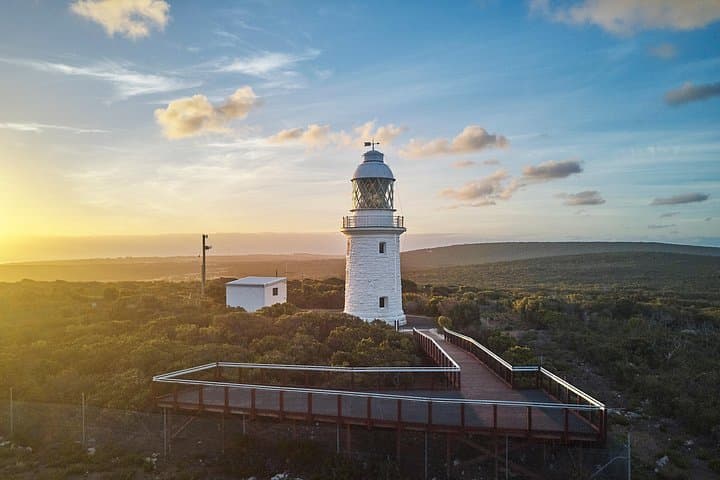


A brisk coastal wind meets you at the base of the white masonry tower, salt on the air and the Indian Ocean spilling out to the horizon. Climbing the 59 iron steps on a guided tour places you at the lantern room where the light still watches shipping lanes, and the balcony hands you a panoramic stage: sea cliffs, Leeuwin-Naturaliste National Park, and Geographe Bay folding into distance.
A brisk coastal wind meets you at the base of the white masonry tower, salt on the air and the Indian Ocean spilling out to the horizon. Climbing the 59 iron steps on a guided tour places you at the lantern room where the light still watches shipping lanes, and the balcony hands you a panoramic stage: sea cliffs, Leeuwin-Naturaliste National Park, and Geographe Bay folding into distance.
The lighthouse has stood since 1904, built during an era of expanding maritime trade and charting a treacherous coast marked by reefs and wrecks. The surrounding limestone tells a quieter story — layered headlands carved by ocean swell, pockets of sand where wildflowers flare in spring, and rocky platforms that funnel migrating whales along the coast.
Inside the Lightkeepers' Museum, personal artifacts and logbooks sketch the rhythm of keeper life: strict routines, isolation, and mechanical upkeep that kept the lamp spinning through storms. Local culture here blends fishing villages and surf communities; small galleries and cafes in nearby Dunsborough keep the regional history visible.
Practically, expect a short, interpretive experience — plan 30–45 minutes for tower and museum. Wear windproof layers and firm shoes for the metal steps and uneven paths. Midday light is best for photos; winter offers whale sightings while spring brings coastal blooms. Accessibility is good around the base and museum, but the tower requires a stair climb. Keep to marked paths, respect nesting birds, and bring a camera or binoculars: the reward is the view and the sense of standing where mariners once searched the horizon.