THE ADVENTURE COLLECTIVE® · Independent discovery and booking for outdoor travel

A private full-day hike that stitches together Chapman's Peak drive, a coastal walk to Cape Point and the Cape of Good Hope, then a visit to Boulders Beach to see African penguins. Rugged coastline, rock scrambling and wide ocean views make this a memorable, customizable day from Cape Town.
A private full-day hike that stitches together Chapman's Peak drive, a coastal walk to Cape Point and the Cape of Good Hope, then a visit to Boulders Beach to see African penguins. Rugged coastline, rock scrambling and wide ocean views make this a memorable, customizable day from Cape Town.
The morning begins with the Atlantic wind cutting across the car’s windshield as you leave Cape Town’s city bowl; cliffs appear like pages of geological history folding into the sea. At Maiden’s Cove the guide points out the first lines of sandstone and granite—Chapman’s Peak already setting the tone—before the route plunges toward the Cape of Good Hope Nature Reserve. From the Western shoreline you step onto a coastal trail that alternates between compact sand, boardwalk, and jagged slabs that demand brief scrambling. The ocean pushes a constant soundtrack underfoot, and False Bay stretches eastward, a wide sweep that can hide breaching whales in spring.
Verified experiences and guided adventures in the surrounding area.
Operated by Table Mountain hiking tours · Cape Town, Western Cape
The morning begins with the Atlantic wind cutting across the car’s windshield as you leave Cape Town’s city bowl; cliffs appear like pages of geological history folding into the sea. At Maiden’s Cove the guide points out the first lines of sandstone and granite—Chapman’s Peak already setting the tone—before the route plunges toward the Cape of Good Hope Nature Reserve. From the Western shoreline you step onto a coastal trail that alternates between compact sand, boardwalk, and jagged slabs that demand brief scrambling. The ocean pushes a constant soundtrack underfoot, and False Bay stretches eastward, a wide sweep that can hide breaching whales in spring.
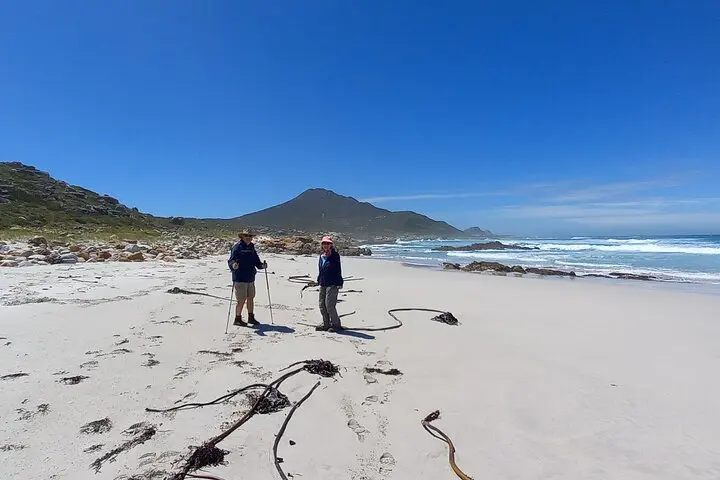
The hike itself is a day-long loop and exploration, roughly 6–8 km on foot with about 250–350 m of cumulative ascent as you approach Cape Point and the old lighthouse. The route threads between Diaz Beach’s pristine shoreline and shingle-strewn coves, crosses dune sections where fynbos—Cape Town’s endemic shrubland—brushes your calves, and follows elevated viewpoints that make the continent’s southwestern corner feel momentous. Boardwalks ease the final approach to the Cape of Good Hope; they also protect delicate vegetation and give photographers a clean foreground for the cliffs and surf.
This coastline carries deep maritime history. Portuguese explorers in the 15th century mapped these rocky margins; centuries of ship traffic and storms have left lighthouses, shipwrecks and a local lore about the sea’s appetite. Geologically the route showcases Table Mountain sandstone overlying older granite, creating the sharp contrasts seen on Chapman’s Peak road and the boulder-strewn coves near Simon’s Town—home to the African penguin colony at Boulders Beach.
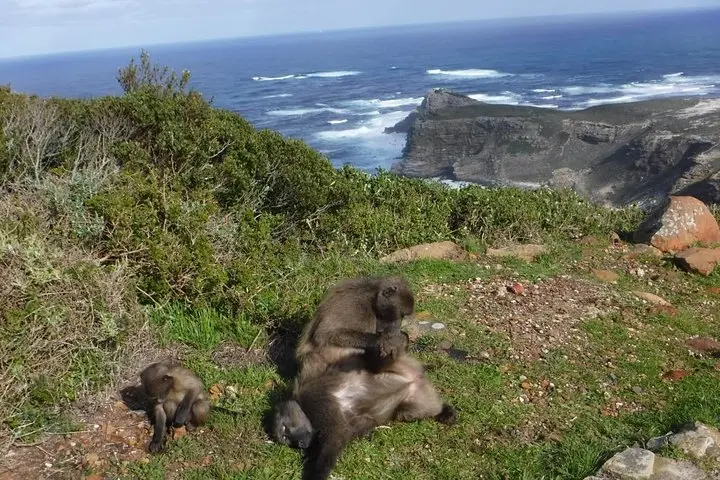
Culture and wildlife arrive in short, vivid bursts: expect curious baboons near car parks, gannets and cormorants wheel overhead, and, season-dependent, southern right whales spouting offshore. After a picnic at Cape Point, you can take the funicular or climb to the old lighthouse for stepped paths and far-reaching views.
Practical edge: this is a private, customizable full-day hike (approx. 8 hours including transfers) that requires sturdy trail shoes and wind protection. Bring at least 1 liter of water, sun protection and moderate fitness—there’s exposed trail and occasional rock scrambling. Guides provide local context, first aid and transport; pick-up from Cape Town city bowl is standard. Weather moves fast here—check forecasts, layer smartly, and keep a safe distance from wildlife (baiting or feeding baboons and penguins is illegal and dangerous). For photographers, golden hour and late-morning light on the cliffs give the most dramatic images. The route rewards steady footsteps with continental views and close encounters with unique Cape biodiversity.
Expect about 6–8 km of hiking with cumulative elevation gain around 250–350 m; the full experience including transfers is about 8 hours.
There are restroom facilities and a restaurant at Cape Point for lunch; carry snacks for the hike portion.
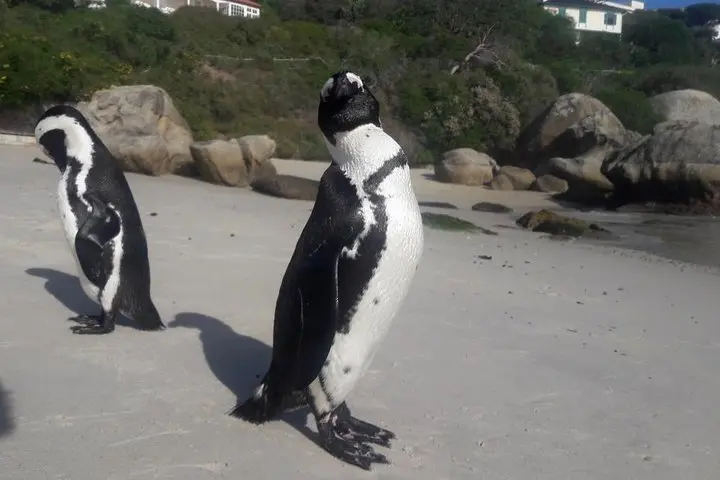
Yes—Boulders Beach hosts an African penguin colony; boardwalks allow close viewing while keeping a safe distance.
The route involves uneven terrain and some scrambling—suitable for active children and older adults with a moderate fitness level, but not recommended for those with serious mobility issues.
Baboons can be aggressive if food is visible—secure belongings in vehicles and do not feed or approach them.
Yes—hotel pickup and drop-off from Cape Town city bowl is included; pick-up windows vary between 07:15 and 08:00 depending on location.
Table Mountain hiking tours operates guided outdoor trips and adventures with an emphasis on safety, stewardship, and memorable experiences.
The morning begins with the Atlantic wind cutting across the car’s windshield as you leave Cape Town’s city bowl; cliffs appear like pages of geological history folding into the sea. At Maiden’s Cove the guide points out the first lines of sandstone and granite—Chapman’s Peak already setting the tone—before the route plunges toward the Cape of Good Hope Nature Reserve. From the Western shoreline you step onto a coastal trail that alternates between compact sand, boardwalk, and jagged slabs that demand brief scrambling. The ocean pushes a constant soundtrack underfoot, and False Bay stretches eastward, a wide sweep that can hide breaching whales in spring.
The morning begins with the Atlantic wind cutting across the car’s windshield as you leave Cape Town’s city bowl; cliffs appear like pages of geological history folding into the sea. At Maiden’s Cove the guide points out the first lines of sandstone and granite—Chapman’s Peak already setting the tone—before the route plunges toward the Cape of Good Hope Nature Reserve. From the Western shoreline you step onto a coastal trail that alternates between compact sand, boardwalk, and jagged slabs that demand brief scrambling. The ocean pushes a constant soundtrack underfoot, and False Bay stretches eastward, a wide sweep that can hide breaching whales in spring.
The hike itself is a day-long loop and exploration, roughly 6–8 km on foot with about 250–350 m of cumulative ascent as you approach Cape Point and the old lighthouse. The route threads between Diaz Beach’s pristine shoreline and shingle-strewn coves, crosses dune sections where fynbos—Cape Town’s endemic shrubland—brushes your calves, and follows elevated viewpoints that make the continent’s southwestern corner feel momentous. Boardwalks ease the final approach to the Cape of Good Hope; they also protect delicate vegetation and give photographers a clean foreground for the cliffs and surf.
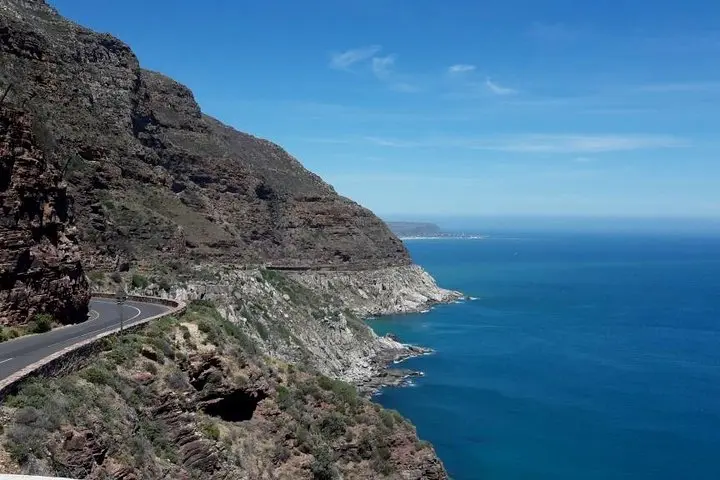
This coastline carries deep maritime history. Portuguese explorers in the 15th century mapped these rocky margins; centuries of ship traffic and storms have left lighthouses, shipwrecks and a local lore about the sea’s appetite. Geologically the route showcases Table Mountain sandstone overlying older granite, creating the sharp contrasts seen on Chapman’s Peak road and the boulder-strewn coves near Simon’s Town—home to the African penguin colony at Boulders Beach.
Culture and wildlife arrive in short, vivid bursts: expect curious baboons near car parks, gannets and cormorants wheel overhead, and, season-dependent, southern right whales spouting offshore. After a picnic at Cape Point, you can take the funicular or climb to the old lighthouse for stepped paths and far-reaching views.
Practical edge: this is a private, customizable full-day hike (approx. 8 hours including transfers) that requires sturdy trail shoes and wind protection. Bring at least 1 liter of water, sun protection and moderate fitness—there’s exposed trail and occasional rock scrambling. Guides provide local context, first aid and transport; pick-up from Cape Town city bowl is standard. Weather moves fast here—check forecasts, layer smartly, and keep a safe distance from wildlife (baiting or feeding baboons and penguins is illegal and dangerous). For photographers, golden hour and late-morning light on the cliffs give the most dramatic images. The route rewards steady footsteps with continental views and close encounters with unique Cape biodiversity.