THE ADVENTURE COLLECTIVE® · Independent discovery and booking for outdoor travel

Explore the Cape of Rodon on a focused two-hour walk that links Skanderbeg’s 15th-century fortifications to St. Anthony’s cliffside church and quiet Rodoni Beach. This compact coastal tour blends geology, history, and easy outdoor terrain.
Explore the Cape of Rodon on a focused two-hour walk that links Skanderbeg’s 15th-century fortifications to St. Anthony’s cliffside church and quiet Rodoni Beach. This compact coastal tour blends geology, history, and easy outdoor terrain.
A salt-etched wind meets you as the path drops toward the narrow finger of land that juts into the Adriatic. Sea spray threads the air; limestone cliffs step down into pebbled coves while low scrub brushes the trail. Walkers here trade city noise for gull calls and the creak of grass in the breeze as the cape stretches toward the horizon.
Verified experiences and guided adventures in the surrounding area.
Operated by Opatrip.com Albania · Rodon (Cape of Rodon), Durrës County
A salt-etched wind meets you as the path drops toward the narrow finger of land that juts into the Adriatic. Sea spray threads the air; limestone cliffs step down into pebbled coves while low scrub brushes the trail. Walkers here trade city noise for gull calls and the creak of grass in the breeze as the cape stretches toward the horizon.
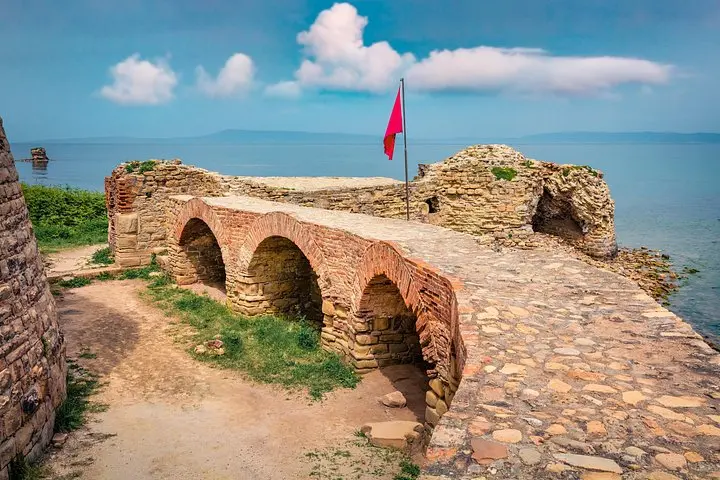
The Cape of Rodon (Kepi i Rodonit) carries layered history: Skanderbeg’s small fortification raised in 1451–52, later altered by Venetian forces, stands amid crumbling walls and reused stones. Geologically, the headland is a modest limestone plateau carved by waves and wind—simple strata, sharp cliffs, and sheltered bays that hosted fishermen and pilgrims for centuries. St. Anthony’s Church near the tip holds faded frescoes and remains a quiet cultural waypoint; local fishing hamlets still practice small-scale coastal traditions.
The walk is practical and immediate: roughly 3–4 km round-trip over uneven coastal paths and low cliffs, with short climbs and exposed sections that demand steady footing. Expect pebbles, packed dirt, and occasional goat tracks; the sea will scent the air and the current seems to tug the peninsula seaward.
Plan for sun and wind, bring water, and allow two hours to move deliberately between the castle, church, and beach. Respect fragile ruins and stay on defined routes—these archaeological traces are easily damaged. Early morning or late afternoon offers softer light, better bird activity, and cooler conditions for a straightforward, culturally rich coastal walk.
The guided itinerary runs about two hours and covers the castle, St. Anthony’s Church, and nearby coves—expect a 3–4 km walking distance.
The tour includes guided visits but not formal paid admissions; access depends on current site conditions and seasonal closures.
People should have moderate fitness; uneven terrain and short climbs make parts unsuitable for very young children or those with significant mobility issues.
Early morning or late afternoon offers cooler temperatures, gentler light for photos, and calmer walking conditions.
Opatrip.com Albania operates guided outdoor trips and adventures with an emphasis on safety, stewardship, and memorable experiences.
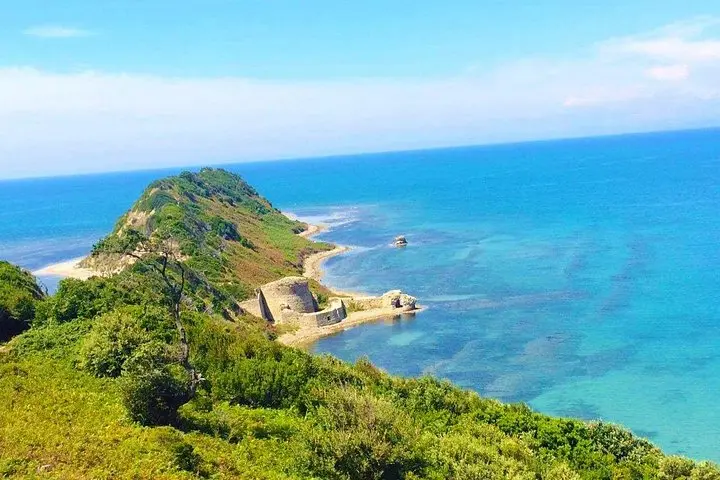


A salt-etched wind meets you as the path drops toward the narrow finger of land that juts into the Adriatic. Sea spray threads the air; limestone cliffs step down into pebbled coves while low scrub brushes the trail. Walkers here trade city noise for gull calls and the creak of grass in the breeze as the cape stretches toward the horizon.
A salt-etched wind meets you as the path drops toward the narrow finger of land that juts into the Adriatic. Sea spray threads the air; limestone cliffs step down into pebbled coves while low scrub brushes the trail. Walkers here trade city noise for gull calls and the creak of grass in the breeze as the cape stretches toward the horizon.
The Cape of Rodon (Kepi i Rodonit) carries layered history: Skanderbeg’s small fortification raised in 1451–52, later altered by Venetian forces, stands amid crumbling walls and reused stones. Geologically, the headland is a modest limestone plateau carved by waves and wind—simple strata, sharp cliffs, and sheltered bays that hosted fishermen and pilgrims for centuries. St. Anthony’s Church near the tip holds faded frescoes and remains a quiet cultural waypoint; local fishing hamlets still practice small-scale coastal traditions.
The walk is practical and immediate: roughly 3–4 km round-trip over uneven coastal paths and low cliffs, with short climbs and exposed sections that demand steady footing. Expect pebbles, packed dirt, and occasional goat tracks; the sea will scent the air and the current seems to tug the peninsula seaward.
Plan for sun and wind, bring water, and allow two hours to move deliberately between the castle, church, and beach. Respect fragile ruins and stay on defined routes—these archaeological traces are easily damaged. Early morning or late afternoon offers softer light, better bird activity, and cooler conditions for a straightforward, culturally rich coastal walk.