THE ADVENTURE COLLECTIVE® · Independent discovery and booking for outdoor travel

Drive Chapman's Peak, watch African penguins at Boulders Beach and hike to the Cape of Good Hope on a focused full-day tour from Cape Town. Expect dramatic coastal cliffs, optional seal-boat trips and a 45-minute hike with panoramic ocean views.
Drive Chapman's Peak, watch African penguins at Boulders Beach and hike to the Cape of Good Hope on a focused full-day tour from Cape Town. Expect dramatic coastal cliffs, optional seal-boat trips and a 45-minute hike with panoramic ocean views.
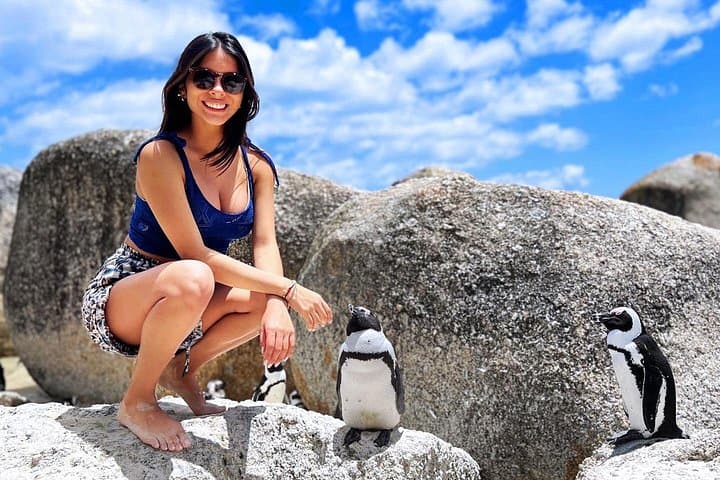
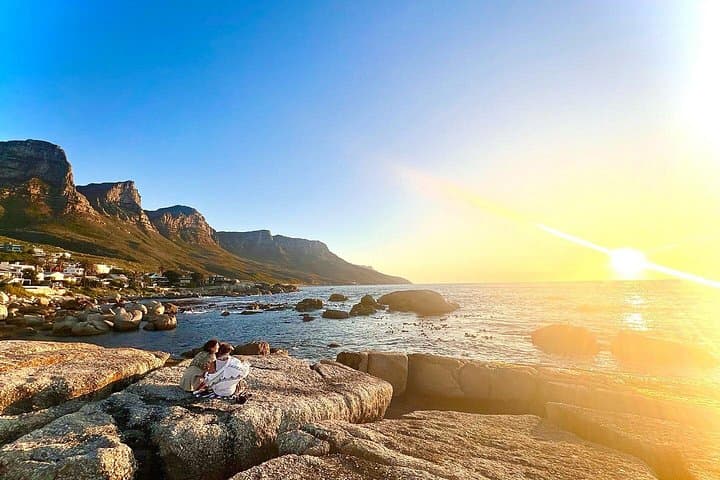
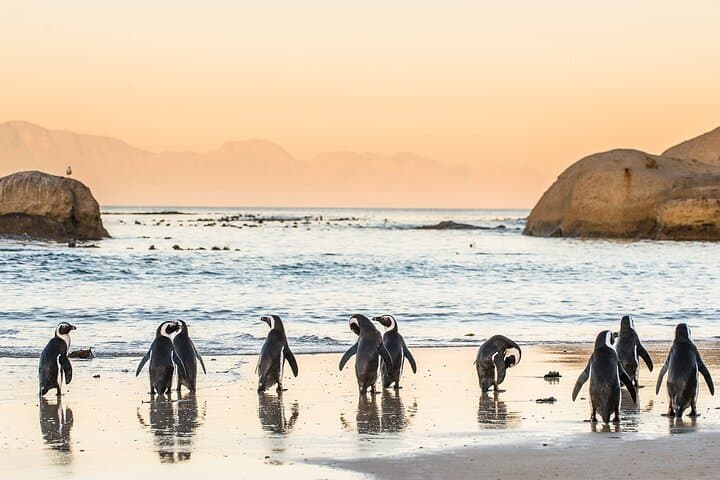
The minivan peels away from Cape Town’s harbor before dawn, headlights cutting through sea mist as the coastline unspools. By midmorning you are perched on Chapman's Peak Drive, the road clinging to sandstone cliffs while the Atlantic hurls itself against the rocks below. The ocean feels intentional here, pulling line and attention toward Boulders Beach where a colony of African penguins shuffles between granite boulders and surf.
Verified experiences and guided adventures in the surrounding area.
Operated by Baz Bus · Cape Town, Western Cape
The minivan peels away from Cape Town’s harbor before dawn, headlights cutting through sea mist as the coastline unspools. By midmorning you are perched on Chapman's Peak Drive, the road clinging to sandstone cliffs while the Atlantic hurls itself against the rocks below. The ocean feels intentional here, pulling line and attention toward Boulders Beach where a colony of African penguins shuffles between granite boulders and surf.
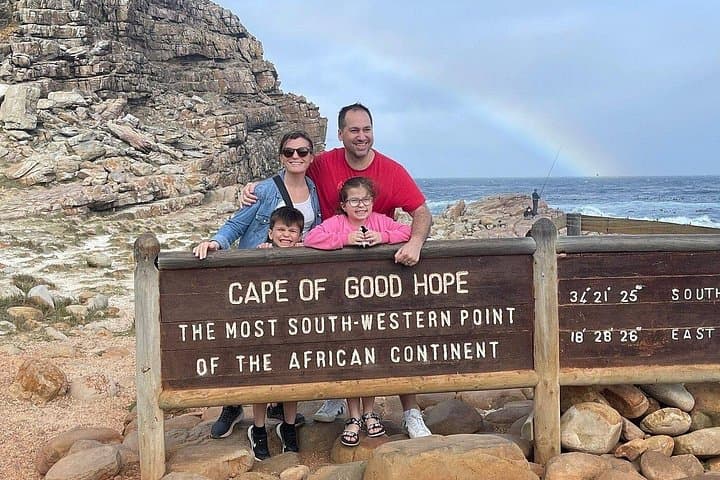
This full-day route reads like a condensed field guide to the Cape Peninsula: Hout Bay’s working harbor and ferry boats to Seal Island, the panoramic ledges of Chapman's Peak, and the windswept promontory where Cape Point and the Cape of Good Hope throw two oceans into dramatic conversation. The landscape is younger by human standards but older in rock — steep Table Mountain sandstone and Cape Supergroup formations that have been scoured and stacked into the cliffs you drive along.
Culturally the route crosses layers of history. Hout Bay remains a fishing community with a maritime character; Simon’s Town, close to Boulders, carries the legacy of a long naval presence. Maritime lore is everywhere — shipwreck warnings and lighthouses that once guided teak and clipper traffic around this headland. The wildlife is blunt and unselfconscious: baboons that time their raids, ostriches grazing scrubby flats, and cormorants that hang like punctuation marks on the rocks.
Practically, the day is paced for sightseeing with short walks and one longer stretch: a roughly 45-minute hike at Cape Point that climbs gentle boardwalks and stairways to viewpoints — expect about 80–150 meters of cumulative elevation change and a mix of paved paths and wooden steps. The tour runs about nine hours (540 minutes) and includes hotel pickup in Cape Town; group sizes are limited to about 17 passengers, so there’s room to move and photograph.
Bring cash for add-ons: an optional seal-boat ride from Hout Bay (approx. R110) and an optional close-up visit to Boulders Beach (approx. R160). Wear sturdy walking shoes, a windproof jacket, sun protection and carry water — the Cape wind turns brisk without warning and the sun can be intense.
Conservation matters here: Cape Point is part of Table Mountain National Park and many visitors walk boardwalks to reduce erosion and disturbance to sensitive fynbos. Respect signs, keep distance from penguins and wildlife, and avoid feeding animals — they are wild and their behaviors are fragile.
For photographers the light shifts quickly: morning for Hout Bay and Chapman's Peak, late afternoon for the golden angles at Cape Point. If you want the penguins with fewer people, plan an early-season visit outside South Africa’s school holidays. The day is a tidy, high-contrast chapter of the Western Cape — equal parts geology, wildlife and coastal driving that leaves you with a clear sense of why sailors both feared and revered this corner of Africa.
The tour is about 9 hours (540 minutes). Pickup is arranged from selected hotels in Cape Town and typically begins early morning; confirm your exact pickup time in the booking details.
Yes — optional activities like the Seal Island boat trip (approx. R110) and certain access at Boulders Beach (approx. R160) are payable locally in cash.
The operator marks the tour as suitable for all physical fitness levels, but there is a 45-minute hike at Cape Point which may be challenging for very young children or those with limited mobility.
Boulders Beach offers boardwalk access and close but respectful viewing of African penguins; interaction should remain hands-off to protect the birds.
Common sightings include African penguins, Cape fur seals (from boats), baboons, ostriches and seabirds such as cormorants and gulls.
For a full refund, cancel at least 24 hours before the scheduled departure time; cancellations within 24 hours are non-refundable.
Baz Bus operates guided outdoor trips and adventures with an emphasis on safety, stewardship, and memorable experiences.
The minivan peels away from Cape Town’s harbor before dawn, headlights cutting through sea mist as the coastline unspools. By midmorning you are perched on Chapman's Peak Drive, the road clinging to sandstone cliffs while the Atlantic hurls itself against the rocks below. The ocean feels intentional here, pulling line and attention toward Boulders Beach where a colony of African penguins shuffles between granite boulders and surf.
The minivan peels away from Cape Town’s harbor before dawn, headlights cutting through sea mist as the coastline unspools. By midmorning you are perched on Chapman's Peak Drive, the road clinging to sandstone cliffs while the Atlantic hurls itself against the rocks below. The ocean feels intentional here, pulling line and attention toward Boulders Beach where a colony of African penguins shuffles between granite boulders and surf.
This full-day route reads like a condensed field guide to the Cape Peninsula: Hout Bay’s working harbor and ferry boats to Seal Island, the panoramic ledges of Chapman's Peak, and the windswept promontory where Cape Point and the Cape of Good Hope throw two oceans into dramatic conversation. The landscape is younger by human standards but older in rock — steep Table Mountain sandstone and Cape Supergroup formations that have been scoured and stacked into the cliffs you drive along.
Culturally the route crosses layers of history. Hout Bay remains a fishing community with a maritime character; Simon’s Town, close to Boulders, carries the legacy of a long naval presence. Maritime lore is everywhere — shipwreck warnings and lighthouses that once guided teak and clipper traffic around this headland. The wildlife is blunt and unselfconscious: baboons that time their raids, ostriches grazing scrubby flats, and cormorants that hang like punctuation marks on the rocks.
Practically, the day is paced for sightseeing with short walks and one longer stretch: a roughly 45-minute hike at Cape Point that climbs gentle boardwalks and stairways to viewpoints — expect about 80–150 meters of cumulative elevation change and a mix of paved paths and wooden steps. The tour runs about nine hours (540 minutes) and includes hotel pickup in Cape Town; group sizes are limited to about 17 passengers, so there’s room to move and photograph.
Bring cash for add-ons: an optional seal-boat ride from Hout Bay (approx. R110) and an optional close-up visit to Boulders Beach (approx. R160). Wear sturdy walking shoes, a windproof jacket, sun protection and carry water — the Cape wind turns brisk without warning and the sun can be intense.
Conservation matters here: Cape Point is part of Table Mountain National Park and many visitors walk boardwalks to reduce erosion and disturbance to sensitive fynbos. Respect signs, keep distance from penguins and wildlife, and avoid feeding animals — they are wild and their behaviors are fragile.
For photographers the light shifts quickly: morning for Hout Bay and Chapman's Peak, late afternoon for the golden angles at Cape Point. If you want the penguins with fewer people, plan an early-season visit outside South Africa’s school holidays. The day is a tidy, high-contrast chapter of the Western Cape — equal parts geology, wildlife and coastal driving that leaves you with a clear sense of why sailors both feared and revered this corner of Africa.