THE ADVENTURE COLLECTIVE® · Independent discovery and booking for outdoor travel

A compact private tour that stitches False Bay’s colorful beaches, Boulders’ famous penguin colony, Chapman’s Peak Drive and the Cape of Good Hope into a five‑hour coastal primer. Expect close wildlife viewing, dramatic coastal geology, and practical local storytelling.
A compact private tour that stitches False Bay’s colorful beaches, Boulders’ famous penguin colony, Chapman’s Peak Drive and the Cape of Good Hope into a five‑hour coastal primer. Expect close wildlife viewing, dramatic coastal geology, and practical local storytelling.
Morning in Cape Town opens cool and crisp; the city peels away as your private driver slips onto the M5 and the coastline stretches out like a promise. The first stop is St. James, where a row of candy‑colored beach huts perch above foam and sand—human punctuation against False Bay’s low, bright horizon. You taste salt and sun, then turn toward Boulders Beach, where granite boulders sit like old island sentries and African penguins wobble between sea and scrub.
Verified experiences and guided adventures in the surrounding area.
Operated by african macaw dmc and Safaris · Cape Town, Western Cape
Morning in Cape Town opens cool and crisp; the city peels away as your private driver slips onto the M5 and the coastline stretches out like a promise. The first stop is St. James, where a row of candy‑colored beach huts perch above foam and sand—human punctuation against False Bay’s low, bright horizon. You taste salt and sun, then turn toward Boulders Beach, where granite boulders sit like old island sentries and African penguins wobble between sea and scrub.
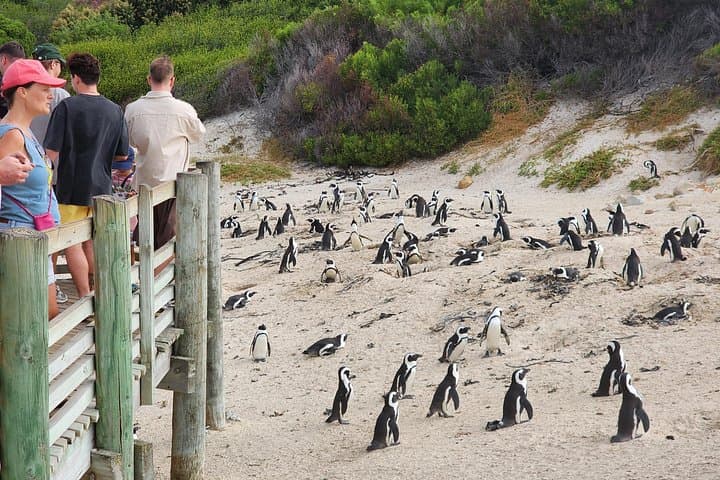
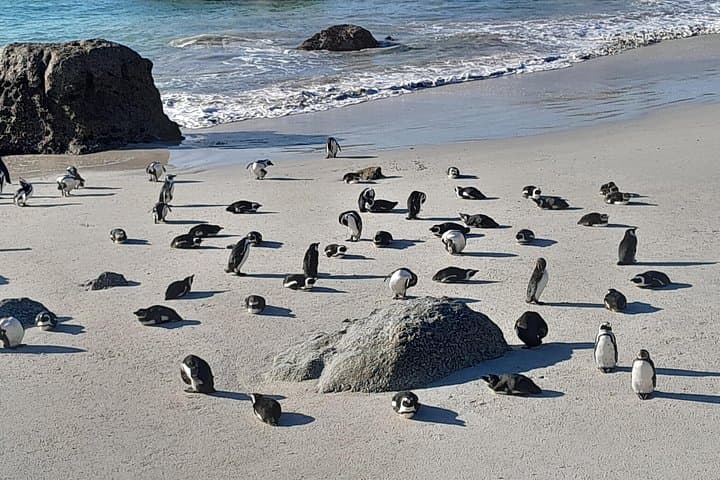
Boulders is geology you can touch: rounded granite formed hundreds of millions of years ago, smoothed by waves and wind into caverns and pools that penguins use as runways. The boardwalk keeps foot traffic off nests, so you watch the birds at close range—heads bobbing, flippers slicing the surf—while your guide explains the colony’s recovery and persistent threats, from oil spills to declining prey caused by overfishing.
The drive continues past fishing hamlets—Kalk Bay’s harbour calls with gulls and fishmongers—and climbs into one of the most cinematic stretches of coast: Chapman’s Peak Drive. Ninety‑plus hairpin turns carve the cliffs, offering vantage points where the Atlantic shifts from turquoise to pewter. The road itself, an engineering ribbon cut into sandstone, is steeped in local lore: explorers, naval history, and the hardy communities that made a living here.
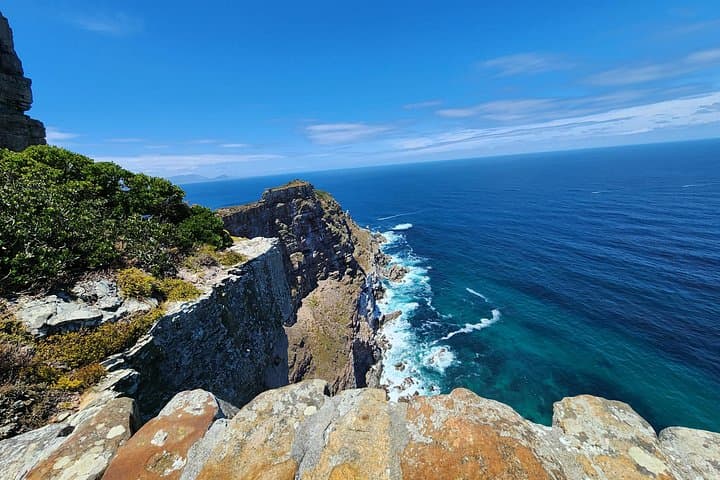
At the Cape of Good Hope and Cape Point Nature Reserve, the panorama widens to the theater of two oceans. It’s a place of competing currents—the cold Benguela brushing against the warm Agulhas—where fynbos blows like a green fire and fauna roam: ostrich, buck, and troops of baboons, all of them characters in an evolving landscape shaped by tectonics and maritime history. Your guide will point out the Martello Tower, stories of Bartholomew Dias and Vasco da Gama, and the curious local legend that the Cape is where the seas meet.
Practicalities matter: the half‑day format packs dense sights into roughly five hours, with door‑to‑door pickup between 08:00 and 13:00 from Cape Town hotels. Boardwalks and viewing platforms minimize walking—expect short flat loops at Boulders and a steeper 200–300 m climb if you choose to reach the upper lighthouse at Cape Point, about 80–120 m of elevation. Entrance fees for Boulders and Cape Point are included, and bottled water is provided onboard.
To get the most: wear layered windproof clothing, comfortable shoes for boardwalks and short hikes, sun protection, and binoculars. Keep a respectful distance from wildlife—baboon encounters are common and feeding animals is illegal. The tour balances showpiece views and factual context: it’s designed for travelers who want to see, learn, and leave the places they visit a little better off than they found them.
Yes—entrance to Boulders Beach and Cape Point Nature Reserve is included in the tour price.
Swimming at Boulders is allowed in designated areas but not guaranteed to bring close penguin encounters; always follow boardwalk rules and avoid disturbing wildlife.
The operator lists wheelchair accessible options; however some viewpoints and the lighthouse have steps—check pickup and specific accessibility needs when booking.
Pickup is flexible between 08:00 and 13:00; confirm your preferred time at booking and be ready 30 minutes before departure in hotel lounges.
Yes—infant seats are available and the tour is family‑friendly, but keep children supervised near wildlife and cliffs.
Bottled water is provided; snacks or meals are not included—there are cafes in Simon’s Town and at Cape Point if you want to stop for a bite.
african macaw dmc and Safaris operates guided outdoor trips and adventures with an emphasis on safety, stewardship, and memorable experiences.
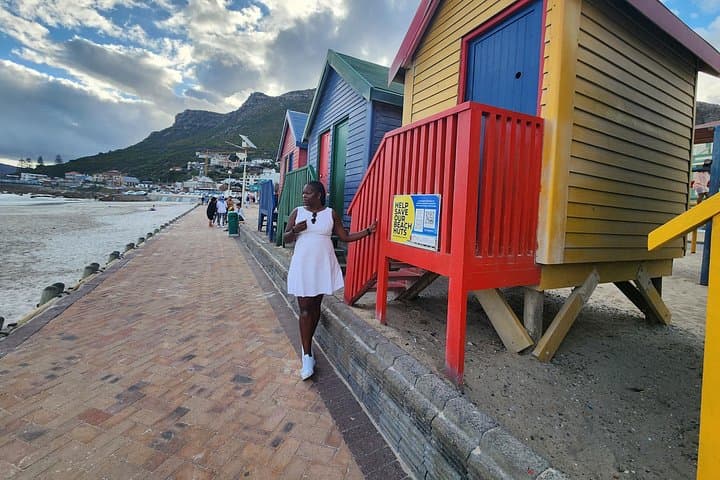
Morning in Cape Town opens cool and crisp; the city peels away as your private driver slips onto the M5 and the coastline stretches out like a promise. The first stop is St. James, where a row of candy‑colored beach huts perch above foam and sand—human punctuation against False Bay’s low, bright horizon. You taste salt and sun, then turn toward Boulders Beach, where granite boulders sit like old island sentries and African penguins wobble between sea and scrub.
Morning in Cape Town opens cool and crisp; the city peels away as your private driver slips onto the M5 and the coastline stretches out like a promise. The first stop is St. James, where a row of candy‑colored beach huts perch above foam and sand—human punctuation against False Bay’s low, bright horizon. You taste salt and sun, then turn toward Boulders Beach, where granite boulders sit like old island sentries and African penguins wobble between sea and scrub.
Boulders is geology you can touch: rounded granite formed hundreds of millions of years ago, smoothed by waves and wind into caverns and pools that penguins use as runways. The boardwalk keeps foot traffic off nests, so you watch the birds at close range—heads bobbing, flippers slicing the surf—while your guide explains the colony’s recovery and persistent threats, from oil spills to declining prey caused by overfishing.
The drive continues past fishing hamlets—Kalk Bay’s harbour calls with gulls and fishmongers—and climbs into one of the most cinematic stretches of coast: Chapman’s Peak Drive. Ninety‑plus hairpin turns carve the cliffs, offering vantage points where the Atlantic shifts from turquoise to pewter. The road itself, an engineering ribbon cut into sandstone, is steeped in local lore: explorers, naval history, and the hardy communities that made a living here.
At the Cape of Good Hope and Cape Point Nature Reserve, the panorama widens to the theater of two oceans. It’s a place of competing currents—the cold Benguela brushing against the warm Agulhas—where fynbos blows like a green fire and fauna roam: ostrich, buck, and troops of baboons, all of them characters in an evolving landscape shaped by tectonics and maritime history. Your guide will point out the Martello Tower, stories of Bartholomew Dias and Vasco da Gama, and the curious local legend that the Cape is where the seas meet.
Practicalities matter: the half‑day format packs dense sights into roughly five hours, with door‑to‑door pickup between 08:00 and 13:00 from Cape Town hotels. Boardwalks and viewing platforms minimize walking—expect short flat loops at Boulders and a steeper 200–300 m climb if you choose to reach the upper lighthouse at Cape Point, about 80–120 m of elevation. Entrance fees for Boulders and Cape Point are included, and bottled water is provided onboard.
To get the most: wear layered windproof clothing, comfortable shoes for boardwalks and short hikes, sun protection, and binoculars. Keep a respectful distance from wildlife—baboon encounters are common and feeding animals is illegal. The tour balances showpiece views and factual context: it’s designed for travelers who want to see, learn, and leave the places they visit a little better off than they found them.