THE ADVENTURE COLLECTIVE® · Independent discovery and booking for outdoor travel

Drive the dramatic False Bay coast from Cape Town to the Cape of Good Hope, pause with penguins at Boulders Beach, and take the iconic Chapman's Peak route. This private, 4–6 hour tour blends coastal geology, naval history, and accessible wildlife encounters.
Drive the dramatic False Bay coast from Cape Town to the Cape of Good Hope, pause with penguins at Boulders Beach, and take the iconic Chapman's Peak route. This private, 4–6 hour tour blends coastal geology, naval history, and accessible wildlife encounters.
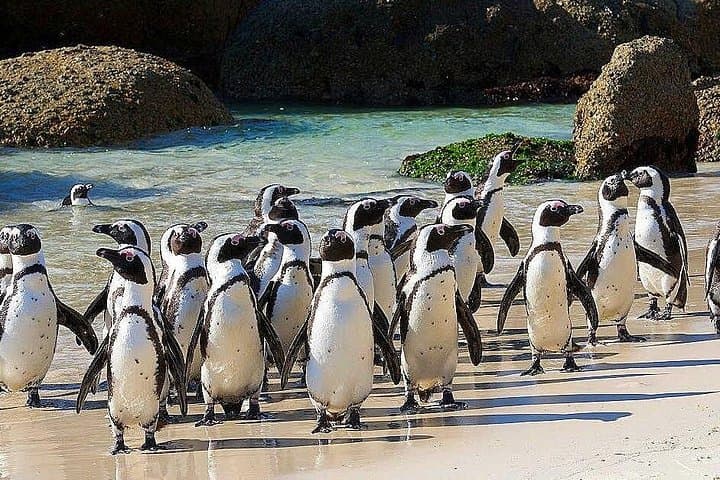
You leave Cape Town with the ocean on your right and a guide at the wheel who knows where the light falls best on the cliffs. The road unspools along False Bay: suburban rooftops give way to spray-slick granite, then to the long sweep of Chapman’s Peak where the cliffs fall away in clean, wind-carved faces. The van eases into Simon’s Town, and within an hour you’re on the boardwalk at Boulders Beach watching African penguins shuffle like weatherproofed commuters — bold, comical, utterly unconcerned by cameras.
Verified experiences and guided adventures in the surrounding area.
Operated by Go That Way · Cape Town, Western Cape
You leave Cape Town with the ocean on your right and a guide at the wheel who knows where the light falls best on the cliffs. The road unspools along False Bay: suburban rooftops give way to spray-slick granite, then to the long sweep of Chapman’s Peak where the cliffs fall away in clean, wind-carved faces. The van eases into Simon’s Town, and within an hour you’re on the boardwalk at Boulders Beach watching African penguins shuffle like weatherproofed commuters — bold, comical, utterly unconcerned by cameras.
This full-day loop is as much about geology and maritime history as it is about wildlife. The granite and Table Mountain sandstone that frame the Cape Peninsula were formed over hundreds of millions of years; waves and wind have since carved the coastal escarpments you pass on Chapman's Peak Drive, a narrow 9km ribbon cut into steep rock. Simon’s Town is a naval town with Victorian bones — its fleet history explains the lighthouses and the tide of sailors who once made this harbour home.
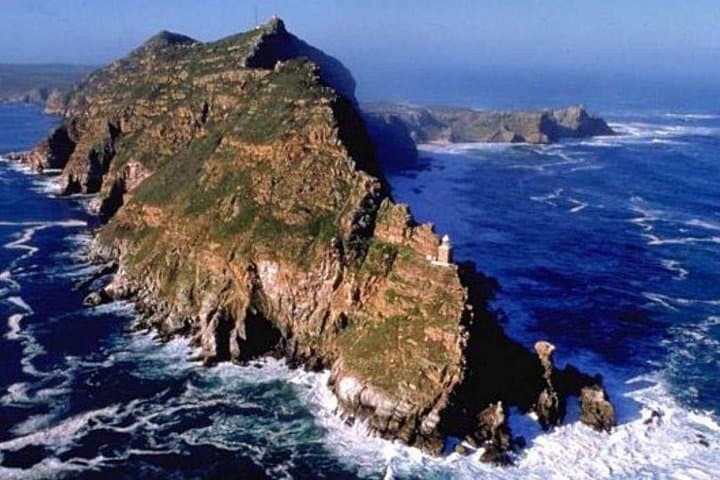
At Cape Point and the Cape of Good Hope the land leans seaward. Trails climb from the reserve car park to viewpoints and the old lighthouse; expect a short, steep walk of roughly 600m with about 120m of elevation gain if you choose to hike up (there’s also a funicular). From the clifftops, currents and wind seem to vie for attention: the Atlantic pulls one way, the Indian Ocean gestures the other, and seabirds cut clean arcs across the horizon.
Local culture shows up in fishing villages like Hout Bay — salted air, stalls of freshly caught fish, and a slow rhythm that contrasts with the ever-changing ocean. If time allows, a short boat ride to Duiker Island offers close views of Cape fur seals barking on the rocks.
Practical guide: this is an easy, accessible day designed for minimal exertion but maximum variety. The tour runs roughly 4–6 hours, includes entrance fees for the Nature Reserve and Boulders Beach, and covers transport on an air‑conditioned minivan with hotel pickup. Wear sturdy shoes for cliff-top paths, pack a windproof layer (the Cape can change temperature and direction in ten minutes), and bring sun protection even on overcast days — UV is strong. Cameras with a mid-telephoto lens capture penguin behavior and the curving cliffs; a wide-angle will earn the landscape shots.
Timing matters: mornings often bring calmer seas and softer light for photography; afternoon can be windier but delivers dramatic clouds and late light along Chapman’s Peak. Respect the wildlife: stay on boardwalks at Boulders, avoid feeding animals, and keep a respectful distance from nesting sites. With straightforward logistics and dramatic coastal scenery, this loop is a compact, high-reward way to experience the raw edge of South Africa’s Cape Peninsula.
The tour runs approximately 4–6 hours depending on traffic and time spent at each stop.
Yes—Cape Point Nature Reserve and Boulders Beach entrance fees are included in the tour price.
Yes—infants and small children can use strollers, and infant seats are available; children must be accompanied by an adult.
The tour is rated easy; however, some viewpoints require short steep walks—options like the funicular at Cape Point can reduce walking.
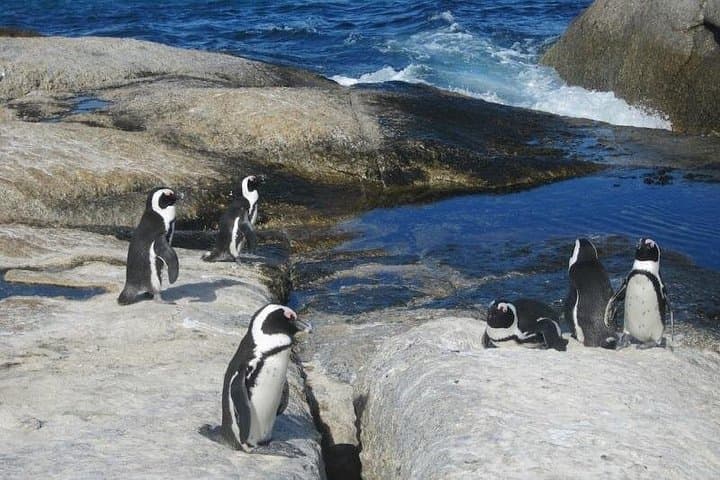
You’ll view the African penguin colony from boardwalks set to minimize disturbance—close but managed encounters are the norm.
The itinerary includes an option to take a short boat to Duiker Island from Hout Bay when sea conditions and timing allow.
Go That Way operates guided outdoor trips and adventures with an emphasis on safety, stewardship, and memorable experiences.
You leave Cape Town with the ocean on your right and a guide at the wheel who knows where the light falls best on the cliffs. The road unspools along False Bay: suburban rooftops give way to spray-slick granite, then to the long sweep of Chapman’s Peak where the cliffs fall away in clean, wind-carved faces. The van eases into Simon’s Town, and within an hour you’re on the boardwalk at Boulders Beach watching African penguins shuffle like weatherproofed commuters — bold, comical, utterly unconcerned by cameras.
You leave Cape Town with the ocean on your right and a guide at the wheel who knows where the light falls best on the cliffs. The road unspools along False Bay: suburban rooftops give way to spray-slick granite, then to the long sweep of Chapman’s Peak where the cliffs fall away in clean, wind-carved faces. The van eases into Simon’s Town, and within an hour you’re on the boardwalk at Boulders Beach watching African penguins shuffle like weatherproofed commuters — bold, comical, utterly unconcerned by cameras.
This full-day loop is as much about geology and maritime history as it is about wildlife. The granite and Table Mountain sandstone that frame the Cape Peninsula were formed over hundreds of millions of years; waves and wind have since carved the coastal escarpments you pass on Chapman's Peak Drive, a narrow 9km ribbon cut into steep rock. Simon’s Town is a naval town with Victorian bones — its fleet history explains the lighthouses and the tide of sailors who once made this harbour home.
At Cape Point and the Cape of Good Hope the land leans seaward. Trails climb from the reserve car park to viewpoints and the old lighthouse; expect a short, steep walk of roughly 600m with about 120m of elevation gain if you choose to hike up (there’s also a funicular). From the clifftops, currents and wind seem to vie for attention: the Atlantic pulls one way, the Indian Ocean gestures the other, and seabirds cut clean arcs across the horizon.
Local culture shows up in fishing villages like Hout Bay — salted air, stalls of freshly caught fish, and a slow rhythm that contrasts with the ever-changing ocean. If time allows, a short boat ride to Duiker Island offers close views of Cape fur seals barking on the rocks.
Practical guide: this is an easy, accessible day designed for minimal exertion but maximum variety. The tour runs roughly 4–6 hours, includes entrance fees for the Nature Reserve and Boulders Beach, and covers transport on an air‑conditioned minivan with hotel pickup. Wear sturdy shoes for cliff-top paths, pack a windproof layer (the Cape can change temperature and direction in ten minutes), and bring sun protection even on overcast days — UV is strong. Cameras with a mid-telephoto lens capture penguin behavior and the curving cliffs; a wide-angle will earn the landscape shots.
Timing matters: mornings often bring calmer seas and softer light for photography; afternoon can be windier but delivers dramatic clouds and late light along Chapman’s Peak. Respect the wildlife: stay on boardwalks at Boulders, avoid feeding animals, and keep a respectful distance from nesting sites. With straightforward logistics and dramatic coastal scenery, this loop is a compact, high-reward way to experience the raw edge of South Africa’s Cape Peninsula.