THE ADVENTURE COLLECTIVE® · Independent discovery and booking for outdoor travel

Walk a remote ridgeline, descend ancient coastal dunes, and swim in a turquoise lagoon on this intimate full-day trek from Exmouth. Small groups, local guiding, and exclusive off-track access make Cape Range feel like a secret you can actually share.
Walk a remote ridgeline, descend ancient coastal dunes, and swim in a turquoise lagoon on this intimate full-day trek from Exmouth. Small groups, local guiding, and exclusive off-track access make Cape Range feel like a secret you can actually share.
The morning begins with a low, bright light on the limestone ridges—air thin and dry, the scrub smelling faintly of salt and resin. You step off the sealed road into a landscape that seems to predate maps: a jagged spine of white rock cutting toward the ocean, and beyond it the turquoise band of Ningaloo Reef, as close as a thought.
Verified experiences and guided adventures in the surrounding area.
Operated by Trek Ningaloo · Exmouth, Western Australia
The morning begins with a low, bright light on the limestone ridges—air thin and dry, the scrub smelling faintly of salt and resin. You step off the sealed road into a landscape that seems to predate maps: a jagged spine of white rock cutting toward the ocean, and beyond it the turquoise band of Ningaloo Reef, as close as a thought.
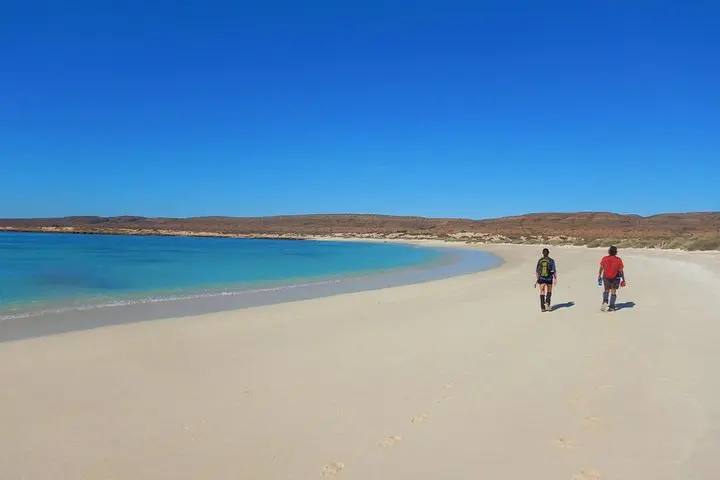
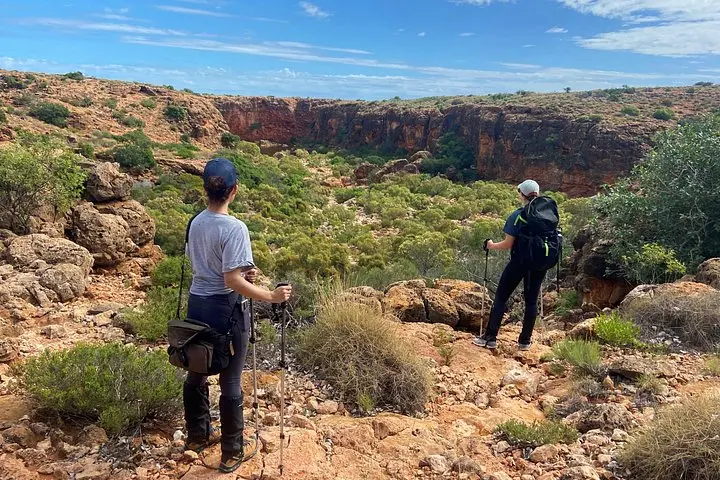
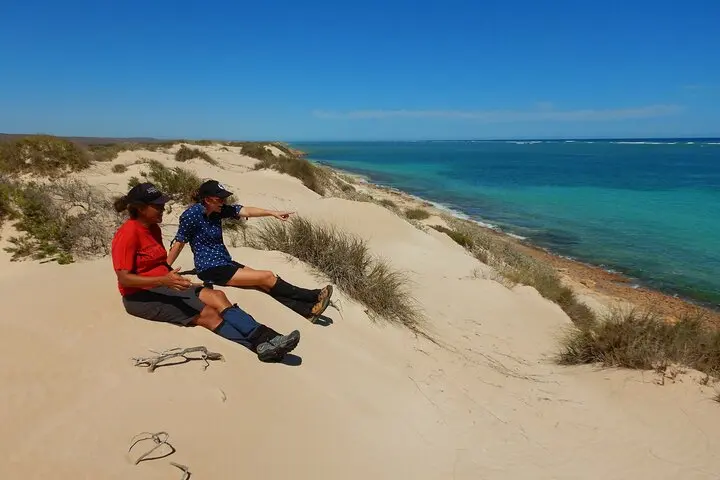
This full-day trek through Cape Range National Park moves slowly but meaningfully. The group is small—six guests at most—so the leader pauses to point out a pale wildflower, a fossil embedded in the limestone, the way a gull rides a column of warm air. The off-track ridgeline offers sweeping views of the North West Cape and the reef; later the route descends across Holocene dunes and along white-sand beaches to a lagoon that practically dares you to swim.
Geology here is loud without raising its voice. The park’s ranges are ancient limestone carved by wind and sea, their eroded gullies exposing layers laid down when this coast was a shallow sea. Ningaloo Reef runs close enough to watch the swell break sugar-white; its reef ecology helped secure the area World Heritage recognition and shapes the island-like behavior of the coastline.
Culturally, this land is lived-in. Aboriginal connections to the coast and ranges go deep, and near Exmouth you’ll hear stories of traditional food-gathering, navigation by stars, and seasonal movements that match the reef’s rhythms. European exploration, pastoral leases, and now conservation management have layered later histories on top of those older traditions.
Practically, the day is eight hours of guided walking with a few short but steep sections. Expect roughly 4–8 kilometres of trekking depending on group pacing and conditions, uneven terrain, and some rocky gullies that demand stable footing and a steady step. Temperatures can climb above 30°C in warmer months; shade is scarce and the sun is relentless.
Bring a comfortable daypack with at least 2–3 liters of water, sturdy hiking boots, sun protection, and layers for coastal wind. Allow time to swim in a protected lagoon—pack a quick-dry towel and a change of clothes if you plan to end the day wet. Guides provide a hearty bush lunch and local context, but tell them any dietary needs when you book.
This is a day for slowing: for reading fossil bands with your fingertips, for standing on a dune and letting the ocean reframe perspective, for witnessing a coastline that resists easy categorization. It’s accessible to hikers with moderate fitness and curiosity—an intimate way to meet Cape Range and the reef that shapes it.
The full experience runs about 8 hours with 4–8 kilometres of walking depending on route and group; expect uneven terrain and one or two short steep gullies—suitable for hikers with moderate fitness.
Yes—time permitting the itinerary includes a swim in a sheltered lagoon or on a white-sand beach; bring swimwear, a towel, and a change of clothes.
Children who are used to walking several kilometres and can manage rocky terrain may join, but check with the operator about age limits and fitness expectations when booking.
Bring a wide-brim hat, long-sleeve sun shirt, SPF 30+ sunscreen, and sunglasses—shade is limited and UV exposure is high year-round.
Guides provide a hearty bush lunch and snacks; you should still carry personal water (2–3 L recommended) especially in warm months.
The route includes off-track sections and secluded beaches; guides carry first-aid kits and have communication plans, but mobile signal may be limited—inform the operator of medical conditions when booking.
Trek Ningaloo operates guided outdoor trips and adventures with an emphasis on safety, stewardship, and memorable experiences.
The morning begins with a low, bright light on the limestone ridges—air thin and dry, the scrub smelling faintly of salt and resin. You step off the sealed road into a landscape that seems to predate maps: a jagged spine of white rock cutting toward the ocean, and beyond it the turquoise band of Ningaloo Reef, as close as a thought.
The morning begins with a low, bright light on the limestone ridges—air thin and dry, the scrub smelling faintly of salt and resin. You step off the sealed road into a landscape that seems to predate maps: a jagged spine of white rock cutting toward the ocean, and beyond it the turquoise band of Ningaloo Reef, as close as a thought.
This full-day trek through Cape Range National Park moves slowly but meaningfully. The group is small—six guests at most—so the leader pauses to point out a pale wildflower, a fossil embedded in the limestone, the way a gull rides a column of warm air. The off-track ridgeline offers sweeping views of the North West Cape and the reef; later the route descends across Holocene dunes and along white-sand beaches to a lagoon that practically dares you to swim.
Geology here is loud without raising its voice. The park’s ranges are ancient limestone carved by wind and sea, their eroded gullies exposing layers laid down when this coast was a shallow sea. Ningaloo Reef runs close enough to watch the swell break sugar-white; its reef ecology helped secure the area World Heritage recognition and shapes the island-like behavior of the coastline.
Culturally, this land is lived-in. Aboriginal connections to the coast and ranges go deep, and near Exmouth you’ll hear stories of traditional food-gathering, navigation by stars, and seasonal movements that match the reef’s rhythms. European exploration, pastoral leases, and now conservation management have layered later histories on top of those older traditions.
Practically, the day is eight hours of guided walking with a few short but steep sections. Expect roughly 4–8 kilometres of trekking depending on group pacing and conditions, uneven terrain, and some rocky gullies that demand stable footing and a steady step. Temperatures can climb above 30°C in warmer months; shade is scarce and the sun is relentless.
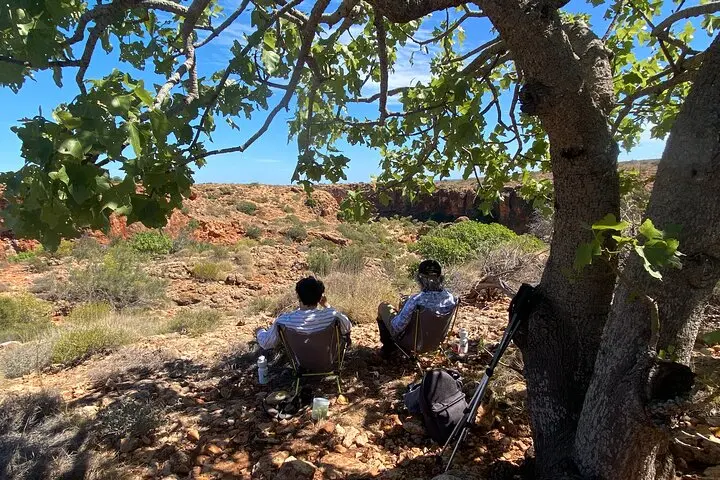
Bring a comfortable daypack with at least 2–3 liters of water, sturdy hiking boots, sun protection, and layers for coastal wind. Allow time to swim in a protected lagoon—pack a quick-dry towel and a change of clothes if you plan to end the day wet. Guides provide a hearty bush lunch and local context, but tell them any dietary needs when you book.
This is a day for slowing: for reading fossil bands with your fingertips, for standing on a dune and letting the ocean reframe perspective, for witnessing a coastline that resists easy categorization. It’s accessible to hikers with moderate fitness and curiosity—an intimate way to meet Cape Range and the reef that shapes it.