THE ADVENTURE COLLECTIVE® · Independent discovery and booking for outdoor travel

An 11-hour round-trip from Paihia takes you to Cape Reinga’s wind-swept lighthouse, the vast 90 Mile Beach, and the towering Te Paki dunes. Expect long drives, short walks, Māori history, and dramatic coastal scenery.
An 11-hour round-trip from Paihia takes you to Cape Reinga’s wind-swept lighthouse, the vast 90 Mile Beach, and the towering Te Paki dunes. Expect long drives, short walks, Māori history, and dramatic coastal scenery.
The bus hums north as the coastline peels away and the landscape opens into a wind-bent world: scrubby manuka, bright pohutukawa blooms, and an ocean that seems to argue with itself. By mid-morning you're standing where two great bodies of water meet — the Tasman Sea pushing from the west, the Pacific pressing from the east — and the surf does not whisper; it argues in white foam around the headland. The path to the lighthouse slopes to a bluff where the wind has a voice and the horizon feels like an unfinished sentence.
Verified experiences and guided adventures in the surrounding area.
Operated by Mullarkey Tours Limited · Cape Reinga, Northland
The bus hums north as the coastline peels away and the landscape opens into a wind-bent world: scrubby manuka, bright pohutukawa blooms, and an ocean that seems to argue with itself. By mid-morning you're standing where two great bodies of water meet — the Tasman Sea pushing from the west, the Pacific pressing from the east — and the surf does not whisper; it argues in white foam around the headland. The path to the lighthouse slopes to a bluff where the wind has a voice and the horizon feels like an unfinished sentence.
This is Te Rerenga Wairua, Cape Reinga, a place layered with geologic time and Māori meaning. The cape is the northern tip of Aotearoa’s long spit of sand and sandstone; coastal processes have built the famous “90 Mile Beach” from longshore drift and millennia of waves. For the local iwi, this headland is where spirits begin the journey to Hawaiki — cultural markers and carved posts near the lighthouse remind you this is living heritage, not merely a photo stop.
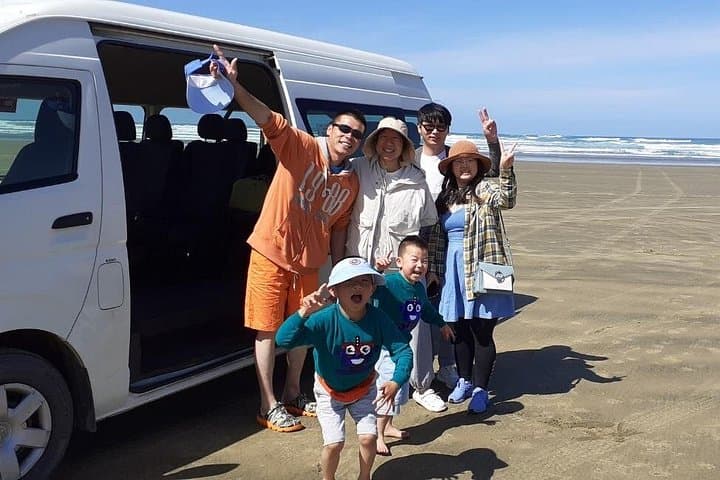
Between the cape and the bus are other landscapes: the clean, flat expanse of 90 Mile Beach where the sand compacts so firmly the coastline doubles as a road, and the Te Paki dunes, a raw inland sea of sand that rises like a small desert. Climb the high ridge of Te Paki and you trade surf-sound for a wind that will push at you as you look back at the coast you’ve just traveled.
On the practical side: the day is long (about 11 hours round trip from Paihia), and the tour balances drive time with short, purposeful stops — a walk on the southern end of 90 Mile Beach, an hour at the lighthouse, a dune climb with options to rent a sandboard. Expect a mix of paved lookouts, compacted sand, and loose dune slopes. Weather governs everything here; wind can change the feel of the cape in minutes and currents make swimming unsafe along the open coast.
Plan for sun, wind, and sand: bring layered outerwear, solid footwear for dunes and boardwalks, a refillable water bottle, and sun protection. Respect signs and cultural areas — the most memorable parts of this trip come from listening: to the guide’s stories, to the sea’s motion, and to the silence at Tapotupotu Bay when you turn your back to the road.
This tour is accessible for most travellers but expect an active day with several short walks and dune climbs. Timing your visit for clearer weather will reward you with the most dramatic swirls where the oceans meet and broad, photo-ready views.
Contrary to some listings, the typical itinerary stops at Taipa where you can purchase lunch; bring snacks if you prefer not to buy lunch en route.
Yes—sandboard rentals are usually available locally at Te Paki but are not included in the tour price; bring clothes you don’t mind getting sandy.
The tour is approximately 11 hours round trip from Paihia; check your booking confirmation for the exact departure time and pickup location.
There are short boardwalk sections and lookouts accessible to most visitors, but the final headland path to the lighthouse includes uneven surfaces and steps.
You may spot dolphins offshore, seabirds along the headland, and occasionally New Zealand fur seals; sightings aren’t guaranteed but are common in the region.
Full refunds are typically available if you cancel at least 24 hours before departure; confirm details on your booking confirmation.
Mullarkey Tours Limited operates guided outdoor trips and adventures with an emphasis on safety, stewardship, and memorable experiences.



The bus hums north as the coastline peels away and the landscape opens into a wind-bent world: scrubby manuka, bright pohutukawa blooms, and an ocean that seems to argue with itself. By mid-morning you're standing where two great bodies of water meet — the Tasman Sea pushing from the west, the Pacific pressing from the east — and the surf does not whisper; it argues in white foam around the headland. The path to the lighthouse slopes to a bluff where the wind has a voice and the horizon feels like an unfinished sentence.
The bus hums north as the coastline peels away and the landscape opens into a wind-bent world: scrubby manuka, bright pohutukawa blooms, and an ocean that seems to argue with itself. By mid-morning you're standing where two great bodies of water meet — the Tasman Sea pushing from the west, the Pacific pressing from the east — and the surf does not whisper; it argues in white foam around the headland. The path to the lighthouse slopes to a bluff where the wind has a voice and the horizon feels like an unfinished sentence.
This is Te Rerenga Wairua, Cape Reinga, a place layered with geologic time and Māori meaning. The cape is the northern tip of Aotearoa’s long spit of sand and sandstone; coastal processes have built the famous “90 Mile Beach” from longshore drift and millennia of waves. For the local iwi, this headland is where spirits begin the journey to Hawaiki — cultural markers and carved posts near the lighthouse remind you this is living heritage, not merely a photo stop.
Between the cape and the bus are other landscapes: the clean, flat expanse of 90 Mile Beach where the sand compacts so firmly the coastline doubles as a road, and the Te Paki dunes, a raw inland sea of sand that rises like a small desert. Climb the high ridge of Te Paki and you trade surf-sound for a wind that will push at you as you look back at the coast you’ve just traveled.
On the practical side: the day is long (about 11 hours round trip from Paihia), and the tour balances drive time with short, purposeful stops — a walk on the southern end of 90 Mile Beach, an hour at the lighthouse, a dune climb with options to rent a sandboard. Expect a mix of paved lookouts, compacted sand, and loose dune slopes. Weather governs everything here; wind can change the feel of the cape in minutes and currents make swimming unsafe along the open coast.
Plan for sun, wind, and sand: bring layered outerwear, solid footwear for dunes and boardwalks, a refillable water bottle, and sun protection. Respect signs and cultural areas — the most memorable parts of this trip come from listening: to the guide’s stories, to the sea’s motion, and to the silence at Tapotupotu Bay when you turn your back to the road.
This tour is accessible for most travellers but expect an active day with several short walks and dune climbs. Timing your visit for clearer weather will reward you with the most dramatic swirls where the oceans meet and broad, photo-ready views.