THE ADVENTURE COLLECTIVE® · Independent discovery and booking for outdoor travel

Drive the Athenian Riviera to Cape Sounion for a half-day private tour to the Temple of Poseidon. Enjoy cliff-top views and a classic Greek sunset, with stops at Vouliagmeni and Glyfada along the way.
Drive the Athenian Riviera to Cape Sounion for a half-day private tour to the Temple of Poseidon. Enjoy cliff-top views and a classic Greek sunset, with stops at Vouliagmeni and Glyfada along the way.
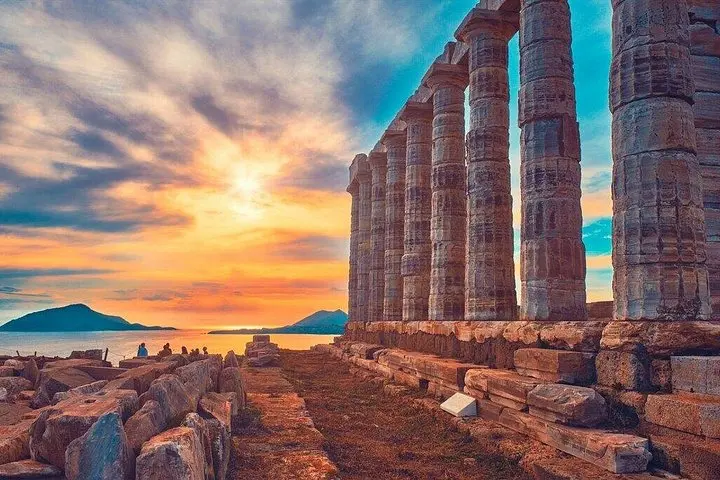
The road south from Athens opens into coastal light: olive-green slopes, roadside tavernas, and the Aegean sparking on your right until the cape rises like a limestone prow. At Cape Sounion the Temple of Poseidon sits on a sheer cliff, white columns cut against sea and sky — the wind here has a voice and seems to urge you closer to the cliff edge.
Verified experiences and guided adventures in the surrounding area.
Operated by Skyline · Sounio, Attica
The road south from Athens opens into coastal light: olive-green slopes, roadside tavernas, and the Aegean sparking on your right until the cape rises like a limestone prow. At Cape Sounion the Temple of Poseidon sits on a sheer cliff, white columns cut against sea and sky — the wind here has a voice and seems to urge you closer to the cliff edge.
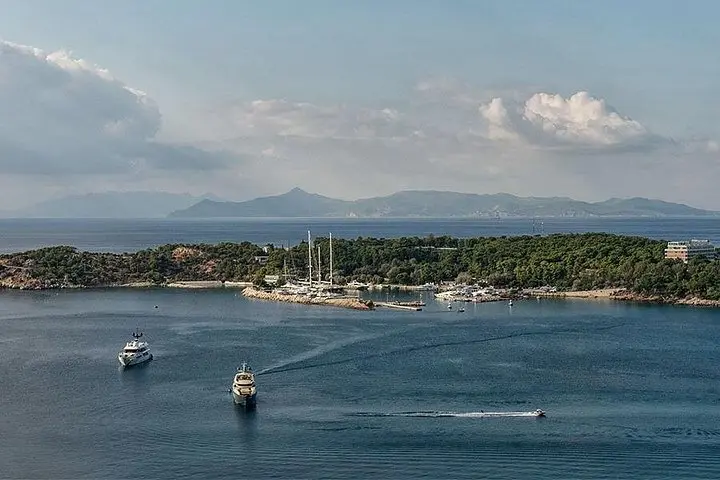
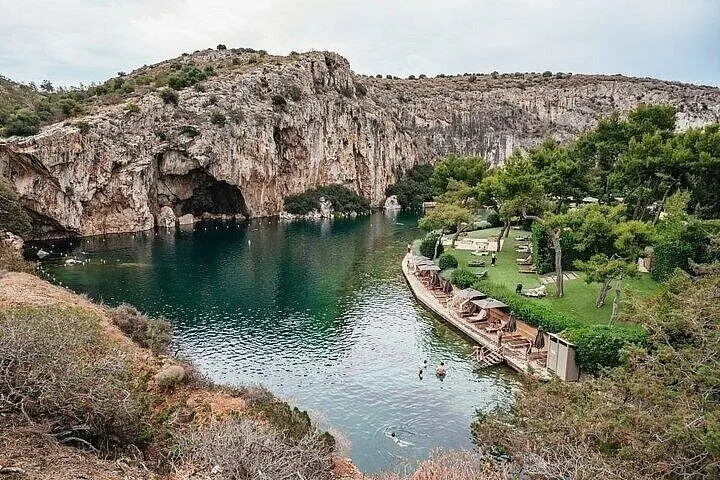
This 5th-century BC temple—built around 440 BCE during Athens’ Golden Age—was both a religious site and a maritime landmark for sailors invoking Poseidon. Geologically the cape is a band of limestone and schist worn by waves and wind, creating steep bluffs that drop directly into deep blue waters. Nearby stops often include Glyfada’s seaside bustle and the thermal lake at Vouliagmeni, offering a mix of urban coast and quiet geology.
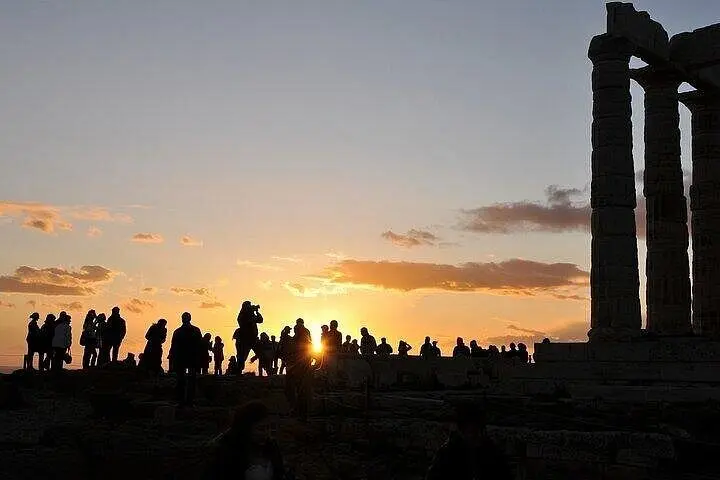
Expect a short walk across uneven archaeological paths and stone steps around the temple platform; much of the site is open-air with minimal shade. The best light for photography and the most dramatic mood arrives at sunset, when the columns silhouette and the Aegean seems to swallow the sun.
Practicalities: the experience is a half-day private tour with round-trip transport from Athens, an English guide, and flexible pickup. Admission to the archaeological site is usually paid on arrival. Wear sturdy shoes, bring water and sun protection, and allow time for traffic along the coastal road. Respect the ruins—no climbing on columns—and check seasonal opening hours if you want to swim afterward at Vouliagmeni or linger in Glyfada.
The drive is roughly 40–75 minutes depending on traffic—about 70 km (43 miles) along the Athenian Riviera by road.
Admission is typically not included on this tour and is paid at the archaeological site upon arrival.
Some itineraries include a stop at Lake Vouliagmeni; swimming depends on time and weather, so bring swimwear if you plan to enter the water.
Children can visit but the terrain is uneven and strollers are not practical on the archaeological paths—plan accordingly.
Skyline operates guided outdoor trips and adventures with an emphasis on safety, stewardship, and memorable experiences.
The road south from Athens opens into coastal light: olive-green slopes, roadside tavernas, and the Aegean sparking on your right until the cape rises like a limestone prow. At Cape Sounion the Temple of Poseidon sits on a sheer cliff, white columns cut against sea and sky — the wind here has a voice and seems to urge you closer to the cliff edge.
The road south from Athens opens into coastal light: olive-green slopes, roadside tavernas, and the Aegean sparking on your right until the cape rises like a limestone prow. At Cape Sounion the Temple of Poseidon sits on a sheer cliff, white columns cut against sea and sky — the wind here has a voice and seems to urge you closer to the cliff edge.
This 5th-century BC temple—built around 440 BCE during Athens’ Golden Age—was both a religious site and a maritime landmark for sailors invoking Poseidon. Geologically the cape is a band of limestone and schist worn by waves and wind, creating steep bluffs that drop directly into deep blue waters. Nearby stops often include Glyfada’s seaside bustle and the thermal lake at Vouliagmeni, offering a mix of urban coast and quiet geology.
Expect a short walk across uneven archaeological paths and stone steps around the temple platform; much of the site is open-air with minimal shade. The best light for photography and the most dramatic mood arrives at sunset, when the columns silhouette and the Aegean seems to swallow the sun.
Practicalities: the experience is a half-day private tour with round-trip transport from Athens, an English guide, and flexible pickup. Admission to the archaeological site is usually paid on arrival. Wear sturdy shoes, bring water and sun protection, and allow time for traffic along the coastal road. Respect the ruins—no climbing on columns—and check seasonal opening hours if you want to swim afterward at Vouliagmeni or linger in Glyfada.