THE ADVENTURE COLLECTIVE® · Independent discovery and booking for outdoor travel

A single day that stitches Cape Town’s top draws into one practical loop: cable-car up Table Mountain, penguins at Boulders Beach, a scenic sweep along Chapman's Peak, and a coastal wine tasting at Cape Point. Expect 10 hours of striking views, short walks, and expert local context.
A single day that stitches Cape Town’s top draws into one practical loop: cable-car up Table Mountain, penguins at Boulders Beach, a scenic sweep along Chapman's Peak, and a coastal wine tasting at Cape Point. Expect 10 hours of striking views, short walks, and expert local context.
The minivan eases around Chapman's Peak as the Atlantic winds push white spray against the cliffs. From the roadside the ocean looks carved and deliberate—each turn revealing another ribbon of road, a different slice of False Bay. On a full-day, small-group loop out of Cape Town, the landscape keeps its own pace: surfers tacking in the shallows at Muizenberg, penguins waddling between granite boulders, and the flat-top silhouette of Table Mountain hovering over the city like a weathered map.
Verified experiences and guided adventures in the surrounding area.
Operated by Kenzi Travel and Tours · Cape Town, Western Cape
The minivan eases around Chapman's Peak as the Atlantic winds push white spray against the cliffs. From the roadside the ocean looks carved and deliberate—each turn revealing another ribbon of road, a different slice of False Bay. On a full-day, small-group loop out of Cape Town, the landscape keeps its own pace: surfers tacking in the shallows at Muizenberg, penguins waddling between granite boulders, and the flat-top silhouette of Table Mountain hovering over the city like a weathered map.
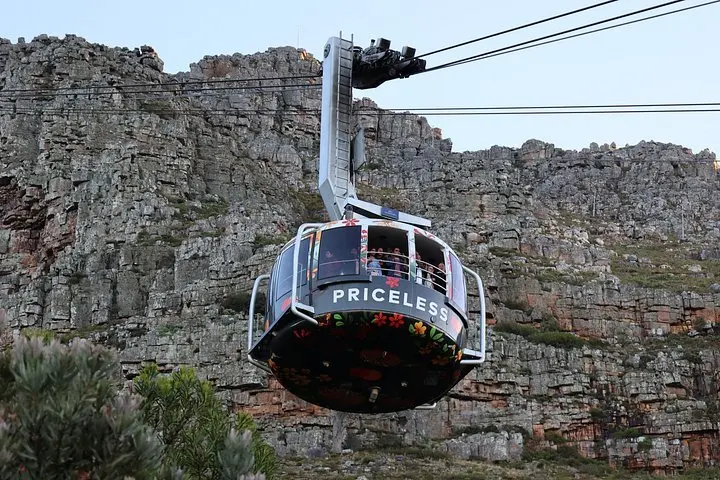
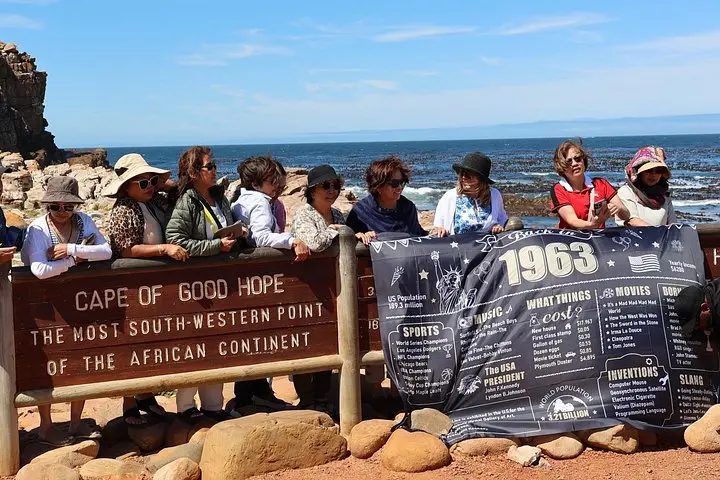
The route reads like a primer on the Cape Peninsula. Table Mountain, rising roughly 1,086 meters above the city, is a granite-and-quartzlandscape that shaped local navigation and myth, its “tablecloth” of orographic cloud a regular mood-shifter. South along the peninsula, Chapman’s Peak Drive (about 9 km of cliff-hugging ribbon) is a modern engineering line cut through 20th-century basalt and sandstone. Cape Point and the Cape of Good Hope mark dramatic shifts in geology and oceanic current—where the Atlantic and Indian Oceans graze the continent and wind-sculpted fynbos clings to thin soils.
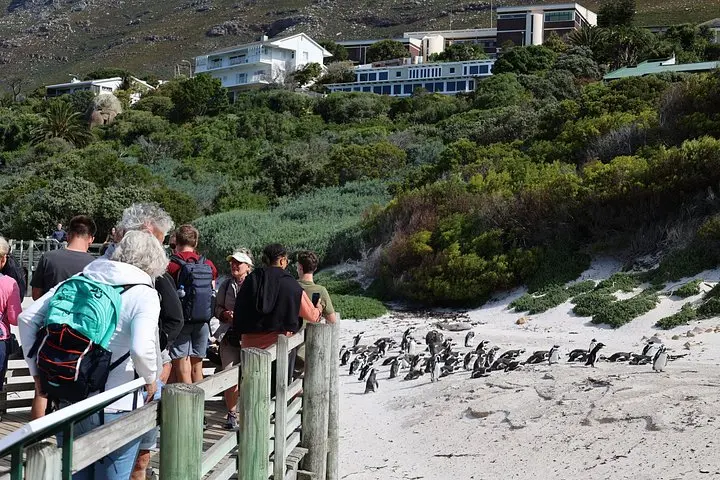
Culture threads through the trip: Afrikaans fishing villages, colonial lighthouses, and Cape Winelands techniques refined over centuries. At Boulders Beach, visitors watch African penguins—what began as two breeding pairs in 1982 is now a protected colony of thousands—on purpose-built boardwalks to keep human feet off nesting sand. Guides underline local rules: no feeding wildlife, no provoking baboons, and stay on paths to protect fragile fynbos.
Practicalities are simple: the tour runs about 10 hours with hotel pickup in Cape Town and a maximum of 12 people—ideal for travelers who want full-day coverage without logistics stress. Expect short walks at viewpoints and boardwalk distances of under 1 km at Boulders; the Cape Point reserve involves steeper sections and could add 1–2 km of walking if you hike to the old lighthouse. Table Mountain access is by cable car; the tour includes prebooked tickets, saving a likely wait in peak season.
Plan for variable weather and strong sunlight—layers are essential because coastal wind can be brisk even when the city is warm. Bring closed shoes for rocky boardwalks, a refillable water bottle, and a small daypack to carry sunscreen, a camera, and any motion-sickness remedies for the drive. Respect wildlife: baboons are known to approach vehicles, so keep doors closed and food stowed.
For photographers, sunrise and late afternoon light on the cliffs and vineyards is best; mid-day is busier but offers crisp visibility from Table Mountain. With a mix of geology, wildlife, and wine, this full-day tour serves as a compact primer on why the Cape Peninsula rewards both attention and care.
Yes — the tour includes prebooked Table Mountain cable car tickets to avoid the usual queues.
You’ll view African penguins from designated boardwalks that keep a safe distance to protect the birds and their nests.
Yes — pickup is provided across Cape Town City Center and surrounding areas; the guide will confirm your pickup point in advance.
Children are welcome; note that some entrance fees for kids are reduced and infant seats are available on request.
Keep doors and windows closed, do not feed them, and follow guide instructions — baboons can become aggressive when habituated to food.
The tour operates in most weather; however, if conditions force cancellation you can cancel at least 24 hours in advance for a full refund per the provider policy.
Kenzi Travel and Tours operates guided outdoor trips and adventures with an emphasis on safety, stewardship, and memorable experiences.
The minivan eases around Chapman's Peak as the Atlantic winds push white spray against the cliffs. From the roadside the ocean looks carved and deliberate—each turn revealing another ribbon of road, a different slice of False Bay. On a full-day, small-group loop out of Cape Town, the landscape keeps its own pace: surfers tacking in the shallows at Muizenberg, penguins waddling between granite boulders, and the flat-top silhouette of Table Mountain hovering over the city like a weathered map.
The minivan eases around Chapman's Peak as the Atlantic winds push white spray against the cliffs. From the roadside the ocean looks carved and deliberate—each turn revealing another ribbon of road, a different slice of False Bay. On a full-day, small-group loop out of Cape Town, the landscape keeps its own pace: surfers tacking in the shallows at Muizenberg, penguins waddling between granite boulders, and the flat-top silhouette of Table Mountain hovering over the city like a weathered map.
The route reads like a primer on the Cape Peninsula. Table Mountain, rising roughly 1,086 meters above the city, is a granite-and-quartzlandscape that shaped local navigation and myth, its “tablecloth” of orographic cloud a regular mood-shifter. South along the peninsula, Chapman’s Peak Drive (about 9 km of cliff-hugging ribbon) is a modern engineering line cut through 20th-century basalt and sandstone. Cape Point and the Cape of Good Hope mark dramatic shifts in geology and oceanic current—where the Atlantic and Indian Oceans graze the continent and wind-sculpted fynbos clings to thin soils.
Culture threads through the trip: Afrikaans fishing villages, colonial lighthouses, and Cape Winelands techniques refined over centuries. At Boulders Beach, visitors watch African penguins—what began as two breeding pairs in 1982 is now a protected colony of thousands—on purpose-built boardwalks to keep human feet off nesting sand. Guides underline local rules: no feeding wildlife, no provoking baboons, and stay on paths to protect fragile fynbos.
Practicalities are simple: the tour runs about 10 hours with hotel pickup in Cape Town and a maximum of 12 people—ideal for travelers who want full-day coverage without logistics stress. Expect short walks at viewpoints and boardwalk distances of under 1 km at Boulders; the Cape Point reserve involves steeper sections and could add 1–2 km of walking if you hike to the old lighthouse. Table Mountain access is by cable car; the tour includes prebooked tickets, saving a likely wait in peak season.
Plan for variable weather and strong sunlight—layers are essential because coastal wind can be brisk even when the city is warm. Bring closed shoes for rocky boardwalks, a refillable water bottle, and a small daypack to carry sunscreen, a camera, and any motion-sickness remedies for the drive. Respect wildlife: baboons are known to approach vehicles, so keep doors closed and food stowed.
For photographers, sunrise and late afternoon light on the cliffs and vineyards is best; mid-day is busier but offers crisp visibility from Table Mountain. With a mix of geology, wildlife, and wine, this full-day tour serves as a compact primer on why the Cape Peninsula rewards both attention and care.