THE ADVENTURE COLLECTIVE® · Independent discovery and booking for outdoor travel

Choose sunrise for quiet light and coffee, or sunset for the classic Cape Town ritual—either way, Lion's Head delivers 360° views, short scrambling and a compact, rewarding climb. This guide gives what to expect and how to prepare.
Choose sunrise for quiet light and coffee, or sunset for the classic Cape Town ritual—either way, Lion's Head delivers 360° views, short scrambling and a compact, rewarding climb. This guide gives what to expect and how to prepare.
You start before the city wakes or just as it exhales—feet on gravel, headlamp cutting through coastal air as the Atlantic wind dares you up the switchbacks. Lion's Head rises like a watchful ridge beside Table Mountain, its granite ribs and pine-studded shelves giving way to a summit amphitheater with full-circle views of Cape Town, the ocean and the long curve of the peninsula.
Verified experiences and guided adventures in the surrounding area.
Operated by Table Mountain hiking tours · Cape Town, Western Cape
You start before the city wakes or just as it exhales—feet on gravel, headlamp cutting through coastal air as the Atlantic wind dares you up the switchbacks. Lion's Head rises like a watchful ridge beside Table Mountain, its granite ribs and pine-studded shelves giving way to a summit amphitheater with full-circle views of Cape Town, the ocean and the long curve of the peninsula.
The peak is one of three principal summits framing the city and sits within the Cape Floristic Region, a globally significant floral kingdom. Geologically, Lion’s Head is Cape Granite capped by lateritic soil; its exposed rock and steep flanks make for short, sharp climbs and sections of scrambling. Culturally, sunset hikes are a Capetonian routine—friends, flasks and the city lights flicking on below. Guides point out the old signal routes and the changing coastline that shaped the city’s maritime history.
Expect narrow paths, a few short ladders and a chained traverse where hands steady progress; the route circles the mountain so views open constantly. Sunrise offers quieter light and coffee at the car park; sunset brings crowds and cooler air at the summit—pack a warm layer.
Practical guidance: wear stable shoes, carry 1–2 liters of water, bring a headlamp for descents, and check wind forecasts—strong gusts change exposure quickly. If you’re uneasy with heights, choose the left-hand contour route to avoid the rock pitches. Small-group tours limit numbers for safety and a better experience, but arrive early in high season to secure parking and space on the ridge.
From the Lion's Head car park expect 45–75 minutes to the summit depending on pace and group size; round-trip with breaks is typically 2–3 hours.
Minimum recommended age is about 10; children should be confident on uneven ground and supervised on exposed sections and ladders.
Yes—sunrise and sunset hikes are common; guides provide headlamps for group descents and the path is often busy at those times, but bring your own light and stay with the group.
Tours are weather-dependent; strong winds or storms can close the route—operators will offer an alternative date or refund if conditions are unsafe.
Table Mountain hiking tours operates guided outdoor trips and adventures with an emphasis on safety, stewardship, and memorable experiences.

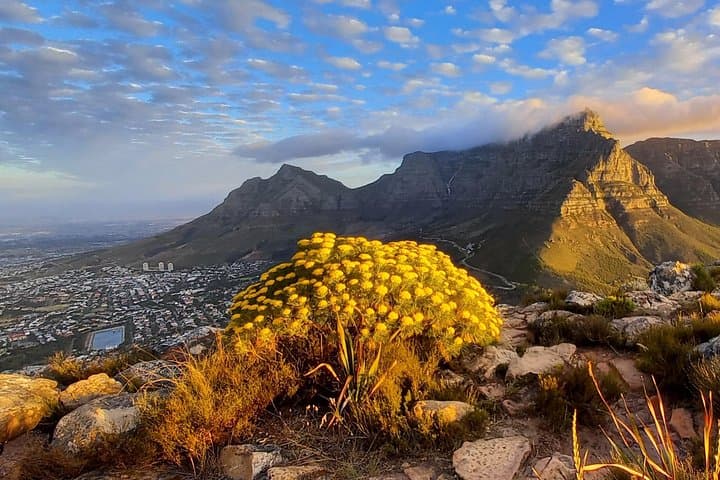
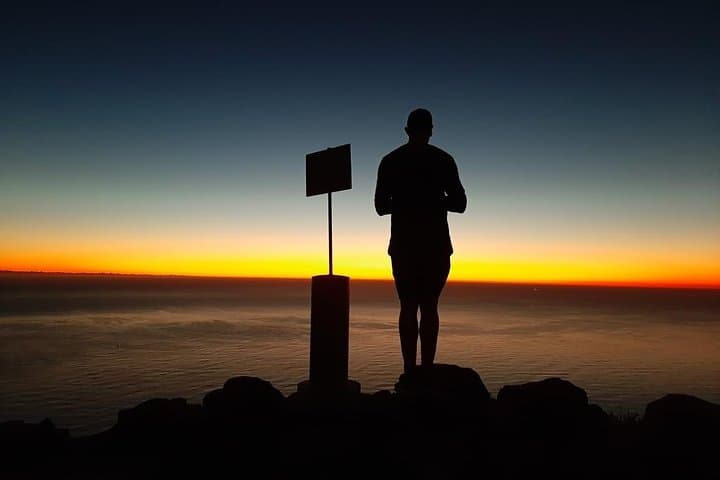
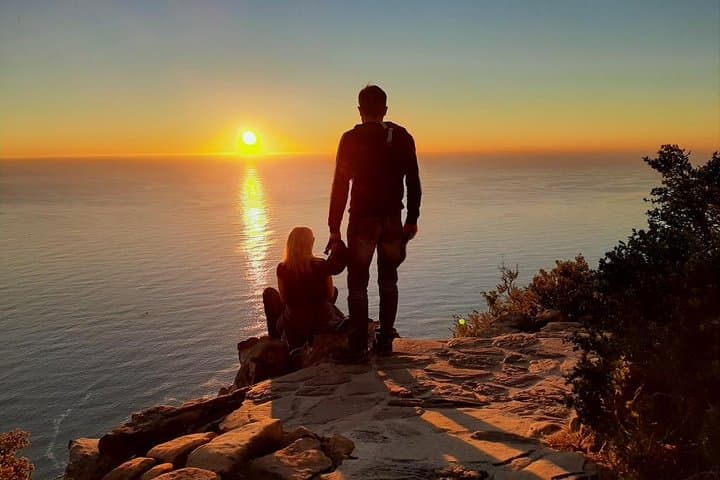
You start before the city wakes or just as it exhales—feet on gravel, headlamp cutting through coastal air as the Atlantic wind dares you up the switchbacks. Lion's Head rises like a watchful ridge beside Table Mountain, its granite ribs and pine-studded shelves giving way to a summit amphitheater with full-circle views of Cape Town, the ocean and the long curve of the peninsula.
You start before the city wakes or just as it exhales—feet on gravel, headlamp cutting through coastal air as the Atlantic wind dares you up the switchbacks. Lion's Head rises like a watchful ridge beside Table Mountain, its granite ribs and pine-studded shelves giving way to a summit amphitheater with full-circle views of Cape Town, the ocean and the long curve of the peninsula.
The peak is one of three principal summits framing the city and sits within the Cape Floristic Region, a globally significant floral kingdom. Geologically, Lion’s Head is Cape Granite capped by lateritic soil; its exposed rock and steep flanks make for short, sharp climbs and sections of scrambling. Culturally, sunset hikes are a Capetonian routine—friends, flasks and the city lights flicking on below. Guides point out the old signal routes and the changing coastline that shaped the city’s maritime history.
Expect narrow paths, a few short ladders and a chained traverse where hands steady progress; the route circles the mountain so views open constantly. Sunrise offers quieter light and coffee at the car park; sunset brings crowds and cooler air at the summit—pack a warm layer.
Practical guidance: wear stable shoes, carry 1–2 liters of water, bring a headlamp for descents, and check wind forecasts—strong gusts change exposure quickly. If you’re uneasy with heights, choose the left-hand contour route to avoid the rock pitches. Small-group tours limit numbers for safety and a better experience, but arrive early in high season to secure parking and space on the ridge.