THE ADVENTURE COLLECTIVE® · Independent discovery and booking for outdoor travel

Launch from Signal Hill or Lion's Head and float above Table Mountain, Robben Island and the Atlantic — a short, weather-dependent tandem flight that delivers cinematic views of Cape Town. Read on for what to expect and how to prepare.
Launch from Signal Hill or Lion's Head and float above Table Mountain, Robben Island and the Atlantic — a short, weather-dependent tandem flight that delivers cinematic views of Cape Town. Read on for what to expect and how to prepare.
The wing fills and the city opens beneath you — a patchwork of sandstone cliffs, braided beaches and the silver flash of the Atlantic. From the ramp at Signal Hill or Lion's Head, a tandem pilot steers the glider into an updraft and Cape Town slips away: Table Mountain presents its basalt flank, Robben Island sits like a gray coin in Table Bay, and the coastline pulls the eye toward Chapman's Peak.
Verified experiences and guided adventures in the surrounding area.
Operated by Arrive & Explore Tours · Cape Town, Western Cape
The wing fills and the city opens beneath you — a patchwork of sandstone cliffs, braided beaches and the silver flash of the Atlantic. From the ramp at Signal Hill or Lion's Head, a tandem pilot steers the glider into an updraft and Cape Town slips away: Table Mountain presents its basalt flank, Robben Island sits like a gray coin in Table Bay, and the coastline pulls the eye toward Chapman's Peak.
Paragliding here mixes geological drama with human history. Table Mountain’s sandstone shelves and the Atlantic’s cold Benguela current shape wind patterns that make Signal Hill and Lion’s Head reliable launch sites. Robben Island, visible offshore, is a stark reminder of South Africa’s recent past; the city’s waterfront grew around a natural harbor carved by the same forces that sculpted the mountains.
Locals treat flying as part of Cape Town’s outdoor culture — a morning bird’s-eye commute for adventure seekers and a sunset ritual for pilots. The experience is weather dependent: pilots choose Signal Hill or Lion’s Head based on wind direction, thermals and safety.
Practical guidance: expect about an hour for pickup, briefing and the flight window (flight time varies with conditions). Wear sturdy, closed-toe shoes and a windproof layer; cameras and operators’ photo packages are usually available. Inform the operator of any medical concerns, and confirm weight and age limits when booking. Early morning or late afternoon flights give the best light and gentler winds. With an experienced tandem pilot, the activity is accessible to most travelers and delivers a compact, unforgettable view of Cape Town from above.
Flight time depends on wind and thermals; a tandem airborne leg commonly lasts 10–25 minutes, while the full experience (pickup, briefing and flight) is typically around an hour.
Most operators set upper and lower weight limits and screen for serious spinal, heart or pregnancy concerns — disclose medical issues when booking to confirm eligibility.
Launch is normally from Signal Hill or Lion's Head depending on wind direction; landings are commonly planned near the beachfront or designated coastal landing zones selected for safety.
Yes — many operators offer in-flight photo/video packages or the pilot may take pictures; check availability and pricing when you book.
Arrive & Explore Tours operates guided outdoor trips and adventures with an emphasis on safety, stewardship, and memorable experiences.
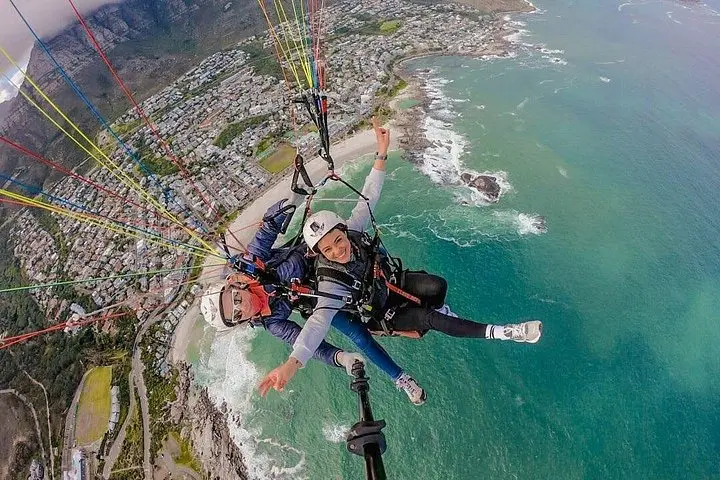
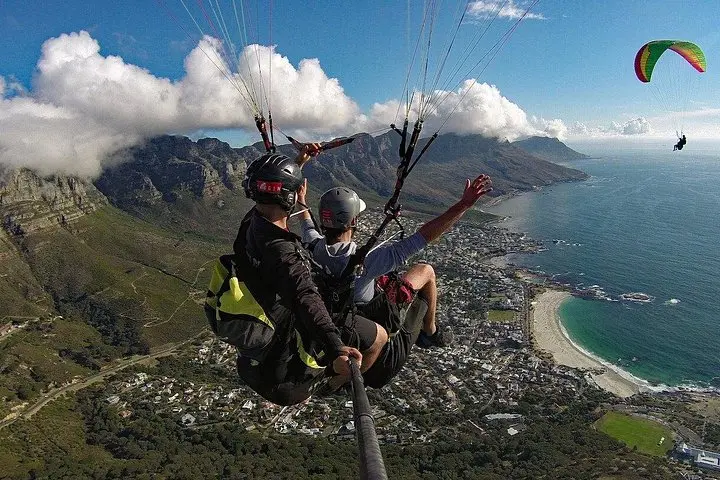
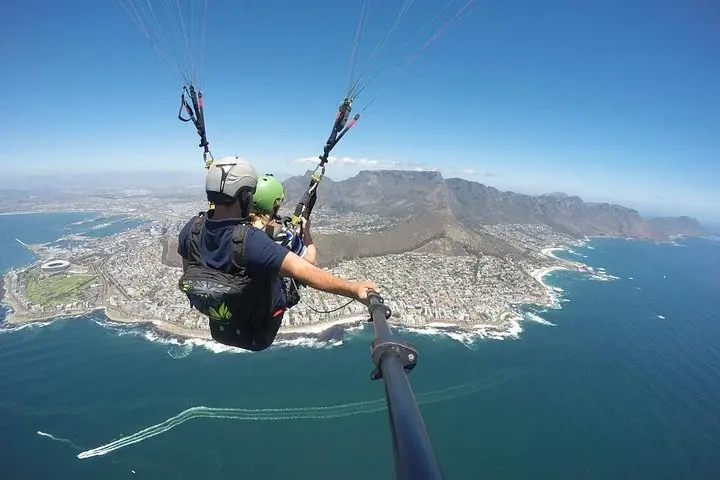
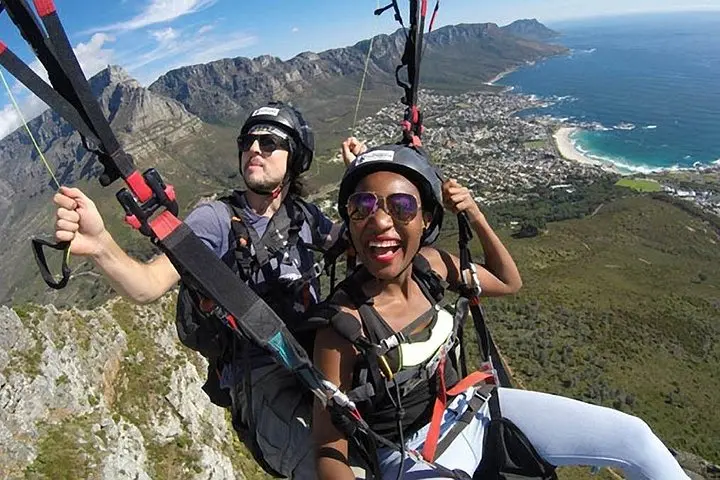
The wing fills and the city opens beneath you — a patchwork of sandstone cliffs, braided beaches and the silver flash of the Atlantic. From the ramp at Signal Hill or Lion's Head, a tandem pilot steers the glider into an updraft and Cape Town slips away: Table Mountain presents its basalt flank, Robben Island sits like a gray coin in Table Bay, and the coastline pulls the eye toward Chapman's Peak.
The wing fills and the city opens beneath you — a patchwork of sandstone cliffs, braided beaches and the silver flash of the Atlantic. From the ramp at Signal Hill or Lion's Head, a tandem pilot steers the glider into an updraft and Cape Town slips away: Table Mountain presents its basalt flank, Robben Island sits like a gray coin in Table Bay, and the coastline pulls the eye toward Chapman's Peak.
Paragliding here mixes geological drama with human history. Table Mountain’s sandstone shelves and the Atlantic’s cold Benguela current shape wind patterns that make Signal Hill and Lion’s Head reliable launch sites. Robben Island, visible offshore, is a stark reminder of South Africa’s recent past; the city’s waterfront grew around a natural harbor carved by the same forces that sculpted the mountains.
Locals treat flying as part of Cape Town’s outdoor culture — a morning bird’s-eye commute for adventure seekers and a sunset ritual for pilots. The experience is weather dependent: pilots choose Signal Hill or Lion’s Head based on wind direction, thermals and safety.
Practical guidance: expect about an hour for pickup, briefing and the flight window (flight time varies with conditions). Wear sturdy, closed-toe shoes and a windproof layer; cameras and operators’ photo packages are usually available. Inform the operator of any medical concerns, and confirm weight and age limits when booking. Early morning or late afternoon flights give the best light and gentler winds. With an experienced tandem pilot, the activity is accessible to most travelers and delivers a compact, unforgettable view of Cape Town from above.