THE ADVENTURE COLLECTIVE® · Independent discovery and booking for outdoor travel

Leap from a small plane above the Swartland and West Coast for a tandem skydive with Table Mountain visible on clear days. This practical guide covers what to expect, local conditions, and how to prepare for a safe, memorable jump.
Leap from a small plane above the Swartland and West Coast for a tandem skydive with Table Mountain visible on clear days. This practical guide covers what to expect, local conditions, and how to prepare for a safe, memorable jump.
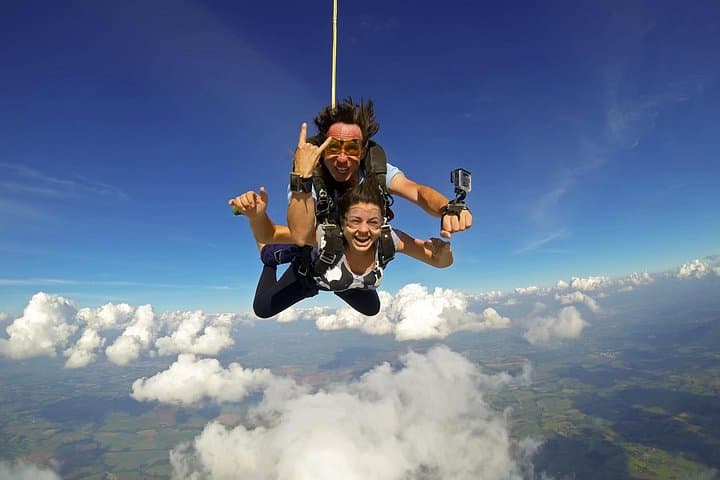
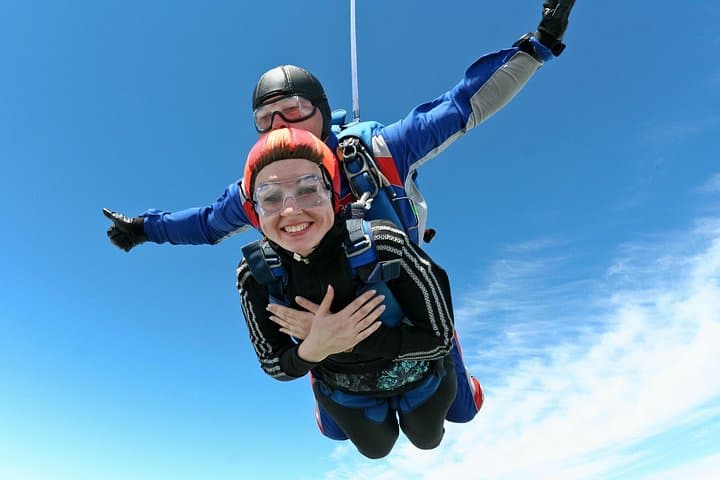
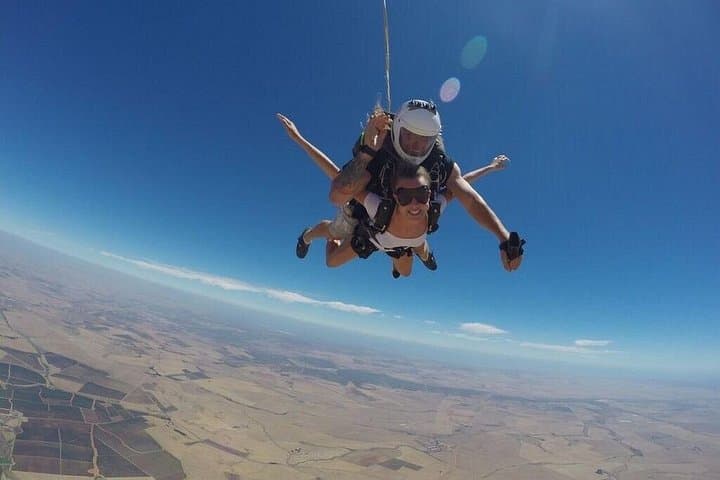
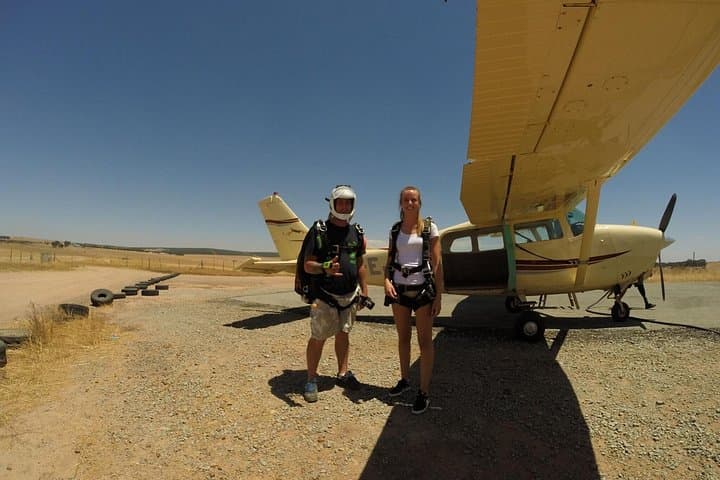
The plane hums low over scrub and fields as the coastline sharpens into a thin, bright line; you strap to an instructor, the wind already testing your resolve. From the private airstrip near Malmesbury, the world opens—flat Swartland farmland and the west coast retreating toward the Atlantic—before the aircraft climbs to the jump altitude and everything quiets to a single, controlled breath.
Verified experiences and guided adventures in the surrounding area.
Operated by Cape Archives Tours · Malmesbury, Western Cape
The plane hums low over scrub and fields as the coastline sharpens into a thin, bright line; you strap to an instructor, the wind already testing your resolve. From the private airstrip near Malmesbury, the world opens—flat Swartland farmland and the west coast retreating toward the Atlantic—before the aircraft climbs to the jump altitude and everything quiets to a single, controlled breath.
This part of the Western Cape has a practical farming history: wheat fields, stone quarries, and small towns like Malmesbury that grew up along trade routes to the coast. Geologically the landscape is broad and low, built on Table Mountain Group sandstones visible to the southeast; on clear days Table Mountain itself sits on the horizon, a distant reference point beneath your canopy.
Locally, skydiving sits at the intersection of adventure tourism and community enterprise—operators run from humble airstrips and rely on predictable coastal winds, experienced pilots and tandem instructors certified to South African standards. Culture here is informal and direct: safety briefings are crisp, consent and weight checks are standard, and the landing zone is shared with agricultural life.
Practical guidance: expect a roughly three-hour window for pickup, brief, flight and jump. Dress in layers that won’t flap (wind will test any loose clothing), bring ID and wear snug sneakers. Weather controls operations—wind and cloud can cancel, so build flexibility into your schedule. Hydrate, eat lightly, and follow instructors’ signals on exit and landing. For first-timers the jump is sensory and procedural: adrenaline arrives fast, but the canopy ride afterward gives you time to drink in a low, wide Cape horizon that quietly insists you look twice.
Age limits vary by operator but typically minimum 16 with parental consent; weight limits commonly range around 95–110 kg depending on instructor tandem equipment—check when booking.
Flights are canceled for high winds, low cloud or rain; operators will reschedule or refund according to their policy—plan flexibly and confirm morning of.
No—tandem jumps are designed for first-timers; instructors handle all technical aspects after a safety briefing.
Not recommended for pregnant people, or those with serious heart, back or recent surgery issues; always disclose medical concerns and consult your doctor.
Cape Archives Tours operates guided outdoor trips and adventures with an emphasis on safety, stewardship, and memorable experiences.
The plane hums low over scrub and fields as the coastline sharpens into a thin, bright line; you strap to an instructor, the wind already testing your resolve. From the private airstrip near Malmesbury, the world opens—flat Swartland farmland and the west coast retreating toward the Atlantic—before the aircraft climbs to the jump altitude and everything quiets to a single, controlled breath.
The plane hums low over scrub and fields as the coastline sharpens into a thin, bright line; you strap to an instructor, the wind already testing your resolve. From the private airstrip near Malmesbury, the world opens—flat Swartland farmland and the west coast retreating toward the Atlantic—before the aircraft climbs to the jump altitude and everything quiets to a single, controlled breath.
This part of the Western Cape has a practical farming history: wheat fields, stone quarries, and small towns like Malmesbury that grew up along trade routes to the coast. Geologically the landscape is broad and low, built on Table Mountain Group sandstones visible to the southeast; on clear days Table Mountain itself sits on the horizon, a distant reference point beneath your canopy.
Locally, skydiving sits at the intersection of adventure tourism and community enterprise—operators run from humble airstrips and rely on predictable coastal winds, experienced pilots and tandem instructors certified to South African standards. Culture here is informal and direct: safety briefings are crisp, consent and weight checks are standard, and the landing zone is shared with agricultural life.
Practical guidance: expect a roughly three-hour window for pickup, brief, flight and jump. Dress in layers that won’t flap (wind will test any loose clothing), bring ID and wear snug sneakers. Weather controls operations—wind and cloud can cancel, so build flexibility into your schedule. Hydrate, eat lightly, and follow instructors’ signals on exit and landing. For first-timers the jump is sensory and procedural: adrenaline arrives fast, but the canopy ride afterward gives you time to drink in a low, wide Cape horizon that quietly insists you look twice.