THE ADVENTURE COLLECTIVE® · Independent discovery and booking for outdoor travel

Descend into Derinkuyu's cool tunnels, walk the Melendiz River through Ihlara Valley, and climb the rock-carved Selime monastery on a private 6–7 hour tour. Expect uneven trails, narrow stairways and vivid Byzantine churches carved into volcanic rock.
Descend into Derinkuyu's cool tunnels, walk the Melendiz River through Ihlara Valley, and climb the rock-carved Selime monastery on a private 6–7 hour tour. Expect uneven trails, narrow stairways and vivid Byzantine churches carved into volcanic rock.
You step off the air-conditioned vehicle and the land immediately feels engineered by time: soft volcanic tuff carved into rooms, chimneys and pinnacles, and a river that keeps cutting deeper and daring you to follow.
Verified experiences and guided adventures in the surrounding area.
Operated by Flame Travel and Events · Göreme, Nevşehir Province
You step off the air-conditioned vehicle and the land immediately feels engineered by time: soft volcanic tuff carved into rooms, chimneys and pinnacles, and a river that keeps cutting deeper and daring you to follow.
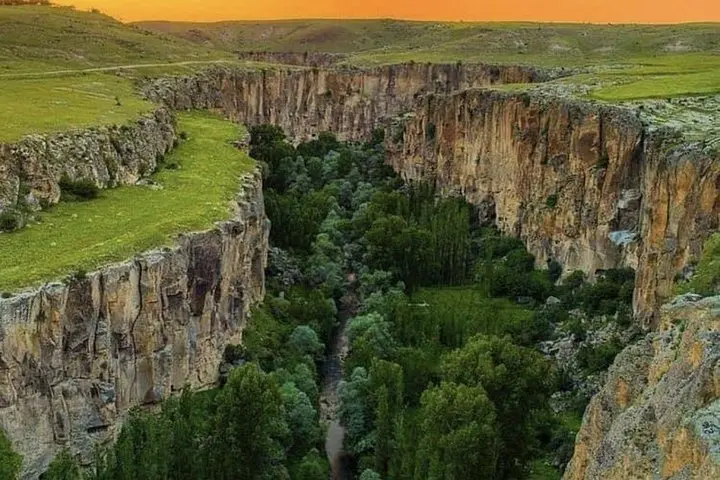
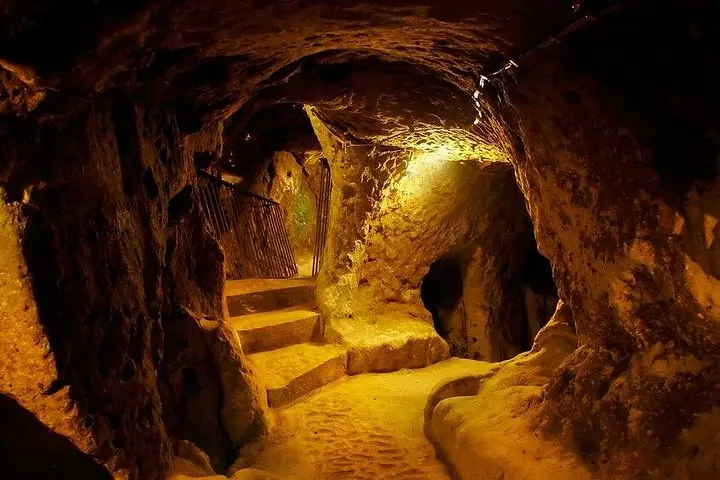
The day begins underground at Derinkuyu, the deepest excavated city in Cappadocia, where staircases dip into cool tunnels and ventilation shafts become silent witnesses to centuries of refuge. From there the tour moves south to Ihlara Valley, a 14 km canyon scored by the Melendiz River. The valley floor offers a riverside trail that winds past Byzantine rock-cut churches with faded frescoes—Ağaçaltı and Sümbüllü among them—each doorway a pocket of history.
At Selime you climb again, into a fortress-monastery complex carved like a small citadel, where defensive galleries and clerical cells show the region’s strategic role under Hittite to Ottoman rule. Finally, Pigeon Valley returns the focus to surface life: dovecotes puncture the slope between Göreme and Uçhisar, a reminder that people here shaped the stone as much as it shaped them.
Practical edge: expect roughly 6–7 hours on the road with 4–7 km of walking in the valley on uneven, often rocky footing and steep steps in caves and monasteries. Temperatures drop underground—bring a light layer—and carry 1–2 liters of water. Admission fees are typically paid on site; wear grippy shoes and plan your camera battery for low-light interiors. This day balances deep geological spectacle and living history—direct, sensory, and best paced deliberately.
Guided walks typically cover 4–7 km of the valley floor depending on stops; the full valley is 14 km end-to-end but most tours use a shorter segment.
Admission is usually paid on-site for attractions like Derinkuyu and Selime; check with your operator before departure.
Derinkuyu has many stairs, narrow passages and tight spaces; it's not suitable for those with limited mobility.
Children can join, but guardians should expect steep steps and low ceilings in caves—supervise closely and consider shorter valley sections if needed.
Flame Travel and Events operates guided outdoor trips and adventures with an emphasis on safety, stewardship, and memorable experiences.
You step off the air-conditioned vehicle and the land immediately feels engineered by time: soft volcanic tuff carved into rooms, chimneys and pinnacles, and a river that keeps cutting deeper and daring you to follow.
You step off the air-conditioned vehicle and the land immediately feels engineered by time: soft volcanic tuff carved into rooms, chimneys and pinnacles, and a river that keeps cutting deeper and daring you to follow.
The day begins underground at Derinkuyu, the deepest excavated city in Cappadocia, where staircases dip into cool tunnels and ventilation shafts become silent witnesses to centuries of refuge. From there the tour moves south to Ihlara Valley, a 14 km canyon scored by the Melendiz River. The valley floor offers a riverside trail that winds past Byzantine rock-cut churches with faded frescoes—Ağaçaltı and Sümbüllü among them—each doorway a pocket of history.
At Selime you climb again, into a fortress-monastery complex carved like a small citadel, where defensive galleries and clerical cells show the region’s strategic role under Hittite to Ottoman rule. Finally, Pigeon Valley returns the focus to surface life: dovecotes puncture the slope between Göreme and Uçhisar, a reminder that people here shaped the stone as much as it shaped them.
Practical edge: expect roughly 6–7 hours on the road with 4–7 km of walking in the valley on uneven, often rocky footing and steep steps in caves and monasteries. Temperatures drop underground—bring a light layer—and carry 1–2 liters of water. Admission fees are typically paid on site; wear grippy shoes and plan your camera battery for low-light interiors. This day balances deep geological spectacle and living history—direct, sensory, and best paced deliberately.