THE ADVENTURE COLLECTIVE® · Independent discovery and booking for outdoor travel

Choose your own route through Cappadocia’s surreal rock formations with a licensed private guide and car. Spend a flexible day exploring Göreme Open-Air Museum, Kaymaklı underground city, Avanos pottery and the fairy chimneys for a tailored mix of geology, history and local craft.
Choose your own route through Cappadocia’s surreal rock formations with a licensed private guide and car. Spend a flexible day exploring Göreme Open-Air Museum, Kaymaklı underground city, Avanos pottery and the fairy chimneys for a tailored mix of geology, history and local craft.
The day begins before the sun has fully climbed, when Göreme's soft rock faces catch a pale light and the first hot-air balloons drift like slow-moving lanterns above the valley.
Verified experiences and guided adventures in the surrounding area.
Operated by Tour Guide Doğukan Acikbas · Göreme, Nevşehir
The day begins before the sun has fully climbed, when Göreme's soft rock faces catch a pale light and the first hot-air balloons drift like slow-moving lanterns above the valley.
Your guide, waiting at the hotel in a comfortable private car, folds a local map onto his lap and asks what you want out of the day. You can chase viewpoints, linger in rock-cut churches, or push into the underground. This is a tour built for choice: you steer; Doğukan, a licensed guide with decades of local knowledge, supplies the stories and the route.
Start at Göreme Panorama, where the valleys spread in ridges and chimneys—the fairy chimneys—stand like weathered columns. From there Uçhisar Castle rises as the highest lookout, its caves and dovecotes cut into tufa that erodes with theatrical patience. The path descends into the Göreme Open-Air Museum next: Byzantine cave churches with frescoes whose ochres survived centuries of wind and time.
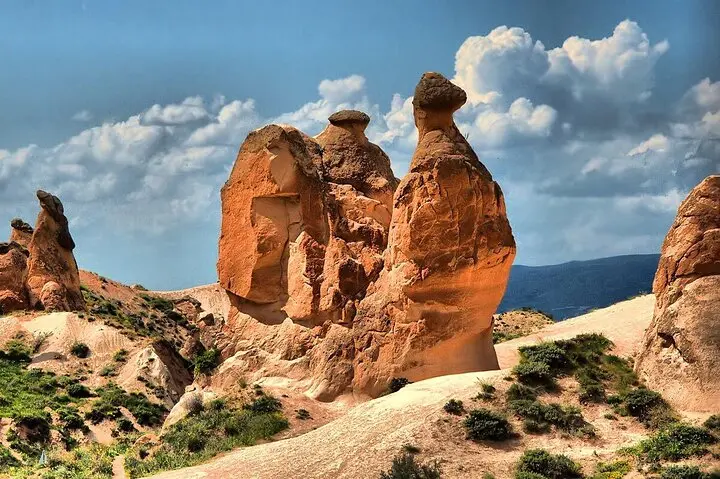
The geology is blunt and readable. Cappadocia formed from volcanic ash and ignimbrites deposited millions of years ago; later, wind and water carved the soft rock into cones and pillars—the landscape keeps sculpting itself, patient and relentless.
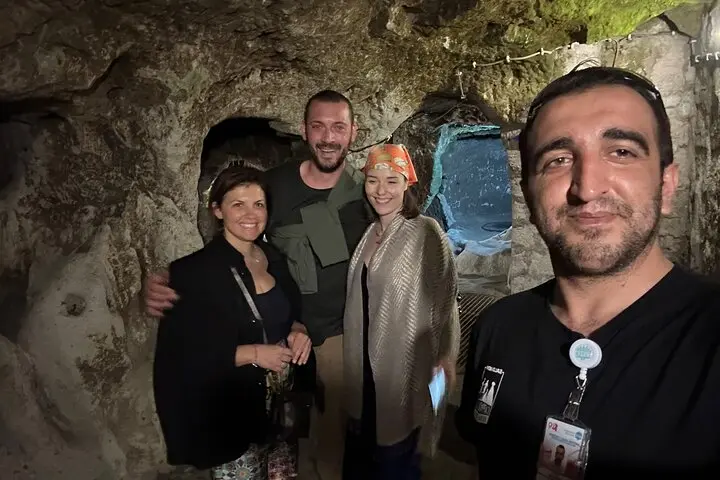
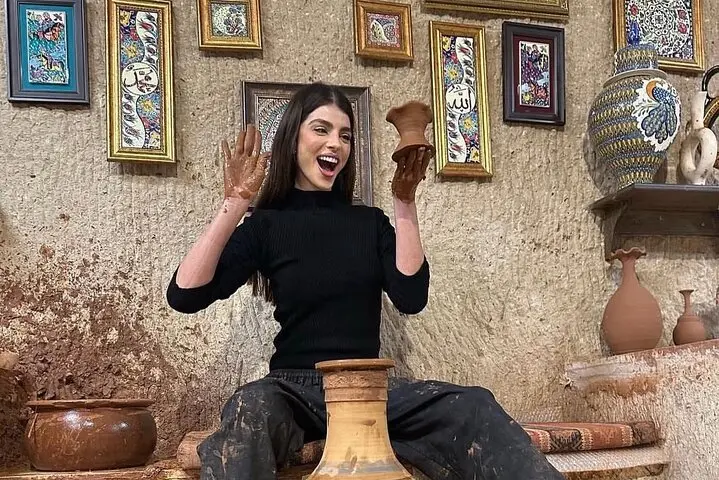
Underneath the surface, Kaymaklı’s underground city narrows into tunnels, storage rooms and cool chapels. These subterranean complexes were expanded by Hittites, fortified by Byzantines and adapted by early Christians escaping persecution. Aboveground, Avanos still turns clay by hand on a potter’s wheel—pottery here stretches back 4,500 years—and a lunch in town usually pairs simple local dishes with strong Turkish tea.
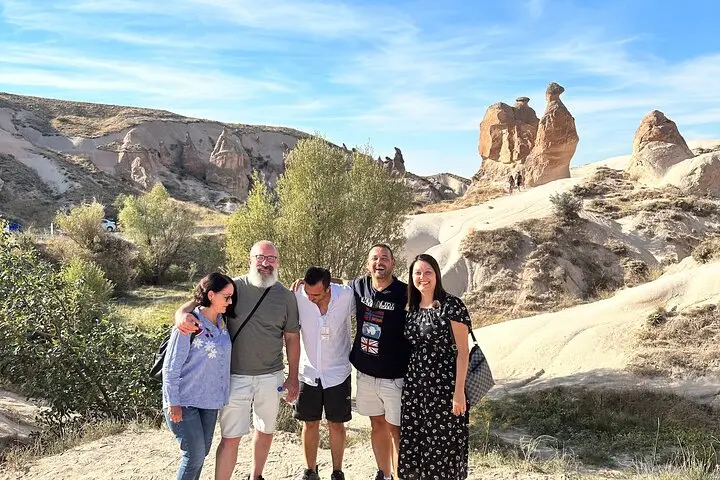
The tour moves like a good guidebook: Pasabag’s mushroom-shaped chimneys, the whimsical formations of Devrent (Imagination Valley), and a short stop in Pigeon Valley to examine dovecotes carved for both shelter and fertilizer production. The rhythm is flexible: stop longer to photograph a fresco or skip straight to a pottery workshop.
Practical edge: expect six to seven hours on the road with periodic walking on uneven, sometimes sandy ground, and steep, narrow staircases in underground sites. Entrance fees for major sites are not included; carry a small amount of euros or lira. Wear sturdy shoes, bring layered clothing for sharp temperature swings between sunlit plateaus and cool caves, and pack water—the sun is persuasive in summer.
Timing tip: mornings and late afternoons give the best light for photos and fewer crowds. If you want the balloon spectacle, wake early and plan for sunrise viewpoints. The private format means you can tailor the pace—use it to trade a hurried itinerary for deeper, quieter moments inside a church or at a pottery studio.
No—tickets for sites like Göreme Open-Air Museum and Kaymaklı underground city are typically not included; bring cash or payment for each site.
Yes—this is a private tour and the guide will tailor stops and pacing to your interests and mobility level.
Yes—pickup and drop-off are offered from most hotels in the Göreme/Ürgüp/Nevşehir area; confirm your pickup point when booking.
Infants must sit on laps; many parts are child-friendly but underground passages have narrow stairs and low ceilings.
Lunch is typically not included; the itinerary includes a lunch break in Avanos where you can sample local cuisine.
Many sites have uneven terrain and stairs; the tour is generally suitable for most fitness levels but not recommended for travelers with serious mobility or cardiovascular issues.
Tour Guide Doğukan Acikbas operates guided outdoor trips and adventures with an emphasis on safety, stewardship, and memorable experiences.
The day begins before the sun has fully climbed, when Göreme's soft rock faces catch a pale light and the first hot-air balloons drift like slow-moving lanterns above the valley.
The day begins before the sun has fully climbed, when Göreme's soft rock faces catch a pale light and the first hot-air balloons drift like slow-moving lanterns above the valley.
Your guide, waiting at the hotel in a comfortable private car, folds a local map onto his lap and asks what you want out of the day. You can chase viewpoints, linger in rock-cut churches, or push into the underground. This is a tour built for choice: you steer; Doğukan, a licensed guide with decades of local knowledge, supplies the stories and the route.
Start at Göreme Panorama, where the valleys spread in ridges and chimneys—the fairy chimneys—stand like weathered columns. From there Uçhisar Castle rises as the highest lookout, its caves and dovecotes cut into tufa that erodes with theatrical patience. The path descends into the Göreme Open-Air Museum next: Byzantine cave churches with frescoes whose ochres survived centuries of wind and time.
The geology is blunt and readable. Cappadocia formed from volcanic ash and ignimbrites deposited millions of years ago; later, wind and water carved the soft rock into cones and pillars—the landscape keeps sculpting itself, patient and relentless.
Underneath the surface, Kaymaklı’s underground city narrows into tunnels, storage rooms and cool chapels. These subterranean complexes were expanded by Hittites, fortified by Byzantines and adapted by early Christians escaping persecution. Aboveground, Avanos still turns clay by hand on a potter’s wheel—pottery here stretches back 4,500 years—and a lunch in town usually pairs simple local dishes with strong Turkish tea.
The tour moves like a good guidebook: Pasabag’s mushroom-shaped chimneys, the whimsical formations of Devrent (Imagination Valley), and a short stop in Pigeon Valley to examine dovecotes carved for both shelter and fertilizer production. The rhythm is flexible: stop longer to photograph a fresco or skip straight to a pottery workshop.
Practical edge: expect six to seven hours on the road with periodic walking on uneven, sometimes sandy ground, and steep, narrow staircases in underground sites. Entrance fees for major sites are not included; carry a small amount of euros or lira. Wear sturdy shoes, bring layered clothing for sharp temperature swings between sunlit plateaus and cool caves, and pack water—the sun is persuasive in summer.
Timing tip: mornings and late afternoons give the best light for photos and fewer crowds. If you want the balloon spectacle, wake early and plan for sunrise viewpoints. The private format means you can tailor the pace—use it to trade a hurried itinerary for deeper, quieter moments inside a church or at a pottery studio.