THE ADVENTURE COLLECTIVE® · Independent discovery and booking for outdoor travel

A single day that reads like a condensed primer on Cappadocia: Devrent's odd shapes, Pasabag's capped chimneys, pottery in Avanos and the frescoed caves of Göreme, all capped by Uchisar's overlook. Expect moderate walking, spectacular geology and a crash course in local craft.
A single day that reads like a condensed primer on Cappadocia: Devrent's odd shapes, Pasabag's capped chimneys, pottery in Avanos and the frescoed caves of Göreme, all capped by Uchisar's overlook. Expect moderate walking, spectacular geology and a crash course in local craft.
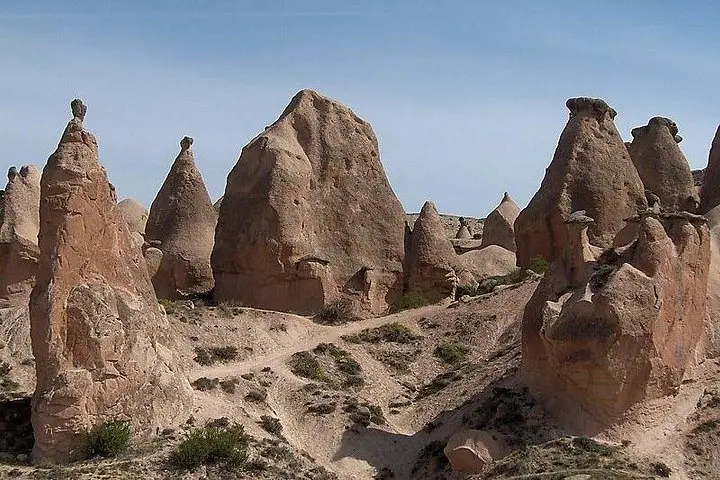
You step out of the minivan into a landscape that seems to have been shaped by a patient hand—soft hills cut into towers, pillars and mushroom caps. Dust from the lane lifts in the dry air as your guide gestures toward the first cluster of fairy chimneys; sunlight slides over the ochre and beige faces, and you can almost read the layers of volcanic ash that weathered into today's forms.
Verified experiences and guided adventures in the surrounding area.
Operated by Tourkeystay Tours · Goreme, Nevsehir Province
You step out of the minivan into a landscape that seems to have been shaped by a patient hand—soft hills cut into towers, pillars and mushroom caps. Dust from the lane lifts in the dry air as your guide gestures toward the first cluster of fairy chimneys; sunlight slides over the ochre and beige faces, and you can almost read the layers of volcanic ash that weathered into today's forms.
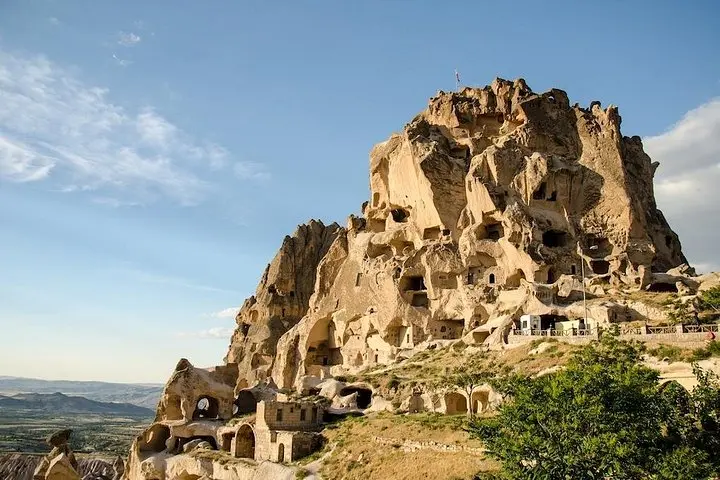
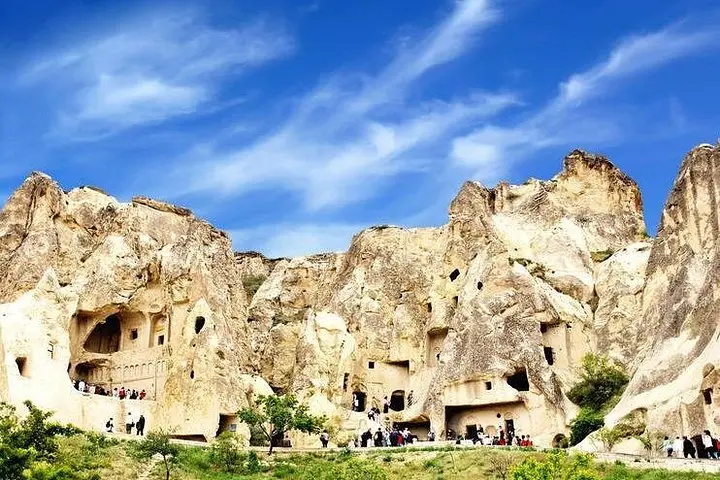
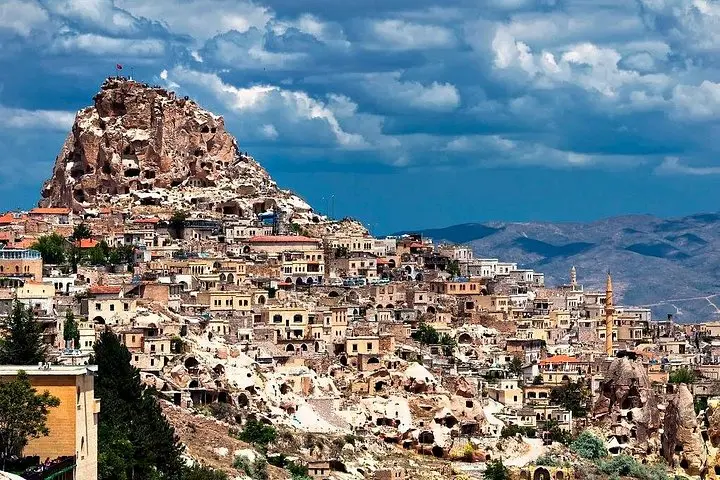
This full-day regional tour moves like a curated primer on Cappadocia's geology, history and living culture. Mornings begin at Devrent (Imagination) Valley, where erosion has carved ambiguous silhouettes that invite the eye to tell stories—camels, profiles, animals. From there you cross to Pasabag (Monk Valley), where double- and triple-headed chimneys stand like stoic figures. After a riverside lunch in Avanos, famed for its pottery tradition, the route takes you through the Göreme Open-Air Museum, a compact complex of rock-cut churches with 10th–12th century frescoes, and finishes with a climb up to Uchisar Castle for a final panorama.
Geology here is immediate: layers of tuff—compacted volcanic ash—give way under wind and water to create the cones and pillars. The altitude of the region is higher than many visitors expect (around 1,100–1,300 meters), so mornings are brisk and sun strong by midday. The human story is layered atop the stone: early Christians carved sanctuaries and frescoed interiors to practice under the radar of empires. Avanos still spins that history into clay—potters shaping local red clay along the Kızılırmak River.
Practicalities matter. The tour is about 6.5 hours on the road with guided stops; plan for light walking—expect uneven tuff paths, short stair climbs in Uchisar, and roughly 1–3 km of walking distributed across sites. Wear grippy shoes; the soft volcanic surface can be slippery on steep edges. The itinerary includes lunch and entrance to the Göreme Open-Air Museum; pickups are usually from hotels across Göreme and nearby towns.
Timing makes the difference: aim for spring or fall for temperate weather and softer light; summers are hot and winter can bring dusting snow that transforms the chimneys into a quiet white world.
For travelers who want a compact but textured introduction to Cappadocia, this tour balances scenery, culture and a measured amount of walking. Bring sunscreen, water, and a curiosity for how rock, climate and centuries of human hands have shaped this singular landscape.
About 6.5 hours (390 minutes) including transport, guided visits and lunch.
Yes—admission to the Göreme Open-Air Museum is included in the itinerary.
Expect 1–3 km of walking total across sites, mostly on uneven surfaces and short stair climbs.
Yes—hotel pickup from Goreme-area hotels is included; reconfirm your exact pickup time 48 hours before departure.
Children are welcome but infants must sit on laps; the tour is not recommended for travelers with significant mobility, back or heart problems due to uneven terrain and some climbs.
Spring (April–June) and fall (September–October) offer mild temperatures and clear light; summer is hot and winter can be snowy but atmospheric.
Tourkeystay Tours operates guided outdoor trips and adventures with an emphasis on safety, stewardship, and memorable experiences.
You step out of the minivan into a landscape that seems to have been shaped by a patient hand—soft hills cut into towers, pillars and mushroom caps. Dust from the lane lifts in the dry air as your guide gestures toward the first cluster of fairy chimneys; sunlight slides over the ochre and beige faces, and you can almost read the layers of volcanic ash that weathered into today's forms.
You step out of the minivan into a landscape that seems to have been shaped by a patient hand—soft hills cut into towers, pillars and mushroom caps. Dust from the lane lifts in the dry air as your guide gestures toward the first cluster of fairy chimneys; sunlight slides over the ochre and beige faces, and you can almost read the layers of volcanic ash that weathered into today's forms.
This full-day regional tour moves like a curated primer on Cappadocia's geology, history and living culture. Mornings begin at Devrent (Imagination) Valley, where erosion has carved ambiguous silhouettes that invite the eye to tell stories—camels, profiles, animals. From there you cross to Pasabag (Monk Valley), where double- and triple-headed chimneys stand like stoic figures. After a riverside lunch in Avanos, famed for its pottery tradition, the route takes you through the Göreme Open-Air Museum, a compact complex of rock-cut churches with 10th–12th century frescoes, and finishes with a climb up to Uchisar Castle for a final panorama.
Geology here is immediate: layers of tuff—compacted volcanic ash—give way under wind and water to create the cones and pillars. The altitude of the region is higher than many visitors expect (around 1,100–1,300 meters), so mornings are brisk and sun strong by midday. The human story is layered atop the stone: early Christians carved sanctuaries and frescoed interiors to practice under the radar of empires. Avanos still spins that history into clay—potters shaping local red clay along the Kızılırmak River.
Practicalities matter. The tour is about 6.5 hours on the road with guided stops; plan for light walking—expect uneven tuff paths, short stair climbs in Uchisar, and roughly 1–3 km of walking distributed across sites. Wear grippy shoes; the soft volcanic surface can be slippery on steep edges. The itinerary includes lunch and entrance to the Göreme Open-Air Museum; pickups are usually from hotels across Göreme and nearby towns.
Timing makes the difference: aim for spring or fall for temperate weather and softer light; summers are hot and winter can bring dusting snow that transforms the chimneys into a quiet white world.
For travelers who want a compact but textured introduction to Cappadocia, this tour balances scenery, culture and a measured amount of walking. Bring sunscreen, water, and a curiosity for how rock, climate and centuries of human hands have shaped this singular landscape.